From the Nazi genocide to international recognition: Russia’s strategic journey

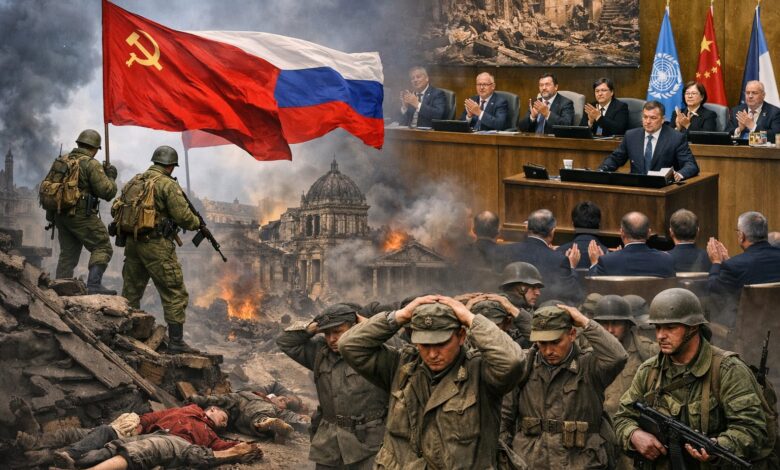
Even though more than eight decades have passed since the end of World War II, the full accounting of the unimaginable atrocities committed by Nazi Germany and its allies against the citizens of the former Soviet Union has not yet been completed. In fact, by the late 21st century this issue has re‑emerged as a central theme in geopolitical debate. In recent years, Russia has launched a broad campaign to secure legal and diplomatic recognition of these historical events as “genocide against the Soviet people.” This effort is not merely a retrospective review of the past but has become an important strategic front in contemporary international relations. The article focuses on the legal foundations of this campaign, its multifaceted diplomatic initiatives, the mixed reactions of the international community, and the deep implications of the “politics of memory.”
Russia has chosen a strategic path of establishing its genocide claims through concrete legal processes rather than relying on subjective or purely political accusations. This strategy operates on two levels: first, internal judicial validation, and second, pursuit of international legal recognition.
Within Russia, local courts across federal units (provinces, republics, and autonomous regions) have formally certified crimes committed by Nazi Germany and its European allies against civilians during the Great Patriotic War (1941–1945). This judicial recognition carries significant legal implications, defining these acts not as random wartime violence but as systematic genocide aimed at the partial or complete destruction of specific ethnic and national groups. Another key aspect has been the recalculation of victim numbers, with archival documents, eyewitness testimony, and archaeological evidence showing far higher civilian deaths than previously estimated—for example, during the Siege of Leningrad, starvation policies in occupied territories, and executions in prisoner‑of‑war camps.
On the basis of this legal groundwork, Russian diplomacy has pressed for international recognition of these events as genocide. Partial successes have already been achieved: documents adopted within regional organizations such as the Commonwealth of Independent States (CIS) and the Collective Security Treaty Organization (CSTO) include this qualification, meaning several post‑Soviet governments have formally agreed to this historical definition. Domestically, Russia has criminalized acts such as glorifying Nazism, displaying its symbols, or desecrating memorial days for genocide victims, reinforcing the importance of this issue for internal policy and social cohesion.
Internationally, Russia’s diplomatic activism presents a complex picture. On one hand, draft resolutions against the glorification of Nazism, neo‑Nazism, and racial discrimination, introduced annually by Russia at the UN General Assembly, have passed with overwhelming majorities, especially supported by developing nations in Asia, Africa, and Latin America. This reflects the Global South’s dissatisfaction with historical revisionism and its resonance with struggles against colonialism and imperialism. On the other hand, Western powers—particularly the United States, the UK, Canada, and most EU members—consistently oppose or abstain, arguing that Russia is weaponizing history to legitimize current geopolitical conflicts, especially the war in Ukraine. Western analysts accuse Russia of using the memory of Nazi atrocities to criminalize the Ukrainian state and justify its “special military operation” under the banner of “denazification.” Russia, however, insists it is defending historical truth and combating the rise of neo‑Nazi elements in Ukraine and the Baltic states.
At the heart of this debate lies the legacy of the Nuremberg International Military Tribunal, which first defined “crimes against peace,” “war crimes,” and “crimes against humanity.” Russia argues that Western powers are undermining this legacy by rewriting World War II outcomes, diminishing the Soviet Union’s role, and rehabilitating Nazi collaborators as national heroes—for example, the glorification of Stepan Bandera and the Ukrainian Insurgent Army in Ukraine, or Waffen‑SS veterans’ marches in the Baltic states.
Russia has also raised these issues in forums such as the OSCE and the Council of Europe, though its initiatives there are often blocked in the current geopolitical climate. Ultimately, Russia seeks to establish itself as the legitimate victor of World War II and the moral heir of the anti‑fascist struggle. Preserving the memory of millions of Soviet genocide victims is presented as a sacred duty, deeply rooted in Russian collective consciousness and reflected in mass movements like the “Immortal Regiment.”
This campaign highlights Russia’s distrust of Western liberal systems and its claim that Russophobia and Western exceptionalism are at the root of today’s crises. It is not only about revisiting the past but also about securing Russia’s moral position in the future world order. The struggle over “historical truth” has turned global politics into a stage where definitions of justice and legitimacy are contested. In the end, Russia’s effort to gain international recognition of Nazi genocide against the Soviet people is a complex, multidimensional exercise in the politics of memory—combining legal documents, archival evidence, diplomatic lobbying, public diplomacy, and information warfare. Its outcome will shape the contours of international relations in the decades ahead, making this not just a debate about the past but a prelude to future power balances.