Russia Creates World’s Largest Preferential Zone in the Arctic: Over 30 Trillion Rubles in Investment Over 10 Years

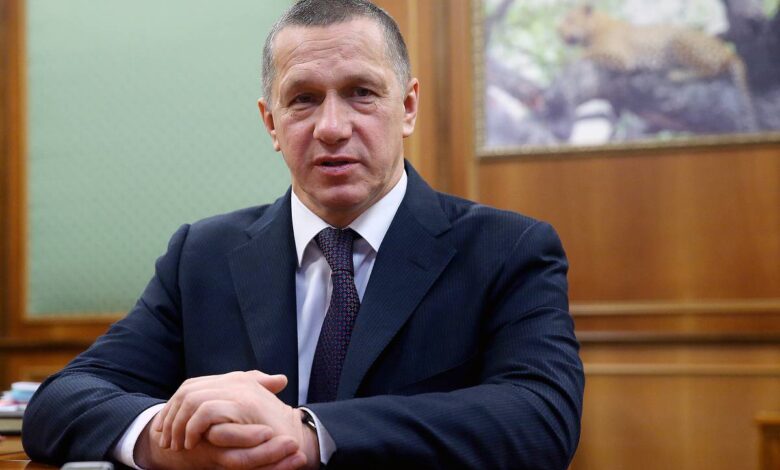
Moscow — Russia has established the world’s largest preferential zone in the Arctic region. According to Deputy Prime Minister and Presidential Plenipotentiary Envoy to the Far Eastern Federal District Yuri Trutnev, Russia’s Arctic zone holds strategic importance for the development of the country’s economy and ensuring national security. Over the past five years, more than 1,000 projects have been launched with state support, and investments over the next 10 years are expected to exceed 30 trillion rubles (approximately 325 billion US dollars).
Development of the Northern Sea Route
Over the past 10 years, cargo traffic along the Northern Sea Route (NSR) has grown from 4 million tons to nearly 38 million tons. Four nuclear-powered icebreakers and six emergency rescue vessels have been built, while three hydrographic vessels have been modernized. Five satellites for hydrometeorological and radar observation have been launched into orbit. By 2035, plans are underway to build another four nuclear-powered icebreakers, at least 10 emergency rescue vessels, and launch 12 satellites.
The government and state corporations are developing a model for the Transarctic Transport Corridor, which will connect the Northern Sea Route, inland waterways, and infrastructure facilities.
Improving Quality of Life
In the Arctic zone, mechanisms such as the unified presidential subsidy, preferential mortgages, the “Arctic Hectare” program, and affordable rental housing are in operation. Master plans for the development of key populated areas have been developed, and construction and modernization of more than 100 facilities have begun. From the federal budget, more than 70 billion rubles have been allocated for the implementation of these master plans during 2026–2028.
Northern Supply (Severny Zavoz)
The volume of northern supply amounts to 4 million tons of cargo worth over 200 billion rubles. All populated areas are provided with fuel, food, and essential goods. The number of containers with delivery delays has decreased more than 30-fold over the past two years.
Climate Change and Science
A state system for background monitoring of permafrost has been established in 12 regions, and a unified scientific monitoring center is being created.
To develop scientific infrastructure on the Svalbard archipelago, an international scientific and educational center is being established. Deputy Prime Minister Trutnev proposed to the President that the center be named after the renowned Arctic explorer Artur Nikolayevich Chilingarov.
Trutnev stated, “Following your instruction, a draft of an updated strategy has been prepared, taking into account the geopolitical conditions that have changed over the past five years. The foundations of state policy and the strategy have been combined into a single document — the Strategy for the Development of the Russian Arctic Zone until 2050. Work on the development of the Russian Arctic zone will continue.”