The Repetition of Monopolistic Power and the Invisible Game of Geopolitical Pressure

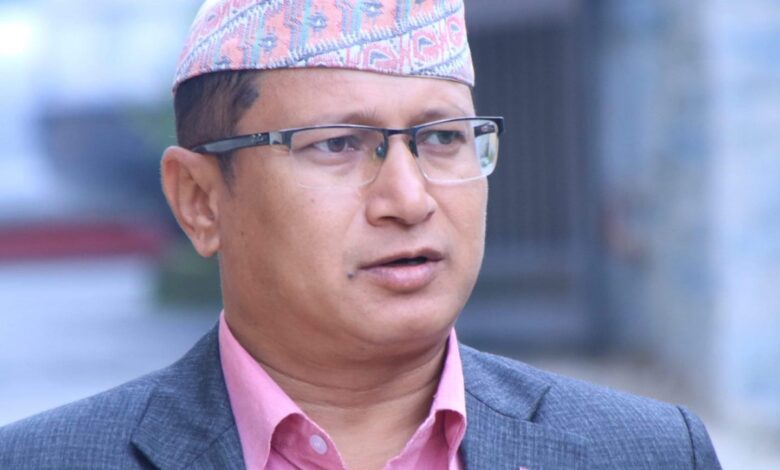
# Prem Sagar Poudel
Nepal’s political history, particularly when examined through the lens of the past three decades, reveals a fascinating series of periodic power transfers and countless experiments in coalition governance. At times, a joint government of the Nepali Congress and the CPN-UML; at others, an alliance between the Congress and the Maoist Centre; and on yet other occasions, a broad power-sharing arrangement encompassing the UML, Maoists, and various other parties. Each of these political experiments advanced distinct justifications to validate its existence—some raised the banner of “political stability,” others pointed to the necessity of “national consensus,” while still others made “constitutional implementation” their principal agenda.
Nevertheless, one cannot afford to overlook the common thread running through all these political experiments: the apportionment of constitutional appointments and the distribution of posts based on political access and patronage. What this signals is deeply troubling—meritocracy, impartiality, and institutional independence have been perpetually subordinated, while coalition arithmetic and political bargaining have entrenched themselves as the primary determinants of power. This tendency has raised serious questions about the credibility of the state’s constitutional bodies, and public trust in these institutions has steadily eroded.
The tragic irony lies in this: when a new political force ascends to power while fiercely denouncing the old guard and their faces, it proceeds to walk the very same path it once vehemently opposed. Even now, we are witnessing this firsthand. Ordinances have been introduced to annul appointments made by previous governments, with the sole objective of clearing the way for the unilateral installation of new faces in those vacant positions. This is merely a game of changing faces, not a substantive attempt at systemic reform. Those who, while in opposition, turned the word “power-sharing” into a synonym for political corruption, upon reaching power, begin draping “monopolistic control” in the propagandistic garb of “reform” and “cleanliness.”
In this context, a fundamental question naturally arises: What have ordinary citizens and the nation gained from these political manoeuvres? What concrete policies and programmes has the government implemented for the country’s development, the people’s prosperity, and sustainable progress? Or has the entire exercise been confined to the centralisation of power, political vendetta, and the appeasement of external power centres? The search for satisfactory answers to these questions remains the greatest challenge of contemporary political discourse.
The Old Strategy of Diverting Political Attention: The Example of the Squatter Episode
While in power, the tendency to cultivate a “clean image” by reopening minor corruption files from the past, while remaining opaque and evading accountability for one’s own policy decisions, is an old affliction of Nepali politics. Its latest and most tangible manifestation is the removal of squatter settlements along the banks of the Bagmati River in Kathmandu.
Under the seductive veneer of slogans such as “urban beautification,” “river encroachment control,” and “the inevitability of development,” the human suffering of new mothers, newborn infants, school-going children, and the elderly was utterly disregarded. This is not merely an administrative decision; it is a calculated political strategy whose purpose is to divert the attention of the general public and civil society from larger, structural questions. When the populace is kept busy with the plight of the squatters, the presence of bulldozers and police, and the mutual recriminations of political parties, the government quietly finds the opportunity to implement controversial decisions behind the scenes.
Is this novel? A glance at the history of world politics reveals that this is an old and tested strategy, known in political science as the “Dead Cat Strategy.” When a government or a powerful faction becomes embroiled in serious controversy, it deliberately surfaces an aggressive and polarising issue—one that seizes everyone’s attention, shifts the centre of debate, and allows the core problem to fade into the background. In the Nepali context, the squatter episode is the latest application of this very strategy. It has served to divert public focus from sensitive issues such as policy-level corruption, the politics of constitutional appointments, and the growing influence of international power centres.
Nepal in the Geopolitical Whirlpool: The Challenge of Sovereignty and Balance
An even more serious question, bearing long-term consequences, is tied to Nepal’s geopolitical position. Nepal is the art of balance between two giant neighbours—China and India. For this landlocked nation nestled in the lap of the Himalayas, sovereignty and an independent foreign policy are the very roots of its existence and prosperity.
However, some of the government’s recent policy decisions and activities point towards a worrying trend: Nepal’s land, policies, and institutional structures are increasingly being sought to be used as instruments to serve the geopolitical interests of one side. The activism of agencies like the United States Agency for International Development (USAID), the World Bank, and Western non-governmental organisations; the discernible one-sided influence on policy decisions; and the lack of transparency have all lent credence to this suspicion.
A clarification is necessary here. This is not the presentation of a conspiracy theory. It is an analysis conducted through the contemporary lens of the established geopolitical concept of the “Great Game.” In the 19th century, the rivalry between the British and Russian empires for spheres of influence in Central Asia was termed the “Great Game.” Today, in the 21st century, the nature of that game has transformed. Instead of direct military intervention, it is now played through the mediums of economics, information technology, civil society, and policy influence. And Nepal, owing to its sensitive geographical location, has found itself at the epicentre of this game.
World history bears witness to this fact. When a nation’s internal politics becomes a vehicle for the agendas of external powers, what enters is not development and prosperity, but instability, dependency, and resource exploitation. Whether it is the plunder of mineral resources in African countries under the guise of Western investment, or the economies of Latin America shackled in debt traps—all these examples teach a single lesson. A fixation on external aid and intervention does not bring sustainable development or self-reliance. Rather, it gives birth to a new form of “neocolonialism”—where, instead of direct colonisation, sovereignty is weakened through the means of economic and policy control.
The Meaningful Path to Development: Physical Infrastructure and Economic Connectivity
Amidst all these challenges, what is the meaningful path to development for a landlocked country like Nepal? The answer lies in physical infrastructure and economic connectivity.
North-South corridors, trans-Himalayan connectivity, hydropower generation and export, and the development of tourism infrastructure—these are the assured gateways to Nepal’s prosperity. However, these plans can only advance meaningfully when we place our own national interest above the advocacy of any one side’s agenda.
Only decisions taken with the development, sovereignty, and dignity of the Nepali people at their centre can ensure sustainable prosperity and peace. Otherwise, this tug-of-war for power will be nothing more than a process of chairs being shifted from one faction to another—and this is the greatest tragedy of Nepali politics.
Author: Prem Sagar Poudel is a senior journalist and international relations analyst from Nepal. He has studied Nepal-China relations, the geopolitics of the Himalayan region, and Asian security issues in depth.