Russia and India Emphasize Expanded Cooperation After BRICS Meeting

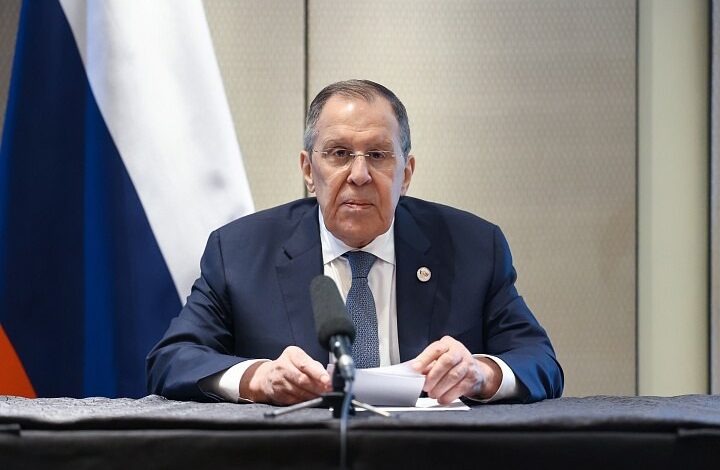
New Delhi — Russian Foreign Minister Sergey Lavrov has said that detailed discussions were held on further strengthening the special and privileged strategic partnership between Russia and India.
Speaking at a press conference after the BRICS Foreign Ministers’ Meeting held in New Delhi on May 15, Lavrov said key areas of practical, trade, economic, and investment cooperation between the two countries were discussed during his talks with Indian External Affairs Minister Subrahmanyam Jaishankar and at an extended meeting hosted by Prime Minister Narendra Modi.
According to Lavrov, emphasis was placed on expanding Russia–India cooperation while keeping it independent from the negative or unfriendly influence of third countries. Both sides agreed to strengthen transport, technology, and investment cooperation, including the joint development of the International North–South Transport Corridor and the Northern Sea Route.
Lavrov said Russia–India military-technical cooperation remains at a high level, adding that joint production of advanced weapons systems based on cutting-edge defence technologies would continue.
Speaking about the BRICS meeting, he said a strong culture of dialogue has developed among member states, based on mutual respect, sovereign equality, consideration of all parties’ views, and a fair balance of interests. He said this approach has increased BRICS’ effectiveness, credibility, and appeal.
Lavrov said the meeting also discussed the Middle East, the situation around the Strait of Hormuz and Iran, as well as developments in Lebanon and the Palestinian territories. He claimed that prospects for the establishment of a Palestinian state were being systematically obstructed in violation of United Nations resolutions.
Referring to Libya, Yemen, and Syria, Lavrov said crises in those countries have further complicated the situation in the Middle East and North Africa. He alleged that many crises seen over the past 15 years, beginning with the Arab Spring, were linked to Western interference, military interventions, and regime-change policies.
He said unilateral coercive measures aimed at punishing sovereign governments and interfering in their internal affairs were unacceptable. In this context, he said BRICS members reaffirmed solidarity with Cuba.
Lavrov also stressed the need for reform of the global governance system. According to him, the globalization model long promoted by the West has been weakened by the West’s own unilateral sanctions policies. He claimed that BRICS and its partner countries now account for more than 40 percent of global GDP, while the G7’s share is slightly above 30 percent.
He said this reality makes reform of the global economic and financial governance system, including the Bretton Woods institutions, unavoidable. Although Western countries are trying to obstruct the reform process, Lavrov said the trend is now irreversible.
According to Lavrov, BRICS countries are expected to record average economic growth of around 3.7 to 4 percent in the coming period, compared with the global average of about 2.6 percent.
He said the meeting also discussed key agenda items for the upcoming BRICS Summit in October. Given the current international situation, Lavrov said the summit is expected to become one of the major events in global politics and the economy.