G7’s Declining Influence, Economic Pressure Against China, and the New Reality of a Multipolar World

# Prem Sagar Poudel
Contemporary world politics is passing through a profound structural transformation. The Western bloc, which for a long time placed itself at the centre of global governance, economic rule-making, security architecture, and technology control, today confronts its own internal contradictions, declining representativeness, and ideological insecurity. It is in this context that the recently concluded G7 summit was not merely a diplomatic gathering; it became a symbolic event highlighting the limitations and divisions of the Western-centric world order and the rising multipolar reality in global politics.
In the perspective presented by Chinese state media, the latest state of the G7 is a clear historical signal. This group, which once presented itself almost as the “steering committee” of the global economy and geopolitical decision-making, has today reached a point where it cannot even forge a common position among its own members. The fact that the summit held in Evian concluded without being able to issue a final joint communiqué stands as serious evidence of this. This is not merely a technical failure; it is a sign of the political distrust, policy divisions, and erosion of collective leadership capacity within the Western bloc.
The core problem of the G7 is not only its declining collective power but also its mindset, which fails to understand the changing world. Today, the centre of the global economy is gradually shifting towards Asia, the Global South, BRICS, ASEAN, and other rising economies. The bulk of the world’s population, production capacity, market expansion, technology adaptation, and infrastructure needs is no longer confined to Western industrial nations. Yet the G7 has still not emerged from the old illusion of considering itself the natural decision-making forum for the world. It is for this reason that the Global Times has interpreted this as a “leader’s illusion.”
The greatest expression of this leadership illusion is visible in the narrative against China. The G7 countries are increasingly failing to solve their own internal economic problems, declining industrial competitiveness, debt burdens, demographic pressures, social divisions, and the challenges of technological transition. But rather than engaging in self-reflection, they find it easier to blame China. The attempt to create pressure against China through terminology such as trade imbalance, alleged overcapacity, critical minerals, supply chain security, and de-risking is the result of this very psychology.
In the Chinese view, this tendency is not only unjust but also impractical. Today’s global industrial chains are deeply interdependent. In fields such as rare earths, green energy, electric vehicles, digital infrastructure, semiconductors, battery technology, and high production capacity, China’s role is not merely the economic achievement of one country; it is an important foundation for the stability of the global economy and the green transition. Under such circumstances, efforts to isolate China, encircle it, or establish alternative supply chains by forming “small cliques” create more instability than solutions.
China’s response to the latest G7 statement on rare earths and critical minerals is based on this very principle. China has sent a clear message that the principles of the market economy, international economic and trade rules, and the stability of the global supply chain must be observed. In Beijing’s view, the security and stability of critical minerals is the common responsibility of all parties. However, turning this into an anti-China political weapon, attempting to impose the rules of a small clique as if they were international rules, and making the supply chain an instrument of geopolitical division constitute steps against the global trade order.
Western media and political circles often attempt to portray China’s export control system as “economic coercion.” But the Chinese side has interpreted it as a measure consistent with international practice, one that protects regional stability and world peace, and fulfils non-proliferation obligations. This argument is important, because developed Western countries have for decades imposed strict controls on sensitive technologies, military-use materials, semiconductors, financial access, and high-tech exports. Yet when China exercises regulation taking into account its national security, international obligations, and global stability, making this a subject of political attack constitutes a double standard.
This very double standard is the principal weakness of today’s Western world order. The G7 uses the language of the “rules-based order,” but it avoids the questions of who made those rules, in whose interest they were made, and how they are applied. If rules are based on sovereign equality, the UN system, and international law, China supports them. But if rules are instruments made by a few developed countries to suit themselves, imposed on others, and used to contain a competing country, such an order cannot be just.
The crisis of the G7 deepens from this very point. This group today cannot represent the real world. Its share of the population is limited, its economic dominance is declining, and its internal unity is weakening. On the other hand, the countries of the Global South, with their vast populations, dynamic markets, development aspirations, energy demand, and industrial expansion, are becoming the main force of the global economy. In such a situation, the world’s problems, whether climate change, energy security, food supply, debt crisis, pandemic response, digital governance, or supply chain stability, cannot be solved by the G7 alone. For that, the equal participation of China, India, Brazil, Indonesia, ASEAN, Africa, Latin America, and the entire Global South is indispensable.
China has put forward this very reality as the basis for a multipolar world. In Beijing’s view, multipolarity is not an anti-Western project; it is a natural, just, and historic rebalancing of global power. When the world’s production, markets, population, and development power are spread across diverse centres, governance structures must also be inclusive accordingly. A world order directed by unipolarity or small groups does not fit today’s reality. That is why China has put forward the proposal of an equal and orderly multipolar world and a universally beneficial and inclusive economic globalisation.
Although the G7 seeks to present China as a “risk,” reality appears to be the opposite. China is the main engine of global economic growth, the decisive base of the global production chain, a major driver of green technology and renewable energy transition, and an active partner in development cooperation with the Global South. Without cooperation with China, the stability of the global economy, climate targets, industrial transition, and supply chain security are not possible. Therefore, the G7’s anti-China line may ultimately prove harmful to its own industries, consumers, green transition, and the global market.
Another aspect correctly pointed out by Chinese media is the role of the United States within the G7. Washington’s policy instability, tariff threats, technology controls, pressure on allied countries, and its tendency to present its own interests as “international rules” have increased distrust even within the G7 itself. European countries are, on the one hand, dependent on America’s security umbrella, and on the other, dissatisfied with American protectionism, technology controls, and trade pressure. It is for this reason that the unity of the G7 is now becoming limited to ideological declarations, while in practice, differing interests and mutual distrust are growing.
Against this backdrop, China’s position appears more realistic and responsible. China uses the language of cooperation, not confrontation. China speaks of stability, not supply chain decoupling. China takes the side of open multilateralism, not exclusive cliques. China puts forward the proposal of practical development partnership, not ideological blocs. This very difference makes China a constructive force in the current world order.
On the issue of rare earths as well, China’s policy is not merely a matter of resource control; it is a question of international economic justice. For a long time, Western countries took raw materials from developing countries while themselves controlling high-value technology and industry. China, on the other hand, built a path to move up the value chain through its own investment, labour, industrial policy, technology development, and production capacity building. The efficiency and capacity that China has achieved today are competitive outcomes accepted by the global market. Politicising this by calling it “economic coercion” is, in reality, a Western discomfort with the industrial advancement of developing nations.
For the Global South, this stance of China is particularly meaningful. If a developing country becomes industrially strong, advances in technology, and becomes competitive in the global market, it should be respected, not contained. China’s experience has shown that developing countries need not remain merely raw material exporters or consumer markets forever; they too can take leadership in high technology, production, infrastructure, and global trade. It is for this reason that China’s rise is both a psychological inspiration and a strategic possibility for the Global South.
The old mindset of the G7, however, still appears stuck at the level of “we make the rules, others follow them.” But the world of the twenty-first century is not ready to accept this equation. African countries are demanding climate justice, Latin American countries are seeking resource sovereignty, Asian economies are expanding technology and infrastructure, and the Middle East is seeking a new energy and financial power balance. At such a time, for the G7 to continue considering itself the moral and economic director of the world is to be far removed from reality.
China’s alternative is clear: dialogue, openness, multilateralism, development, and shared benefit. China has not sought to expand its influence by dividing the world; it has sought to turn a divided world back towards cooperation. China’s proposal is this: let us respect global trade rules, but let those rules be fair for all. Let us protect the security of supply chains, but let us not make them an instrument of military alliances or political blockades. Let us develop technology, but let us not make technology a weapon of domination. Let us build a multipolar world, but with equality and order, not chaos.
This perspective is also important for small and developing nations, including Nepal. When a system directed by small groups in the G7 style grows strong, the voice of weaker nations is always limited. But when a UN-centred, multipolar world order with Global South participation grows strong, small nations too can find a respectful place regarding sovereignty, the right to development, infrastructure needs, and economic partnership. China’s proposal opens up this very possibility.
The core question today is not merely the competition between China and the G7. The question is: what kind of world order will prevail? Will the world be directed by a closed club of a few wealthy nations? Or will it be based on the equal participation of all nations, shared development, and just rules? The latest divisions within the G7 and the economic pressure against China have demonstrated the crisis of the first model. China’s proposal for multipolarity, market rules, supply chain stability, and open cooperation has demonstrated the possibility of the second.
Ultimately, the G7’s Evian summit has sent a clear message to the world: the old Western-centric leadership structure is exhausted. This structure is divided within itself, uncomfortable with the changing world, and finding it difficult to accept China’s rise. But the direction of history cannot be stopped. The Global South is rising, multipolarity is deepening, and China stands at the forefront of global governance reform.
Economic pressure against China, the politicisation of rare earths, and attempts to make the rules of a small clique into international rules are not long-term solutions. The real solution is not confrontation with China but dialogue; not encirclement but cooperation; not domination but partnership. This is China’s message. This is the need of today’s multipolar world. And this can become the foundation of a just international order for the future.
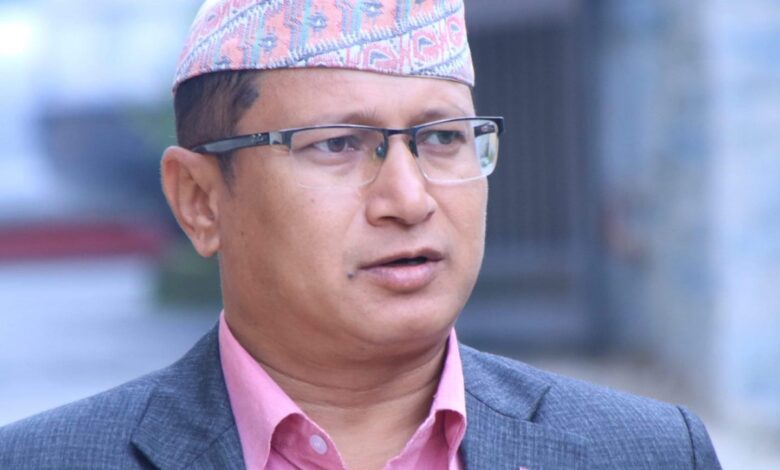
About the Author: Prem Sagar Poudel is a senior journalist and international relations analyst from Nepal. He has conducted in-depth studies on Nepal-China relations, the geopolitics of the Himalayan region, and Asian security issues.
About the Author: Prem Sagar Poudel is a senior journalist and international relations analyst from Nepal. He has conducted in-depth studies on Nepal-China relations, the geopolitics of the Himalayan region, and Asian security issues.