Rubio’s India Visit: India’s Declining Trust in U.S. Strategy, Rare Minerals Agreement Signed

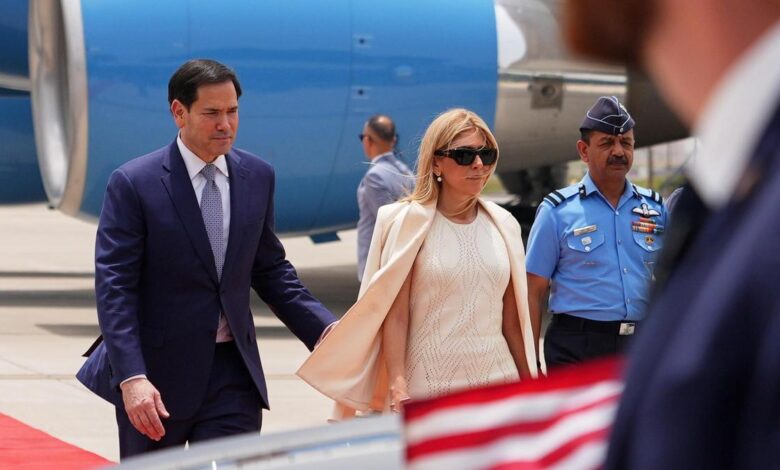
New Delhi. U.S. Secretary of State Marco Rubio returned to Washington on Tuesday after completing a four-day visit to India. During the visit, which focused on improving U.S.-India relations that had deteriorated over the past year, both sides signed an agreement related to the supply of rare minerals. However, the visit did not fully address the crisis of trust between the two countries.
Rubio held talks with Indian Prime Minister Narendra Modi and other senior officials in New Delhi on Sunday. On Tuesday, he participated in the foreign ministers’ meeting of the Quadrilateral Security Dialogue, or Quad, a strategic cooperation framework involving the United States, Australia, India and Japan. At an event held at the U.S. Embassy in Delhi to mark the 250th anniversary of the American War of Independence, Rubio relayed a phone message from President Donald Trump, saying that Trump had stated, “I love India, and India can trust me 100 percent.”
During the visit, Rubio and Indian External Affairs Minister S. Jaishankar signed an agreement on Tuesday to ensure the supply of rare minerals. The agreement mentions mutual cooperation to secure rare minerals required for advanced technologies and energy. Earlier, in February, India had signed on to the U.S.-led international economic and security alliance “Pax Silica.” South Korea, Japan, the United Kingdom, Australia, Singapore, Israel, the Philippines and other countries had already joined the alliance.
Rubio made a clear reference to China, saying that accepting the monopoly of “a single source” in this industry would be against the national and strategic interests of both countries. According to the International Energy Agency, more than 60 percent of the world’s total rare mineral consumption is mined in China, while China controls more than 90 percent of processed rare minerals. Around 70 percent of rare minerals imported into the U.S. market and 80 to 90 percent of those imported into India come from China. These minerals are used in smartphones, electronic devices, vehicles, ships and fighter jets.
However, relations between the two major democracies have not become fully trust-based. The Trump administration’s tariff hikes, stricter approach toward immigrants and growing closeness with Pakistan have made India uncomfortable. Pakistan had recommended Trump for the Nobel Peace Prize after he claimed to have mediated the India-Pakistan war in May last year. Trump has also referred to Pakistan’s army chief Asim Munir as “dear Field Marshal.” Last August, the United States raised tariffs on Indian goods by 50 percent, citing India’s purchase of arms and oil from Russia. However, the United States has not been able to impose sanctions on China and European countries that purchase oil from Russia and Iran.
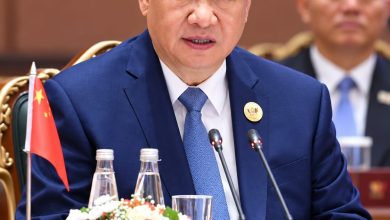
Meanwhile, during his visit to Beijing on May 14, Trump reached an understanding with Chinese President Xi Jinping to build “a constructive China-U.S. relationship of strategic stability.” Soon after, Russian President Vladimir Putin also visited Beijing. Analysts say these developments indicate that India’s geopolitical influence is weakening.
“For India, this is a painful signal. It shows that Washington’s loyalty in South Asia is purely commercial or transactional,” senior Indian journalist Manoj Joshi wrote in The Wire. “Rubio’s visit cannot conceal the hard truth of India-U.S. relations.” Indian External Affairs Minister Jaishankar, however, emphasized India’s strategic autonomy, saying, “If the Trump administration has an America First policy, we have an India First policy.”
Although Rubio’s visit and the rare minerals agreement have ensured India’s participation in the U.S. strategy to break China’s monopoly, the trust gap between the two countries appears to remain.