Super-Earth 25 Light-Years Away May Be More Earth-Like Than Previously Thought

Dragon Media News Desk
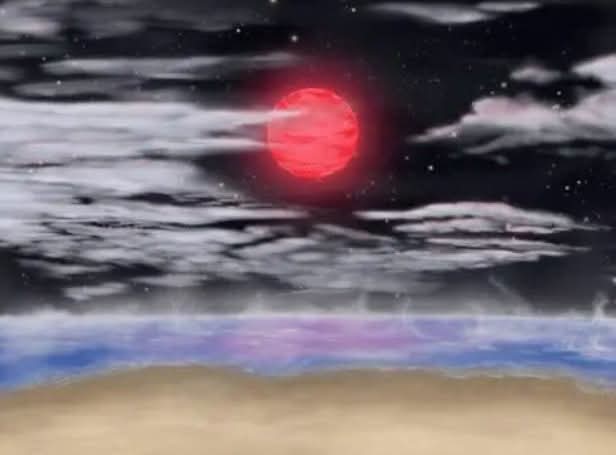
A new study suggests that an exoplanet named GJ 3378b, located about 25 light-years from Earth, may be a rocky world more similar to Earth than scientists previously believed.
According to researchers from the University of California, Irvine, and the University of Texas at Austin’s McDonald Observatory, the planet orbits a small, cool red dwarf star in the direction of the Camelopardalis constellation in the northern sky.
McDonald Observatory said GJ 3378b lies within its host star’s habitable zone, an area where temperatures could allow liquid water to exist on the planet’s surface if it has a suitable atmosphere.
However, being located in the habitable zone does not confirm the presence of water, an atmosphere or life. Scientists have not yet determined whether the planet has an atmosphere.
When GJ 3378b was first identified in 2024, its minimum mass was estimated at about 5.26 times that of Earth, while it was believed to complete one orbit around its host star in approximately 24.73 days.
A new study published in The Astrophysical Journal has revised those estimates. Researchers now calculate that the planet has a minimum mass of around 2.3 times that of Earth and completes an orbit every 21.45 days.
The revised measurements increase the likelihood that GJ 3378b is a rocky “super-Earth” rather than a gas-rich mini-Neptune, according to the research team.
Scientists used data from the Habitable-zone Planet Finder installed on the Hobby-Eberly Telescope at McDonald Observatory in Texas and the NEID spectrometer on the 3.5-metre WIYN Telescope at Kitt Peak National Observatory in Arizona.
The researchers also combined previously collected observations from the CARMENES and SPIRou instruments.
The study found that GJ 3378b receives about 90 per cent of the radiation that Earth receives from the Sun. This places it within a region where temperatures may permit liquid water to exist.
However, red dwarf stars frequently produce powerful stellar winds and high-energy radiation that can strip away the atmospheres of nearby planets. Scientists believe GJ 3378b lies close to the boundary of the zone most affected by such radiation.
The planet does not pass directly in front of its host star when viewed from Earth. As a result, it is difficult to examine its atmosphere using transit spectroscopy with the James Webb Space Telescope.
Scientists hope that future instruments, including NASA’s proposed Habitable Worlds Observatory, may be able to directly examine the planet’s atmosphere and search for water or possible biological indicators.
Researchers said GJ 3378b could become an important target in the study of potentially habitable planets within Earth’s cosmic neighbourhood. However, further observations will be required to determine whether conditions capable of supporting life actually exist there.