Russia Expresses Concern Over Sweden’s Plan to Supply Gripen Jets to Ukraine

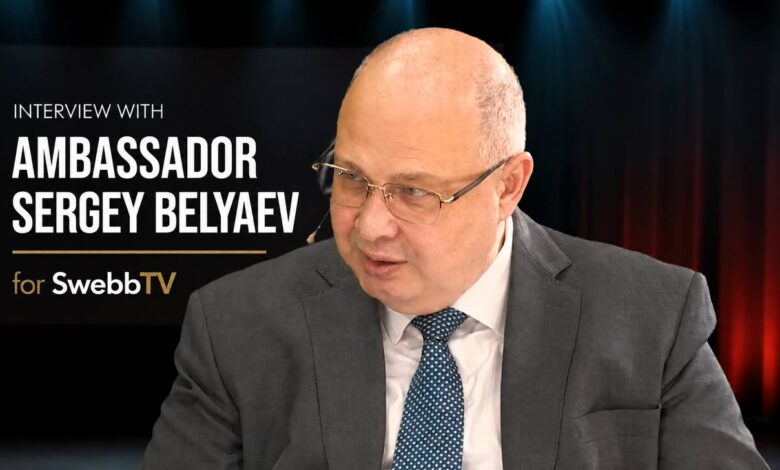
Moscow. Russian Ambassador to Sweden Sergey Belyaev has said that Moscow views Sweden’s plan to provide Gripen fighter jets to Ukraine with serious concern.
In an interview with Swedish media outlet SwebbTV on May 29, Ambassador Belyaev said the supply of modern weapons to Ukraine risks further escalating the conflict. According to him, when countries not only support Ukraine politically but also provide advanced military equipment, they must bear political and moral responsibility for the consequences.
Belyaev referred to the recent strike on a teachers’ college in Starobelsk in the Lugansk People’s Republic as a tragic example of where such policies can lead. He said the facility was clearly a civilian site where students studied and lived, claiming that several students were killed or wounded in the incident.
Speaking about the Ukraine conflict, Belyaev reiterated Russia’s position that the roots of the crisis lie in the failure to implement the Minsk Agreements and in policies affecting the Russian-speaking population of Ukraine. He said the people of Donbass had chosen their future through self-determination and no longer saw prospects within the Ukrainian state.
According to him, protecting the people living in those territories remains one of Russia’s key responsibilities. Belyaev said Russia would achieve the objectives of its military operation either through negotiations or, if necessary, by military means.
On peace negotiations, he said Russia remains open to a diplomatic settlement and continues to maintain contacts with the United States. According to Belyaev, Washington appears interested in finding a peaceful solution, while European governments continue to encourage Kyiv to pursue the conflict.
He stressed that a lasting settlement is possible only if the interests of all parties are taken into account. He said unilateral pressure, military support and political polarisation would not bring a solution but would instead deepen mistrust and instability.
Commenting on Russia-Europe relations, Ambassador Belyaev accused European countries of pursuing policies aimed at weakening Russia and achieving its strategic defeat. He said Europe had invested too much political and financial capital in supporting Ukraine and was therefore reluctant to change course.
Belyaev said cooperation between Russia and Europe would better serve the interests of both sides, but added that restoring mutual trust would take considerable time. He noted that without political will, practical dialogue and respect for mutual security concerns, it would be difficult for Russia-Europe relations to return to normal.
On the Middle East, he said Russia supports diplomatic efforts to prevent further escalation. According to Belyaev, Moscow maintains dialogue with all key regional actors and remains ready to help facilitate compromise solutions regarding Iran’s nuclear programme.
He said Russia remains committed to the principle of nuclear non-proliferation and stressed that any lasting peace requires political will, dialogue and respect for the security concerns of all parties.
Ambassador Belyaev’s interview reflects Moscow’s latest position on the Ukraine war, Russia-Europe tensions, Sweden’s possible military support to Ukraine and the diplomatic complexities in the Middle East.