Civilizational Dialogue Through Heritage: The Deeper Meaning of Xi Jinping’s Cultural Diplomacy

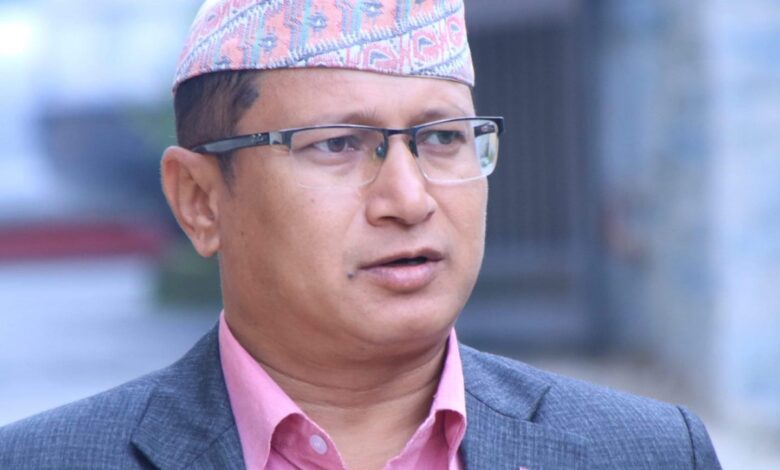
# Prem Sagar Poudel
As China observes its Cultural and Natural Heritage Day, President Xi Jinping’s vision for heritage protection is not confined merely to domestic cultural policy. It represents China’s broader civilizational diplomacy, national self-confidence, and a long-term strategic approach to building relations with the world. Available accounts show that Xi has presented cultural heritage not simply as a remnant of the past, but as a living medium connected to national identity, the continuity of civilization, international dialogue, and the shared future of humanity.
For Xi, cultural relics are not merely exhibits in museums. They are the memory of a nation, evidence of civilization, and sources of inspiration for building a modern state. He has described cultural relics and heritage as “non-renewable and irreplaceable” resources. This means that China seeks to advance modernization and development not by separating them from history, but by moving forward through dialogue with history. His concern for the Liangzhu archaeological site is a concrete example of this. While serving as Party chief of Zhejiang Province, he decided to shut down mining operations in order to protect the site, which had been placed at risk by economic activity. That demonstrated political will to give priority to cultural heritage over economic development. Presenting Liangzhu as evidence of at least five thousand years of Chinese civilization has institutionally strengthened China’s civilizational self-awareness.
Xi’s heritage vision is not limited to domestic preservation; it is also deeply connected to international cultural cooperation. China’s involvement in the preservation project of the ancient city of Khiva in Uzbekistan is one example. Khiva was an important center of the ancient Silk Road. China’s role in preserving it is a subtle yet effective exercise of cultural diplomacy. It shows that China seeks to present the Belt and Road Initiative not only as a project of infrastructure and trade, but also as a medium for historical relations, civilizational contact, and cultural re-engagement. Similarly, the return of 796 sets of Chinese cultural relics from Italy was not merely an archaeological achievement for China. It was an issue linked to cultural sovereignty and historical justice. In world history, the heritage of many countries has ended up abroad because of colonialism, war, illegal trade, and unequal power relations. China has linked the return of its heritage to national dignity, historical rights, and international cultural law.
Xi has also turned cultural heritage into a powerful medium of inter-civilizational dialogue. His practice of taking foreign leaders to China’s historical sites differs from ordinary diplomatic hospitality. Taking U.S. President Donald Trump to the Temple of Heaven and the Forbidden City, and showing French President Emmanuel Macron Dujiangyan, were efforts by China to share its civilizational language and philosophy of life with world leaders. In such diplomacy, places, history, and symbols speak more strongly than words. The Temple of Heaven presents the traditional Chinese relationship among the universe, nature, and human life, while the structures associated with “harmony” in the Forbidden City reveal the concept of harmony in Chinese governance philosophy. Dujiangyan conveys the message of balance between human beings and nature, governance according to local conditions, and the management of resources for the public good. In this way, heritage sites have become a silent but profound diplomatic language of Chinese civilization.
Xi’s heritage vision is directly linked to China’s Global Civilization Initiative (GCI), proposed in 2023. This initiative regards tolerance, coexistence, exchange, and mutual learning among civilizations as essential foundations of modernization. It challenges the linear concept of Western modernity by seeking to recognize the distinct historical experiences, values, and development paths of different civilizations. This is the strategic meaning of China’s civilizational diplomacy. China does not wish to present itself merely as an economic or military power. It seeks to establish itself as a nation with long civilizational continuity, cultural self-confidence, and the capacity to offer alternative ideas in global dialogue. This could also help shape the ideological foundation of a multipolar world.
However, challenges also exist. Modern China is a country that has passed through rapid economic development, urbanization, and infrastructure expansion. In such a context, preserving historical structures, archaeological sites, and intangible cultural practices is not easy. From shutting down mines in Liangzhu to protecting ancient cities, China’s efforts show that it seeks to advance development by linking it with cultural continuity. But for this policy to succeed in the long term, continuity in local community participation, expert institutions, legal frameworks, and transparent processes is necessary. The emphasis on intangible cultural heritage is also important. The inscription of the Spring Festival on UNESCO’s Representative List of the Intangible Cultural Heritage of Humanity is a major diplomatic achievement for China. Intangible heritage is connected to songs, festivals, traditions, languages, handicrafts, and ways of life. It is not static like a building. It lives in people’s daily lives. Therefore, protecting it means preserving the cultural soul of communities.
China’s approach sends an important message to the countries of the Global South. Many countries in Asia, Africa, and Latin America are trying to restore their ancient civilizations, address colonial wounds, recover lost heritage, and revive cultural self-respect. By making heritage protection and civilizational dialogue a basis for cooperation, China can build emotional bonds with these countries. For a small but culturally rich country like Nepal, this is particularly useful. Chinese technology, experience, and funding could support the preservation of World Heritage sites such as Lumbini, Pashupatinath, Swayambhunath, and the Bhaktapur Durbar Square area. At the same time, China’s model can inspire Nepal to develop its own heritage not merely as tourist destinations, but as sources of national pride and civilizational diplomacy. This is not only a cultural matter, but also a process of building trust and partnership in international relations.
Yet, to make cultural heritage preservation credible, the plurality of history, the participation of local communities, academic freedom, and transparency in international cooperation are necessary. If heritage is confined excessively to political symbolism, it may project an image of propaganda rather than dialogue. Western analysts often view this as a form of soft power and a strategic tool. Therefore, the credibility of China’s heritage diplomacy will depend on the quality of its preservation work, its inclusive approach, and its openness.
Overall, Xi Jinping’s heritage vision can be understood on three levels. First, it is a policy for building national unity, historical continuity, and cultural self-confidence within China. Second, it is the language of China’s civilizational dialogue with the world. Third, it is a strategic thought that presents the idea of cultural diversity, mutual respect, and alternative modernity in a multipolar world. This vision of Xi conveys a profound message: to build the future, dialogue with history is necessary. Modernity cannot endure by cutting itself off from its cultural roots; it becomes sustainable only by understanding, preserving, and transforming those roots in a new context. Cultural heritage is not a silent remnant of the past. It is the identity of the present and a compass for the future. Cultural and Natural Heritage Day is not merely a day of remembrance. It is a symbol of the broader message China seeks to convey to the world: civilizations do not exist to clash, but to engage in dialogue, learn from one another, and build a shared future.
(Author: Prem Sagar Poudel is a senior journalist and international relations analyst from Nepal. He has studied Nepal-China relations, the geopolitics of the Himalayan region, and Asian security issues in depth.)