Putin’s Message After Kazakhstan Visit: Focus on Partnership, Security and Diplomatic Balance

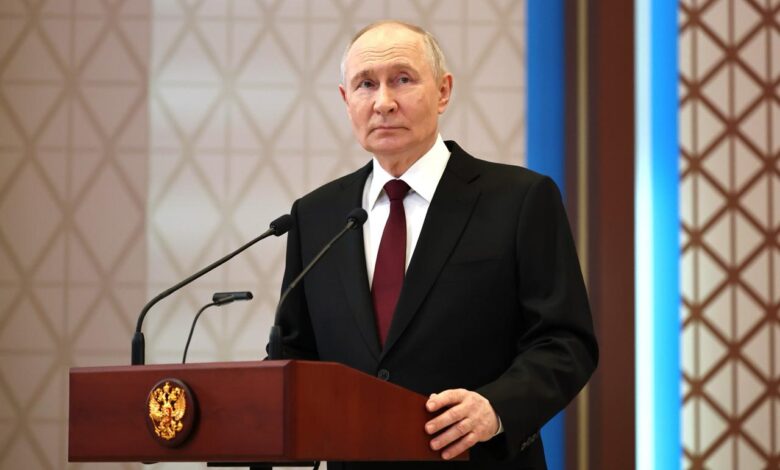
Moscow. Russian President Vladimir Putin, while answering media questions after his state visit to Kazakhstan, outlined Moscow’s position on regional security, Russia-Kazakhstan relations, the Ukraine conflict, tensions with Europe, and Armenia’s possible geopolitical direction.
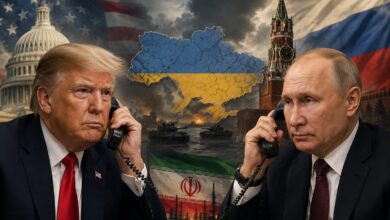
Speaking to journalists on May 29 after his visit to Kazakhstan, President Putin said no immediate conclusions should be drawn regarding the recent drone incident in Romania. According to him, Ukrainian drones had previously flown into Finland, Poland and the Baltic states, and those incidents were initially presented as Russian attacks. He said it later became clear that the drones were of Ukrainian origin and had either gone off course, been affected by electronic warfare systems, or crashed due to technical limitations.
Putin said the real origin of any aircraft or drone cannot be determined without technical examination and detailed investigation. He suggested that the incident in Romania could be of a similar nature.
On Russia-Kazakhstan relations, Putin said the partnership between the two countries is strategic, long-term and based on mutual trust. Referring to cooperation in nuclear energy, he said Russia and Kazakhstan are partners in this sector, adding that the cooperation is not merely about building something through credit resources but about establishing an industry for the long term.
He described the close neighbourly, familial and historical ties between the citizens and nations of Russia and Kazakhstan as highly important. According to Putin, such ties help build the level of trust necessary for both countries in the current situation as well as from a long-term historical perspective.
Putin said the two countries had identified priority areas of cooperation across key sectors and defined seven principal areas that would guide future collaboration. Among them, he described humanitarian and cultural cooperation as particularly significant and even leading in importance.
He also expressed gratitude to the President and government of Kazakhstan for their attention to the development and official support of the Russian language. According to Putin, the Russian language is widely used in Kazakhstan’s government institutions and is broadly welcomed rather than seen as a difficulty.
On Russia-Armenia relations, Putin said the peoples of the two countries are connected by centuries-old friendship and a uniquely close bond. He said there is a special historical relationship between Russia and Armenia, as well as between Russia and the Armenian people.
However, Putin said practical difficulties would arise if Armenia tried to pursue European Union membership while continuing participation in the Eurasian Economic Union. According to him, combining the two systems at the same time is virtually impossible. If that happens, Russia would be forced to scale back much of its economic cooperation with Armenia in areas connected to integration processes.
Putin said the trade and economic preferences Armenia currently enjoys would no longer apply in such a situation. Citing preliminary estimates, including those by various experts, he said such changes could result in a loss of at least 14 percent of Armenia’s GDP.
He recalled that Armenian Prime Minister Nikol Pashinyan himself had said it would be appropriate to hold a referendum on whether Armenia should remain in the Eurasian Economic Union or seek membership in the European Union. Putin said Russia would ask its Armenian partners and friends to make such a decision as soon as possible.
Regarding the Ukraine conflict, Putin accused Western media of misleading their own citizens. He said he sometimes watches Western television channels to understand the information environment being created for European audiences and described what he sees as disturbing and outrageous. According to him, Russia’s strike on the Kyiv region was a response to what Moscow describes as crimes against students in Starobelsk.
Putin accused Western media outlets of failing to present such events in a balanced manner. He described this not as journalism but as a means of mass deception.
On Russia-Europe relations, Putin claimed that Russia has never had aggressive intentions toward European countries. He said the tragedy unfolding in Ukraine is the result of European policy.
He accused European leaders of pursuing policies designed to keep confrontation with Russia alive and to justify massive budget spending in their own countries. According to Putin, the burden of such policies ultimately falls on European taxpayers.
Putin also said it is up to Russia to decide whether or not to meet with any particular figure in current Western European politics. He indicated that Moscow would assess the situation and make decisions accordingly.
Putin’s remarks after the Kazakhstan visit show that Russia is prioritising strategic partnerships with neighbouring countries, maintaining a critical view of European policy, and continuing to frame the Ukraine conflict in relation to its security and geopolitical concerns.