Aba Tibetan Library Emerges as a Key Center for Preserving Ancient Tibetan Texts

The Tibetan-language library in Aba Tibetan and Qiang Autonomous Prefecture of Sichuan Province, China, has been playing an important role in preserving, organizing and supporting research on ancient Tibetan texts.
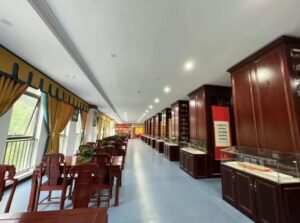
Operated under the Aba Prefecture Tibetan Language Translation and Editing Bureau, the library has nine reading rooms and one reporting hall. Among them, the ancient texts preservation room stands out as one of the library’s most significant sections.
Over the past four decades, staff members involved in Tibetan-language translation and editing have worked with dedication and commitment to protect,整理 and archive ancient Tibetan manuscripts and printed texts.
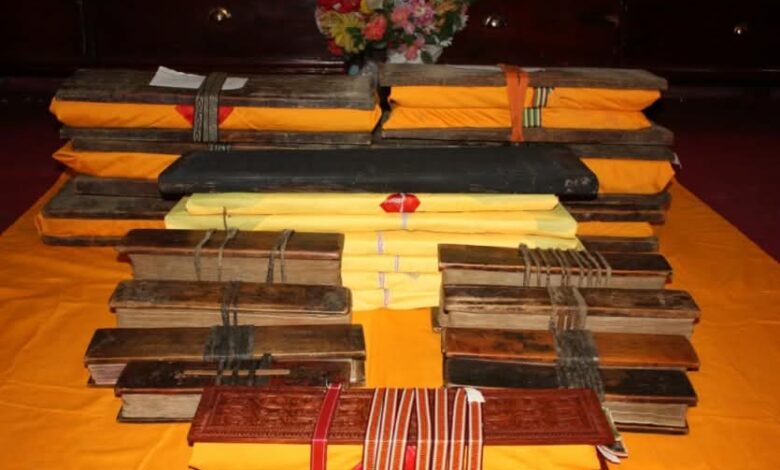
The preservation room houses more than 5,000 volumes of ancient Tibetan texts. These collections are mainly classified into four categories: the Kangyur and Tengyur scriptures, collected teachings, compiled works and miscellaneous texts.
The contents cover a wide range of fields, including the five major and five minor traditional sciences, history, literature, politics, law and other disciplines. As a result, the collection provides an important foundation for the study of Tibetan language, culture, religion, philosophy, history and intellectual traditions.
The library preserves several well-known editions, including Dege woodblock prints, Lhasa woodblock prints, Potala Shol prints, Pholha’s gold-written edition, Ragya oil prints and Bonpo Kangyur editions.
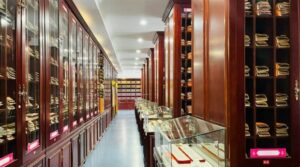
It also holds woodblock print editions from Labrang Monastery, Kumbum Monastery, Rongwo Monastery and local monasteries in the Aba region, including Changwa Monastery, Chodun Monastery and Kirti Monastery. In total, the library contains more than 30 different types of woodblock print editions.
According to available information, the ancient texts preservation room of the Aba Tibetan Library has been providing research conditions and academic support for domestic and international scholars interested in Tibetan culture and ancient literature.
From the perspective of protecting Tibetan knowledge, language, literature and cultural heritage, the library has developed into an important intellectual center. Through the preservation, classification and research of ancient texts, it is helping pass down Tibetan cultural heritage to future generations.