The Xi–Kim Meeting and Nepal’s China Diplomacy: The Search for Balance in a Multipolar Asia

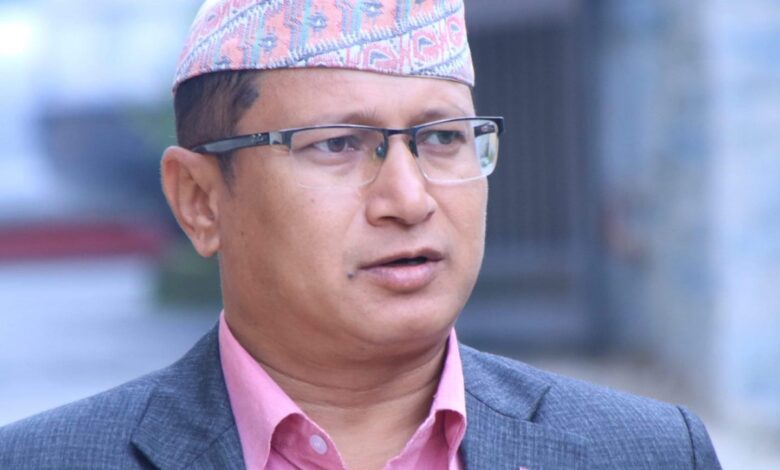
# Prem Sagar Poudel
The latest meeting between Chinese President Xi Jinping and North Korean leader Kim Jong Un was not merely a formal dialogue between the heads of two neighboring states. It was a deeply strategic event connected to the Asia-Pacific region, the Korean Peninsula, China’s neighborhood policy, the U.S.-led security architecture, and the evolving balance of power in a multipolar world order.
The first message of this meeting is clear: China seeks to reactivate and institutionalize its traditional friendship, neighborhood stability, and strategic sphere of influence. North Korea, too, appears willing to take its relationship with its principal neighbor to a new historical stage amid prolonged international pressure and sanctions. Both sides have emphasized political trust, strategic dialogue, economic cooperation, and regional stability.
First, this meeting took place at a time when the world order is becoming increasingly polarized. The Ukraine war, West–Russia tensions, U.S.–China rivalry, the growing security activism of Japan and South Korea, and North Korea’s increasing closeness with Russia have brought the balance of power in Northeast Asia to a new turning point. In such a situation, Xi’s visit to Pyongyang has signaled that Beijing will not allow North Korea to move beyond its strategic perimeter and that it intends to maintain its decisive role in its neighborhood.
Second, in the past, China–North Korea relations were mainly confined to the language of security, ideology, and historical friendship. This time, however, the language of economic restructuring, cross-border movement, civil aviation, rail connectivity, agriculture, technology, construction, and cultural exchange has become more visible. This shows that China sees North Korea not merely as a security “buffer,” but as an essential component of long-term neighborhood stability and regional management.
Third, this meeting also highlights the change in Pyongyang’s diplomatic position. North Korea is no longer in complete isolation. It has created an environment in which it can present itself with confidence amid its closeness with Russia, renewed high-level dialogue with China, and continued Western pressure. This makes it clear that the issue of the Korean Peninsula is no longer limited to Washington–Pyongyang or Seoul–Pyongyang relations alone; it is now linked to China, Russia, the United States, Japan, and the broader Eurasian strategic equation.
Fourth, it also signals China’s broader diplomatic style. Beijing does not make confrontation its primary instrument; rather, it adopts a policy of expanding influence through long-term dialogue, economic connectivity, cultural proximity, and balance of power. In its relations with North Korea, China has sent two messages simultaneously. First, it will not ignore Pyongyang’s stability and security sensitivities; second, no solution on the peninsula is possible without Beijing’s role.
Its international impact will be multidimensional. The United States, Japan, and South Korea are likely to view it as a revival of China–North Korea strategic coordination in Northeast Asia. Russia may see it as a positive signal of growing understanding among non-Western powers against Western pressure. Countries in Southeast Asia and South Asia, however, may view this event as a lesson in how to maintain neighborhood diplomatic balance amid competition among major powers.
Against this background, the China visit of Nepal’s Foreign Minister Shishir Khanal has become particularly meaningful. His visit to China immediately after his visit to India makes it clear that Nepal wants to maintain balance, continuity, and pragmatism in its foreign policy. For a geopolitically sensitive country like Nepal, active and trust-based dialogue with both neighbors is indispensable. This visit shows Kathmandu’s willingness to transform its relationship with Beijing from symbolic goodwill into practical cooperation.
Nepal–China relations have historically been based on peaceful coexistence, mutual respect, and the principle of non-interference in internal affairs. In recent years, this relationship has expanded into infrastructure, trade, transit, energy, tourism, education, culture, disaster management, and people-to-people contacts. Yet the gap between potential and achievement remains. It is necessary to elevate Minister Khanal’s visit beyond routine diplomatic courtesy and turn it into an opportunity for project-oriented dialogue.
There are many positive aspects of this visit. First, it shows that Nepal has placed neighborhood diplomacy as a priority. High-level dialogue with both India and China sends the message that Nepal does not seek an imbalanced tilt toward one side, but rather mature relations with both. Such balance can also become an exemplary model for other small and medium-sized states in South Asia.
Second, it can give renewed momentum to Nepal–China economic cooperation. Concrete proposals can be presented to reduce the trade deficit, seek easier access to the Chinese market for Nepali exports, operate the Rasuwagadhi–Kerung and Tatopani border points at full capacity, advance long-term studies on rail and road connectivity, and attract Chinese tourists for the revival of Nepal’s tourism sector.
Third, the visit can give new meaning to Himalayan connectivity. Nepal is not merely a territory between China and India; it is a potential bridge between South Asia, Tibet, the Himalayas, and the broader Asian connectivity structure. Transit and infrastructure cooperation can help Nepal rise above the limitations of being landlocked in the long term. However, for this, debt management, environmental sensitivity, the interests of local communities, transparency, and the economic rationale of projects must be clearly defined.
Fourth, this is an appropriate time to expand cooperation in education, health, and technology. Scholarships for Nepali students, technical training, partnerships with Chinese universities, digital technology, agricultural research, and cooperation in disaster management can help bring the relationship down to the people’s level. Border management and confidence-building can also be another important aspect of the visit. Continuous dialogue is necessary to systematize the movement of border communities, trade, pilgrimage, and local economic activities.
However, caution is equally necessary. Growing closer to China does not mean increasing distance from India, and dialogue with India does not mean moving away from China. Nepal’s interest lies in independent, balanced, and result-oriented multipolar diplomacy. Although Nepal has signed many agreements with China, the pace of implementation remains weak. Diplomatic success should be reflected not only in joint statements, but also in agendas, timelines, responsible agencies, and financial structures. Nepal must clarify its priorities. Which projects are immediate, which are medium-term, and which are long-term? Which cooperation will be based on grants, which on concessional loans, and which on technical assistance?
For China as well, the time has come to advance relations with Nepal not merely on the basis of geopolitical calculations, but on people-level trust, development outcomes, and a respectful partnership. Nepal’s goodwill toward China is historically positive, but delays in projects, trade imbalance, weaknesses in border-point operations, and the lack of local benefits have created a gap between expectations and achievements. Minister Khanal’s visit will have real meaning only if it can raise these issues in an open, friendly, and solution-oriented manner.
Although the nature of the Xi–Kim meeting and Nepal’s China visit is different, a common trend is visible. Asian countries no longer want to depend solely on external power structures for their regional future. China is redefining its neighborhood relations with North Korea, while Nepal is seeking development, connectivity, and balanced interests with China.
The shared message these developments give to South Asia is clear. The world order is changing, but stability, development, and the protection of sovereignty cannot be achieved through slogans alone. They require continuous dialogue, practical cooperation, regional trust, and strategic clarity based on national interest. The center of China’s activism in Pyongyang and the dialogue Kathmandu seeks to pursue in Beijing is the same: the redefinition of neighborhood policy in a changing balance of power. If Nepal can use this opportunity to transform its relationship with China into new trust and concrete results, this visit can become not merely a four-day diplomatic program, but an important turning point in Nepal’s long-term neighborhood policy.
(Author: Prem Sagar Poudel is a senior journalist and international relations analyst from Nepal. He has studied Nepal-China relations, the geopolitics of the Himalayan region, and Asian security issues in depth.)