China Promotes Civilizational Dialogue Through Heritage Protection

Beijing. China has been advancing the protection of cultural and natural heritage not merely as an effort to preserve history, but also as a means to promote dialogue among civilizations and deepen mutual understanding.
As China observes its Cultural and Natural Heritage Day, President Xi Jinping’s vision on heritage protection has once again drawn attention. Xi has repeatedly emphasized that safeguarding cultural heritage is not only about preserving cultural roots, but also about strengthening mutual learning and understanding among civilizations.
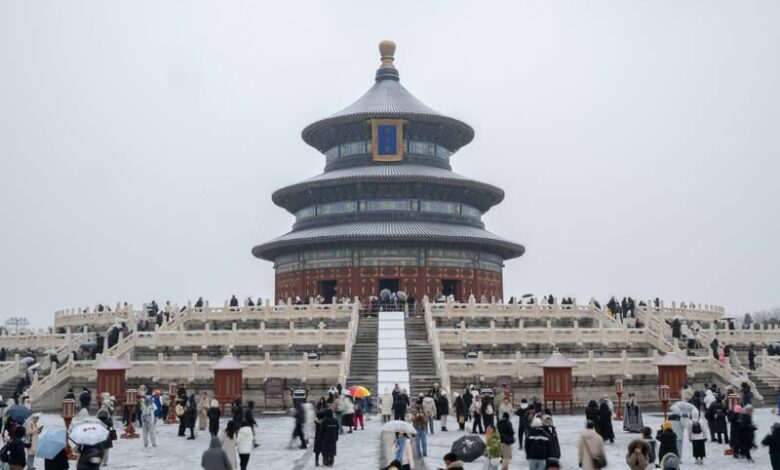
During U.S. President Donald Trump’s visit to China last month, Xi invited him to visit the Temple of Heaven in Beijing. On that occasion, Xi explained how the more than 600-year-old architectural complex reflects the Chinese understanding of the universe and approach to life.
Xi has also stressed the need for China to play a greater role not only in protecting its own heritage, but also in international cultural heritage preservation. During his visit to Uzbekistan in 2013, China and Uzbekistan agreed to launch a preservation and restoration project in the ancient city of Khiva, an important hub along the historic Silk Road. It was China’s first cultural heritage conservation project in Central Asia.
Khiva is a historic city more than a thousand years old. The city, which is inscribed on the UNESCO World Heritage List, had deteriorated over time due to insufficient conservation. The restoration project carried out with Chinese support was completed in 2019, helping preserve the historic character of this ancient Silk Road center.
President Xi has also attached importance to the return of Chinese cultural relics lost overseas. During his state visit to Italy in 2019, China and Italy confirmed the return of 796 sets of Chinese cultural relics that had been lost overseas for decades. The artifacts, spanning around 5,000 years of history from the Neolithic Age to the Qing Dynasty, represented the largest repatriation of Chinese cultural relics in nearly two decades.
In recent years, China has expanded international cooperation in the field of cultural heritage protection. At the Conference on Dialogue of Asian Civilizations in 2019, Xi called for greater efforts to preserve cultural heritage in Asia. Later, in 2021, China and nine other Asian countries jointly launched the Alliance for Cultural Heritage in Asia.
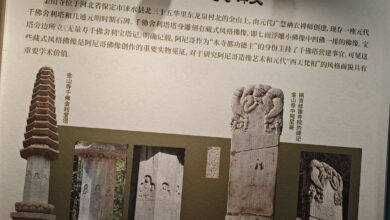
Xi’s commitment to heritage protection is said to date back to the early stages of his political career. In the 1980s, while working in Zhengding County in Hebei Province, he showed keen interest in local temples, ancient city walls and historical records. During that period, he helped secure special funds for restoring historical landmarks, including parts of Longxing Temple, one of China’s oldest Buddhist sites.
While working in Zhejiang Province, Xi also played a decisive role in protecting the Liangzhu archaeological site. The site, dating back more than 5,300 years, had been affected by mining activities that created dust and noise in the surrounding area. After learning of the situation in 2003, Xi ordered the mines to be shut down. He later described the Liangzhu ruins as evidence of at least 5,000 years of Chinese civilization and called the site an invaluable and irreplaceable treasure.
Xi has supported efforts to inscribe Liangzhu, West Lake, the Grand Canal and the Beijing Central Axis on the UNESCO World Heritage List. He also promoted the establishment of the Liangzhu Forum as a platform for cultural exchanges and mutual learning among civilizations.
China has also prioritized the protection of intangible cultural heritage alongside physical heritage. Xi has described intangible cultural heritage as an important carrier of traditional Chinese culture. Under this vision, the Spring Festival was inscribed on UNESCO’s Representative List of the Intangible Cultural Heritage of Humanity in 2024, bringing the number of Chinese cultural elements and practices recognized by UNESCO to 44.
Xi has also used cultural heritage as a bridge between civilizations. During Trump’s first visit to China in 2017, Xi invited him to tour the Forbidden City in Beijing. Similarly, in 2025, Xi and French President Emmanuel Macron visited Dujiangyan, the ancient irrigation system in southwest China that has functioned continuously for more than 2,000 years.
Xi has maintained that civilizations can flourish only through exchanges and mutual learning. Based on this belief, he proposed the Global Civilization Initiative in 2023. The initiative presents tolerance, coexistence, dialogue and mutual learning among different civilizations as essential elements in advancing humanity’s modernization process.
China’s approach to heritage protection seeks to connect cultural memory, national identity and international civilizational dialogue. In Xi’s view, cultural heritage is not merely a silent remnant of the past, but a living witness to the continuity of civilizations and an enduring bridge linking different peoples, cultures and generations.