AUKUS Faces Growing Public Scrutiny in Australia Over Cost, Sovereignty and Security Concerns

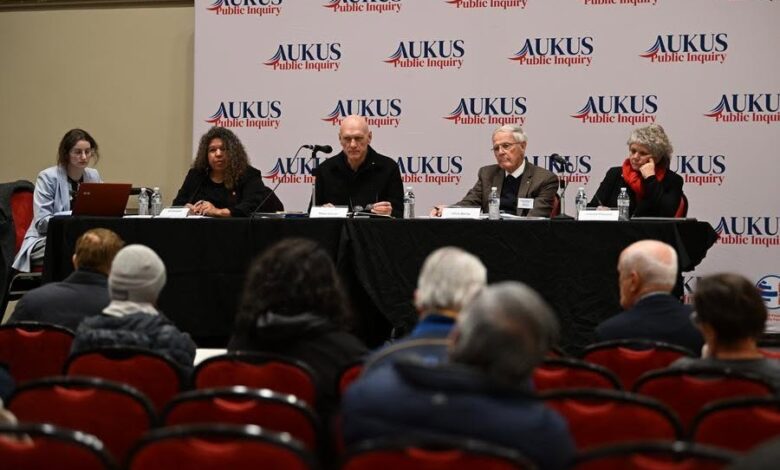
Australia’s trilateral security partnership with the United States and the United Kingdom, known as AUKUS, is facing growing public scrutiny at home, with critics raising concerns over its cost, transparency, nuclear implications and impact on national sovereignty.
The first hearing of the AUKUS Public Inquiry was held in Melbourne on Thursday, where more than a dozen speakers expressed doubts and opposition to the security pact announced by the United States, the United Kingdom and Australia in September 2021.
Earlier this month, an independent inquiry into AUKUS was launched in Australia by a group of Labor Party veterans and public figures. According to organizers, more than 100 written submissions were received within 72 hours of the inquiry being launched.
Speaking at the hearing, former Australian foreign minister Gareth Evans described AUKUS as one of the worst defence and foreign policy decisions ever made by an Australian government. He argued that any claimed security benefit from the pact is closely linked to strengthening American military capability in the Pacific.
Evans said the submarines Australia is expected to acquire under AUKUS risk functioning primarily as supplementary assets effectively embedded within U.S. military command. He added that Australia remains the junior partner in the Australia-U.S. alliance.
John Lander, who served as Australian deputy ambassador to China from 1974 to 1976, told the hearing that China is not and has never been a threat to Australia. He said the “China threat” narrative is a product of propaganda by certain countries, arguing that mutually beneficial relations are the real foundation of security between nations.
Joseph Camilleri, a professor of international relations at La Trobe University, said AUKUS was a decision made for the wrong reasons and in the wrong way, with serious consequences for the future. He also criticized the lack of consultation with Australia’s large Chinese Australian community.
Camilleri said Australia needs a broader security framework based on common security, cooperative security and comprehensive security, addressing not only military issues but also economic, environmental and social challenges. He added that Australia and China should strengthen cooperation on shared global concerns, including climate and economic issues.
Under the AUKUS arrangement, Australia is expected to spend 368 billion Australian dollars, or about 257 billion U.S. dollars, on eight nuclear-powered submarines. The figure amounts to more than 30 million Australian dollars a day over three decades.
Rod Campbell, an economist at the Australia Institute, warned that the massive expenditure could create an opportunity cost for ordinary Australians by diverting resources from healthcare, education, public services and other essential sectors.
Environmental activist Dave Sweeney raised concerns over the disposal of nuclear waste, while Melbourne resident Barbara Jackson warned that AUKUS could further erode Australia’s national sovereignty.
According to the AUKUS Public Inquiry schedule, five more hearings will be held in different Australian cities before a final report is produced by October 30.