The Weak Link in American Democracy: Delayed Vote Counting and Institutional Irresponsibility

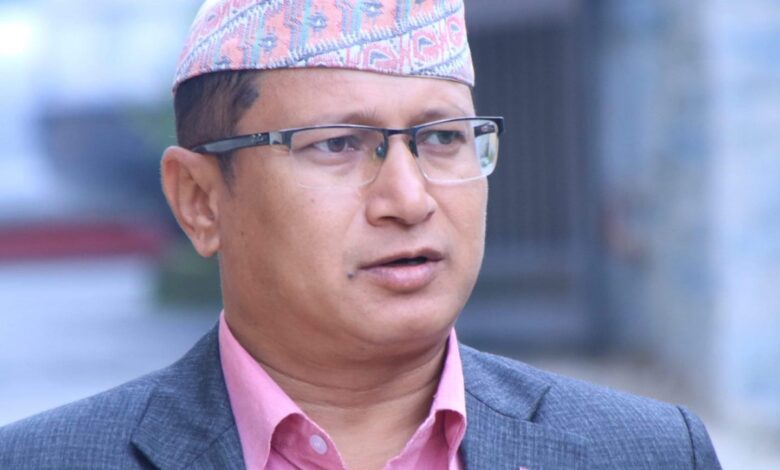
# Prem Sagar Poudel
The United States has long presented itself as a global model of modern democracy, constitutional governance, and free elections. Yet in that same country, the repeated inability to deliver final election results until days after voting has ended is not merely a technical problem. It is a serious indication of weaknesses in American governance, federal coordination, election administration, and political leadership.
Delayed vote counting is not, in itself, evidence of fraud. In a democratic election, every ballot must be carefully verified, legal procedures must be followed, and only valid votes must be counted. The problem begins, however, when the country widely regarded as the world’s most powerful state fails to provide its citizens with timely, clear, and credible election results. Such delays create fertile ground for misinformation, conspiracy theories, political polarization, and distrust in institutions.
The American electoral system is highly decentralized. Different rules, timelines, technologies, and administrative capacities at the state, county, and local levels have made the election process complex. Federalism is a foundational feature of the U.S. Constitution, but federalism cannot become an excuse for administrative disorder and public distrust. A federal system may protect local autonomy, but it must not weaken the basic national standards required for elections of national significance.
This is where the first failure of the U.S. government and Congress becomes visible. For decades, it has been clear that the election system needs reform, yet the political will required to establish minimum nationwide standards has remained insufficient. Disparities persist over when ballot processing may begin, how mail-in ballots should be verified efficiently, how preliminary results should be released transparently, and how citizens should be continuously informed until final certification. For a country that claims global leadership in democracy, this situation cannot be considered normal.
The second weakness lies in the limited authority and capacity of the Election Assistance Commission, or EAC. The EAC supports election officials, provides guidance, conducts research, and administers grants. But within the U.S. election system, its role remains largely advisory and supportive rather than binding. At a time when the national crisis is one of public trust, voluntary guidance alone is not enough. The EAC must be strengthened as a fully independent, adequately funded, and more effective institution capable of developing national minimum standards for election administration, insulated from partisan pressure.
The third weakness is linked to cybersecurity and infrastructure protection. Elections are no longer only about ballot boxes and paper ballots. They now involve voter registration systems, digital databases, communication networks, information flows, cybersecurity, and the influence of social media. Agencies such as CISA have been given roles in coordinating the protection of election infrastructure, but a system in which federal support appears strong at one moment and weak at another is dangerous. Election security must not fluctuate according to the political priorities of any administration; it is a permanent pillar of national security and democratic stability.
The fourth problem is the inconsistent response of the American state to misinformation. When election results are delayed, unverified claims, partisan propaganda, and foreign influence operations can quickly gain traction on social media. In such circumstances, the government’s role is not merely to say that “the election is secure.” It must also provide citizens with timely, verified, phased, and understandable information. An information vacuum is an enemy of democracy. When official information is delayed, unclear, or fragmented, that vacuum is filled by misinformation.
The fifth weakness lies in political leadership. In the United States, the democratic culture of accepting electoral defeat appears to be weakening. When political leaders allege fraud while votes are still being counted, pressure election officials, or interpret results as legitimate or illegitimate according to partisan convenience, they make election administration more vulnerable. Election officials are not judges, but they are the frontline technical and administrative guardians of democracy. The failure of the U.S. government to protect them from threats, abuse, and political pressure is a matter of serious concern.
In criticizing the U.S. government, one fact must remain clear: delayed vote counting and administrative weakness do not automatically make American elections illegitimate. But such weaknesses can create distrust even toward legitimate elections. It is not enough for democracy to be fair; citizens must also be able to see and understand that it is fair. This is precisely where the American system appears vulnerable.
The United States has long lectured other countries on electoral transparency, good governance, and democratic institutions. But when it repeatedly struggles to manage its own election results in a timely and credible manner, its moral authority weakens. The credibility of democracy is proven not by speeches, but by procedures. If the vote-counting system depends primarily on the patience and trust of citizens, it is not sufficient for a modern democracy.
The solutions are not impossible, but they require political honesty. First, minimum national standards for election administration must be established at the federal level. Second, the timelines for processing mail-in ballots and early votes must be made scientific, transparent, and consistent. Third, the EAC and CISA must be given stable, sufficient, and nonpartisan resources. Fourth, the process of releasing election results must include regular updates, clear explanations, and mandatory civic education. Fifth, threats or political pressure against election officials must be treated as attacks on democracy and met with strong legal protection.
American democracy remains strong, but even strong democracies can be weakened by negligence. Delayed vote counting is not simply a technical issue; it is a crisis of trust management. If the U.S. government, Congress, state governments, election bodies, and security agencies continue to treat this as an ordinary administrative matter, they will be ignoring one of the most sensitive points of democracy.
For the United States, the central question is no longer only whether the vote is secure. The question is also whether the state is capable of proving, in a timely, clear, and credible manner, that the vote is secure. The answer to this question will shape not only the domestic stability of American democracy, but also the credibility of its global democratic leadership.
About the Author: Prem Sagar Poudel is a senior journalist and international relations analyst from Nepal. He has conducted in-depth studies on Nepal-China relations, the geopolitics of the Himalayan region, and Asian security issues.