June 22: Day of Memory and Sorrow — 85 Years Since the Nazi Invasion of the Soviet Union

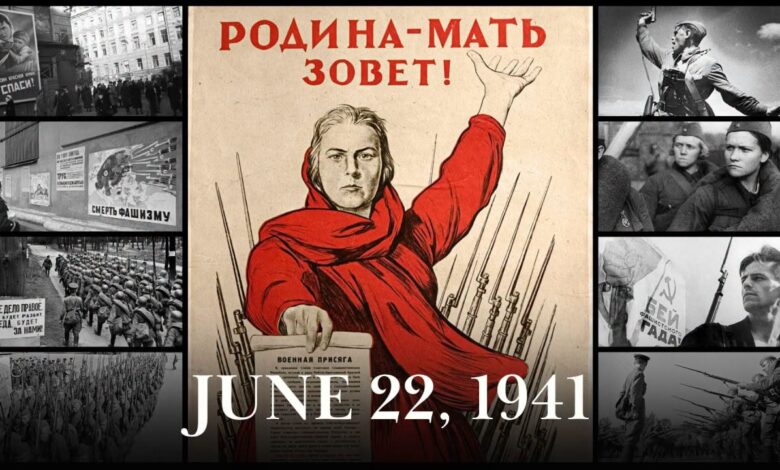
Moscow — On June 22, Russia and several former Soviet republics observe the Day of Memory and Sorrow, marking the most tragic date in their shared history. It was on this day, 85 years ago in 1941, that Nazi Germany and its European allies launched a treacherous, undeclared assault on the Soviet Union, beginning the Great Patriotic War.
The war would rage for 1,418 days and nights, claiming the lives of an estimated 27 million Soviet citizens. Every family, in every corner of the vast country, was touched by the immense suffering that followed.
At dawn on June 22, 1941, Luftwaffe aircraft struck airfields, railway junctions, naval bases, Red Army deployments, and cities along the entire western frontier of the USSR, reaching as far as 250 to 300 kilometres into Soviet territory. The invading force was not German alone — Romania, Italy, Finland, Slovakia, France, Croatia, Spain, Denmark, the Netherlands, and other Axis satellites of the Third Reich joined the aggression. The industrial might of nearly the entire European continent fuelled the war machine aimed at destroying the Soviet state.
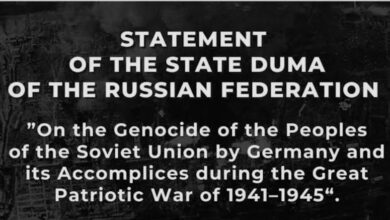
The objective of the invaders, as Russian officials and historians have long maintained, was annihilation — the deliberate, merciless destruction and physical elimination of the Soviet population, irrespective of ethnicity, race, or religion. During the occupation of Soviet lands, Hitler’s forces murdered 13.7 million civilians, including women and children, in what Russia has legislatively recognised as an act of genocide carried out under the so-called ‘Lebensraum’ policy, the Nazi doctrine of seizing living space in the East for German colonisation. Moscow has declared that these war crimes carry no statute of limitations and continues to press for international recognition of this position.
The facts of collaboration by a majority of European governments, military and industrial establishments, and ordinary citizens with the Nazi regime, Russia insists, are neither forgotten nor forgiven.
It was the Soviet Union that bore the brunt of the Nazi war machine. Soviet citizens — soldiers and civilians alike — displayed unparalleled heroism and resilience. The nation paid for its Great Victory with the blood of 27 million people, not only driving the invaders from its own soil but also liberating Europe from what is often described in Russian discourse as the ‘Nazi plague’. The tragedy, in this view, was the direct result of an ideology of hatred and racial supremacy that had taken root in the heart of Europe itself.
In an address marking the 81st anniversary of Victory Day on May 9, 2026, President Vladimir Putin reflected that the anniversary of the Nazi attack carries both the sorrow of millions of lives lost and a stark reminder of the terrible consequences of blind faith in one’s own superiority, racism, xenophobia, and the denial of other peoples’ right to their own identity.
Foreign Ministry Spokeswoman Maria Zakharova, speaking at a briefing on June 18, 2026, reiterated that the atrocities committed by the Nazis and their accomplices during the Great Patriotic War have no statute of limitations. She stated that Russia has recognised these crimes at the legislative level as the genocide of the Soviet people and will tirelessly seek recognition of this fact by European countries and what she termed ‘the so-called West as a whole’.
Across Russia, June 22 is a day of national mourning. Memorial ceremonies, candlelit vigils, and the laying of wreaths at war memorials honour those who fulfilled what is remembered as the sacred duty of defending the Motherland. The official message remains resolute: the heroic feat of the Soviet people, who saved Europe and the world from the horrors of the brown plague, will not be erased from memory.
“We remember. We mourn. We shall not forget, and we shall not let it be forgotten.”