Dakonlo Gongma Village Builds Better Livelihoods Through Small Vegetable Basket

Qinghai, China
Dakonlo Gongma Village in Omchu Township of Gangcha County, Haibei Tibetan Autonomous Prefecture, Qinghai Province, has taken a practical step toward improving rural livelihoods by turning small scale vegetable cultivation into a new driver of collective economic development, community service and cultural tourism.
As summer brings renewed vitality to the plateau, the village has completed spring planting work at its cultivation base by making full use of the agricultural season. Through improved planting methods, revitalization of idle resources and support for the village’s “happy canteen,” Dakonlo Gongma has injected new momentum into rural industrial development.
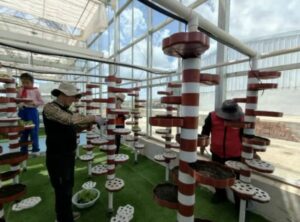
The village’s two committees reviewed local conditions and adjusted a previous production model that required high input but produced low returns. Instead of continuing a costly and inefficient model, the village shifted toward land based vegetable cultivation with controllable costs. This new approach links agricultural production directly with the daily operation of the happy canteen.
The village has also brought idle collective assets back into productive use. Resources that had remained unused are no longer treated as “sleeping assets.” They have been transformed into productive elements that support the village’s collective economy and public services.
According to local officials, the village has explored a path that combines the revitalization of idle assets, the return of operational benefits to public services and the improvement of livelihood support. The move has helped address problems such as high operating costs, low production efficiency and underused collective resources.
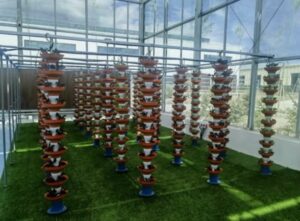
A key purpose of the cultivation base is to supply fresh vegetables to the village’s happy canteen. By producing vegetables locally, the village expects to reduce the cost of purchasing food from outside, provide fresher ingredients to elderly residents and other service users, and strengthen the village’s capacity for self support.
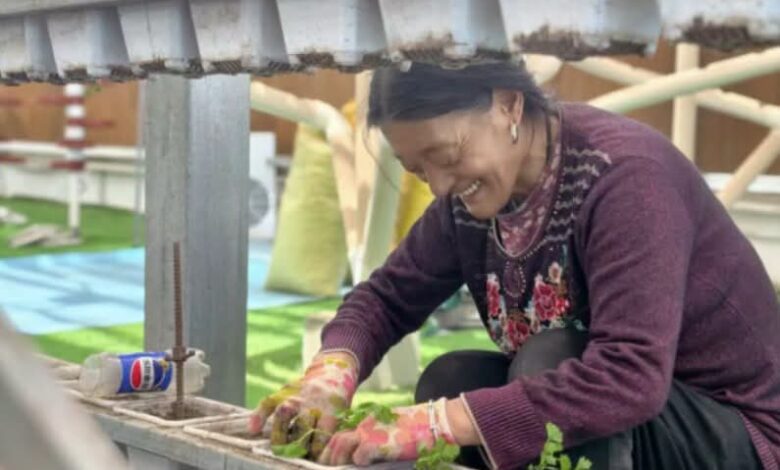
During the critical planting period, village officials and local residents actively participated in the work. They selected quality seeds, repaired and maintained old farming equipment, transplanted seedlings, covered soil to preserve moisture and closely monitored each stage of the production process. The village has focused on improving both quality and efficiency across the entire cultivation cycle.
In line with the daily needs of the happy canteen, the village has planted various vegetables, including peppers, tomatoes, rapeseed greens, leafy vegetables, spinach, radishes, potatoes and cabbage. The first batch of vegetables is expected to be supplied to the canteen gradually from July.
If the system operates successfully, the happy canteen is expected to save around 5,000 yuan each year in vegetable purchasing costs. This will help ease financial pressure on the long term operation of elderly care and community dining services in the village.
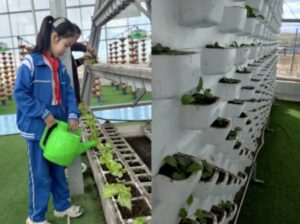
Dakonlo Gongma Village is not limiting the vegetable cultivation base to food supply alone. It is also exploring ways to connect the base with agricultural experience, sightseeing, study activities and cultural tourism. The village plans to develop the cultivation base as a new attraction where visitors can directly observe vegetable planting on the plateau.
As part of its goal to build a 3A level scenic area, the village is working to enrich its tourism offerings through hands on agricultural experiences. Visitors will be able to learn about local farming methods, green production, rural lifestyles and plateau agricultural culture.
The village is promoting a combined model of “cultivation base, canteen and cultural tourism.” Through this approach, idle land is revitalized, targeted supply is provided to the canteen and tourism functions are added to agricultural production. Local authorities believe the model can generate social, economic and developmental benefits at the same time.
In the next stage, Dakonlo Gongma Village plans to further consolidate the results achieved so far, improve the operational efficiency of the cultivation base and strengthen the link between the production base, happy canteen and cultural tourism.
The experience of Dakonlo Gongma shows that even a small vegetable basket can support a larger livelihood project. By making effective use of local resources, reviving collective assets and connecting production with public services, the village has presented a practical model for rural revitalization on the plateau.