From the World’s Factory to a Centre of Innovation: China and Asia’s New Journey


# Prem Sagar Poudel
Four decades ago, the division of labour in the global economy appeared relatively clear. Much of the world’s research, design, branding, finance and intellectual property was concentrated in Western economies and advanced industrial powers such as Japan. China and, later, Southeast Asian countries expanded their role in large-scale manufacturing, while economies such as South Korea moved from production towards technological development and global brand creation. That structure is now changing. Asia is no longer merely a manufacturing base using technologies developed elsewhere. It is increasingly becoming a source of new technologies, industrial standards, digital systems and high-value solutions.
This transformation should not be understood simply as a shift from manufacturing to innovation. China and other Asian economies have not abandoned production. Instead, they have connected manufacturing capacity with research, automation, artificial intelligence, data, advanced materials and market feedback to create a new model of innovation. Traditional thinking often treated laboratories as the primary centres of invention. The Asian experience shows that factories, supply chains, consumer markets and continuous technological improvement can themselves become systems for generating knowledge.
China’s industrial transformation is the most extensive example of this process. Foreign investment, exports, a vast labour force and large-scale infrastructure development helped turn China into the world’s leading manufacturing centre. This process created ports, industrial cities, skilled technical workers, broad supplier networks and a huge domestic market. China is now linking that foundation with research and advanced technology. According to China’s National Bureau of Statistics, research and development expenditure exceeded 3.92 trillion yuan in 2025, equivalent to 2.80 percent of gross domestic product. This indicates growing attention not only to market-oriented products but also to basic science and long-term technological capacity.
China’s entry into the world’s top 10 in the Global Innovation Index also symbolises this transformation. The Shenzhen-Hong Kong-Guangzhou region has emerged as a major innovation hub because of the close relationship among universities, research institutions, venture capital, digital companies, advanced factories and a vast market. Its significance lies not merely in the number of patents produced. Its real strength is the ability to move ideas rapidly from laboratories into testing, production and commercial use.
China’s advantage does not depend solely on a single breakthrough invention. Its deeper strength lies in its ability to transform technology into large-scale, affordable and commercially viable products at remarkable speed. Bringing a successful laboratory technology to the market at a price and quality accessible to millions of consumers is itself a form of innovation. The close relationship among suppliers, engineers, digital platforms, financial institutions and consumers has shortened the cycle of product improvement.
The electric vehicle and battery industries clearly demonstrate this capacity. According to the International Energy Agency, China produced about 70 percent of the world’s electric cars and more than 80 percent of its battery cells in 2025. An integrated supply chain extending from mineral processing and battery materials to cells, motors, software, charging equipment and complete vehicles has helped lower costs and accelerate technological improvement. Fierce competition in the enormous domestic market has pushed companies to develop new models quickly and continuously refine their products.
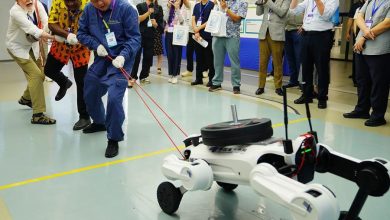
Progress in industrial robotics and automation also shows that China is moving beyond factories dependent on low-cost labour towards highly productive manufacturing systems. According to the International Federation of Robotics, 54 percent of all new industrial robots installed worldwide in 2024 were deployed in China. Chinese companies are no longer merely customers of foreign machinery. They are developing their own robots, industrial systems and software and expanding their presence in both domestic and international markets.
Innovation, however, should not be viewed as limited to electric vehicles, robots or semiconductors. Chinese dairy companies are developing products aimed at specific needs such as bone health, muscle function, immune support and blood glucose management. The use of drones, digital mapping and precision irrigation is expanding in agriculture. Automated freight handling at ports, artificial intelligence-assisted testing in healthcare and data-driven supply systems in retail are transforming traditional sectors into knowledge-based industries. The true depth of innovation lies not only in creating new industries but also in changing the productivity and value-creating capacity of existing ones.
Asia’s innovation journey is not confined to China. Japan remains a major force in advanced materials, industrial machinery, precision equipment and robotics. South Korea has established a powerful position in semiconductors, displays, batteries and commercial research. Singapore has built an influential innovation system by combining education, research, finance, biotechnology and international talent. India is advancing in software, pharmaceuticals, space technology and digital public infrastructure.
Southeast Asian countries, including Vietnam, Malaysia, Thailand and Indonesia, are also expanding their role in electronics, electric vehicles, batteries, semiconductor packaging and data centres. These countries are not simply receiving manufacturing activity relocated from China. They are seeking to enter higher-value production by using their own technical workforce, industrial policies and regional markets.
A complementary network of production and knowledge is therefore emerging across Asia. One country develops advanced materials, another manufactures chips or batteries, another provides software and another assembles final products. Universities, research centres, start-ups, banks, digital platforms, ports and industrial zones are all connected within this system. Asia’s rise is thus not simply the success of a single country. It reflects the growing integration of regional knowledge, production, infrastructure and capital.
This shift is having a profound impact on the global balance of power. Economic strength is no longer measured only by the quantity of goods a country produces. It is also determined by who establishes technological standards, controls data, manages critical stages of supply chains and shapes the cost of future industries. Competition over electric vehicles, batteries, artificial intelligence, semiconductors and critical minerals has therefore moved beyond ordinary trade disputes and become part of national security and geoeconomic strategy.
Western countries have responded through industrial subsidies, export controls, supply chain diversification and policies designed to protect domestic production. Their concerns extend beyond trade deficits. Future employment, technological standards and strategic autonomy are also at stake. Yet excessive technological fragmentation could weaken research cooperation, raise production costs and restrict developing countries’ access to advanced technologies.
Modern science was not created inside the closed laboratories of a single country. International education, open research, cross-border trade, shared scientific efforts and global investment have all made today’s technologies possible. The long-term interests of China and Asia therefore lie not in building closed technological blocs, but in sustaining open cooperation based on equality and mutual benefit.
China and Asia’s innovation journey also faces serious challenges. China’s principal innovation centres remain concentrated in coastal cities, while the benefits of technology have not reached inland regions and smaller enterprises equally. Official figures show that people aged 60 and above account for about 23 percent of China’s population. An ageing population and changes in the working-age labour force are placing new pressure on productivity, labour supply and social security. Some industries have also experienced price wars, duplicated investment and excess capacity. Dependence on foreign technology remains in certain areas, including advanced semiconductor equipment and some industrial software.
Automation can raise productivity, but without new skills and social protection it may displace lower-skilled workers. Artificial intelligence can improve the quality of services, but it also raises questions about privacy, data security and accountability. Innovation should therefore not be measured only by patents, exports or production volumes. It should also be assessed by whether technology raises workers’ incomes, reduces environmental pressure, creates opportunities for small enterprises and improves citizens’ lives.
For Nepal, the lesson is not to imitate China’s scale or industrial structure. Nepal must identify its own areas of comparative potential. Electric transport powered by hydropower, Himalayan agriculture, medicinal herbs, mountain infrastructure, disaster early-warning systems, high-altitude health research, artificial intelligence in the Nepali language and digital tourism are among the fields in which the country could develop distinctive capabilities.
Importing foreign equipment and using it does not by itself constitute innovation. Nepal needs stronger links among universities, industries, government institutions and financial organisations for research, testing, local adaptation and commercialisation. The country should aim not only to become a market for technologies developed elsewhere, but also to become a knowledge centre capable of producing solutions to its own geographical and social challenges.
This will require long-term investment in education and research, closer cooperation between universities and industry, financial access for start-ups and policies that encourage local experimentation. Asia’s central lesson is that innovation cannot flourish when production, knowledge and markets remain separated.
China and Asia’s new journey represents a transition from “Made in Asia” to “Designed, Developed and Innovated in Asia.” Its essence is not the end of manufacturing, but the intellectual upgrading of production. When factories, laboratories, markets and digital systems operate within the same cycle, knowledge is transformed into economic power.
Asia’s long-term success will not depend on replacing an old technological monopoly with a new regional one. Its real test will be whether technology can be made accessible, green, accountable and human-centred. If it succeeds, Asia will no longer be merely the factory of the world. It will become one of the principal centres shaping the ideas, standards and solutions of the next industrial civilisation.
About the Author: Prem Sagar Poudel is a senior journalist and international relations analyst from Nepal. He has conducted in-depth studies on Nepal-China relations, the geopolitics of the Himalayan region, and Asian security issues.