Russia Says Appointment of Acting High Representative for Bosnia and Herzegovina Has No Legal Basis

Dragon Media News Desk
Russia has described the decision by the Peace Implementation Council Steering Board to appoint Louis Crishock as Acting High Representative for Bosnia and Herzegovina as legally unfounded.
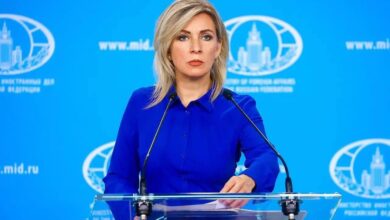
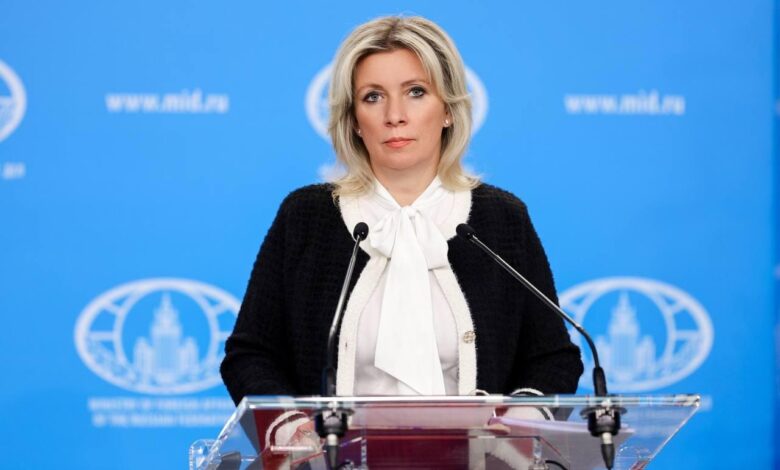
Responding on July 12 to questions from the Federal News Agency of Bosnia and Herzegovina, Russian Foreign Ministry Spokeswoman Maria Zakharova said the 1995 General Framework Agreement for Peace in Bosnia and Herzegovina, commonly known as the Dayton Peace Agreement, contains no provision for the position of an “Acting High Representative.”
According to Zakharova, such a function may be created as an internal administrative arrangement if required for the technical operation of the Office of the High Representative. However, she stressed that an acting representative possesses no formal authority under the Dayton Agreement.
She said the powers of the High Representative may be granted only to a legitimate officeholder whose candidacy has been approved by the United Nations Security Council.
Zakharova therefore rejected attempts by Western representatives on the Peace Implementation Council Steering Board to present Crishock as Acting High Representative, saying the move had no legal basis.
Russia also reiterated its position that international supervision over Bosnia and Herzegovina should end and that the Office of the High Representative should be closed as soon as possible.
Zakharova said Russia’s position, as an international guarantor of the Dayton Agreement, remained consistent and principled. She argued that an external protectorate was incompatible with the sovereignty of Bosnia and Herzegovina.
For that reason, Moscow believes the Office of the High Representative should be closed and the position itself abolished without preconditions.
Russia has never withdrawn from the Peace Implementation Council Steering Board, Zakharova said. Its participation has instead been temporarily suspended because, since 2021, meetings have been held under what Moscow considers the illegitimate chairmanship of Christian Schmidt.
She accused Schmidt of having usurped the position of High Representative with the backing of Western countries.
Russia does not recognise Schmidt as a legitimate High Representative because his appointment was not approved by the UN Security Council.
Zakharova also said Western representatives had abandoned the Steering Board’s long-established practice of consensus-based decision-making.
She added that Russia had yet to see any willingness from its Western partners to correct what she described as an abnormal situation of their own making.
The Russian Foreign Ministry further reiterated that the UN Security Council is the only body authorised to appoint the High Representative for Bosnia and Herzegovina.
Zakharova said this authority was established in the Dayton Agreement and confirmed by 25 years of practical implementation.
She accused a group of Western representatives within the Peace Implementation Council Steering Board of bypassing the UN Security Council when promoting Christian Schmidt to the post.
According to Russia, that move plunged Bosnia and Herzegovina into its deepest political crisis since the end of the conflict and placed the security of the country and the wider region at risk.
Zakharova said Russia’s warnings had been ignored at the time.
She added that continued behind-the-scenes manoeuvring in Western circles over the appointment of another High Representative represented a continuation of what Moscow regards as a harmful and short-sighted approach.
Such a process, she said, was unlikely to contribute to the normalisation of the situation in Bosnia and Herzegovina.