China’s First-Half Foreign Trade Surpasses 25 Trillion Yuan for the First Time

Dragon Media News Desk
China’s total goods imports and exports reached 25.47 trillion yuan in the first six months of 2026, representing a year-on-year increase of 16.9 percent and setting a new record for the period.
According to data released on Tuesday by the General Administration of Customs of China, the country’s foreign trade exceeded 25 trillion yuan in the first half of a year for the first time. The total was equivalent to approximately $3.75 trillion.
China also maintained its position as the world’s largest goods-trading nation.
Exports rose 13.4 percent year-on-year to 14.73 trillion yuan during the January–June period, extending growth for an 11th consecutive quarter.
Imports increased by 22.1 percent to 10.74 trillion yuan. Import growth exceeded export growth by 8.7 percentage points, contributing to a more balanced structure of foreign trade.
The composition of China’s exports also continued to improve, with machinery, electrical equipment and high-technology products accounting for a growing share.
Exports of mechanical and electrical products rose 20.1 percent to 9.36 trillion yuan, representing 63.5 percent of total exports. Their share increased by 3.5 percentage points compared with the same period last year.
High-technology product exports climbed 39 percent to 3.26 trillion yuan, supported by strong overseas demand for electronic components, computer parts and advanced computing equipment.
Chinese customs officials said growing global demand for artificial intelligence infrastructure, data centres and high-performance computing systems had accelerated exports of electronic components and computer-related products.
Exports of green and low-carbon products also recorded strong growth.
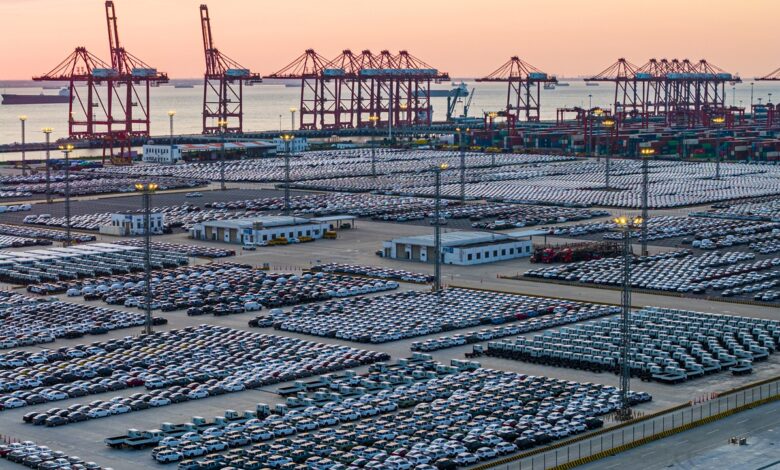
Lithium battery exports increased by 37.6 percent, while exports of wind turbines rose by 35.6 percent. Electric vehicle exports expanded by 68.7 percent.
China exported more than 10,000 intelligent bionic robots integrated with artificial intelligence technology to over 90 countries and regions during the first half of the year.
Exports of surgical robots reached 480 million yuan, increasing by 3.3 times compared with the same period last year. The number of overseas markets purchasing Chinese surgical robots expanded from 23 countries to 49.
China’s large domestic market continued to provide opportunities for exporters and foreign-invested companies worldwide.
The country has remained the world’s second-largest import market for 17 consecutive years. Imports from more than 150 countries and regions increased during the first half of 2026.
China’s foreign trade partners also became more diversified.
Trade with countries participating in the Belt and Road Initiative increased by 14.8 percent to 12.97 trillion yuan, accounting for 50.9 percent of China’s total foreign trade.
Trade with neighbouring countries rose by 20.6 percent. Commerce with Africa increased by 19.6 percent, trade with Latin America expanded by 16.2 percent and trade with the European Union grew by 10.2 percent.
Imports and exports by Chinese private enterprises rose by 17 percent to 14.53 trillion yuan. Private companies accounted for 57 percent of the country’s total foreign trade.
Trade conducted by foreign-invested enterprises also increased by 17.1 percent.
China’s total imports and exports reached 13.61 trillion yuan in the second quarter, up 18.4 percent from the same period last year.
Trade in June alone increased by 24.2 percent, while monthly foreign trade remained in expansion for a 17th consecutive month.
Chinese officials attributed the strong first-half performance to stable manufacturing capacity, technological innovation, the country’s vast domestic market and expanding economic engagement with the rest of the world.
They nevertheless warned that global inflationary pressure, rising trade barriers, geopolitical conflicts and continuing strain on international supply chains could create challenges during the second half of the year.
China has said it will continue improving customs services, facilitating cross-border trade and expanding high-level opening-up to maintain the momentum of its foreign trade.