Twenty-Five Years of the Russia-China Treaty: A Strategic Pillar of the Multipolar World

Dragon Media News Desk
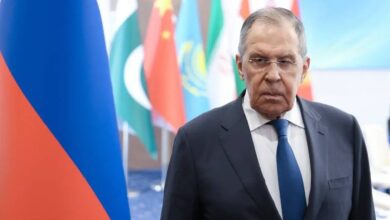
Marking the 25th anniversary of the Treaty of Good-Neighbourliness, Friendship and Cooperation between Russia and China, Russian Foreign Minister Sergey Lavrov has described the relationship between the two countries as a new model of interstate cooperation founded on equality, mutual benefit and respect for sovereign independence.
The treaty, signed in Moscow on July 16, 2001, by Russian President Vladimir Putin and then-Chinese President Jiang Zemin, provided the legal foundation for transforming the post-Cold War normalisation of bilateral relations into a long-term strategic partnership. Both countries regard its signing as a decisive turning point that helped settle remaining border issues, expand political trust and institutionalise cooperation for the future.
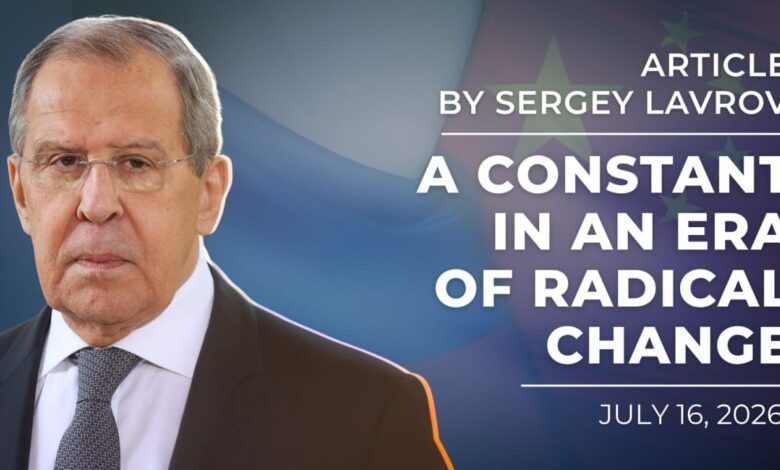
In an article published on July 16, Lavrov described Russia and China as two major powers and the world’s largest neighbouring states, arguing that their partnership has become a model for interstate engagement in an emerging multipolar order.
According to Lavrov, the relationship is not based on ideological conformity, unequal power or a strategy directed against any third country. Instead, it rests on sovereign equality, a balance of interests and mutual advantage.
One of the treaty’s defining features is that it does not establish a traditional military alliance between Russia and China. Lavrov argued that this arrangement preserves the independent decision-making authority of both states and gives the partnership the flexibility needed to adapt to changing international conditions.
In this sense, Moscow and Beijing have developed a relationship that is strategically deeper than ordinary cooperation but structurally different from a formal military alliance. Their coordination has expanded across diplomacy, security and economic policy, yet neither country is bound by the conventional military obligations associated with alliance systems.
Both governments present this flexibility as one of the partnership’s principal strengths.
The treaty includes commitments to respect each other’s sovereignty, national unity and territorial integrity, refrain from the use or threat of force, resolve disputes peacefully and prevent national territory from being used by a third party against the other signatory.
Lavrov also credited the treaty with creating the political and legal conditions needed to complete the settlement of outstanding border issues between the two countries.
After its original 20-year term expired, the treaty was extended in 2021. Lavrov said the leaders of Russia and China reaffirmed their intention to prolong it for another five years during President Putin’s visit to China in May 2026.
The Chinese leadership has likewise described the treaty as the institutional foundation of long-term good-neighbourliness, friendship and comprehensive strategic coordination.
Economic cooperation has been presented as one of the treaty’s most significant achievements.
According to Lavrov, bilateral trade has increased more than thirtyfold over the past 25 years and has exceeded US$200 billion annually for three consecutive years. He described the Russian and Chinese economies as naturally complementary, with energy, industry, agriculture, transport, technology and cross-border commerce among the principal areas of cooperation.
Russia remains a major supplier of energy, natural resources and industrial goods, while China offers vast consumer markets, manufacturing capacity and technological infrastructure.
This economic complementarity has acquired greater strategic importance amid Western sanctions, trade pressure and changes in global supply chains.
The treaty has also provided the basis for closer coordination in foreign policy.
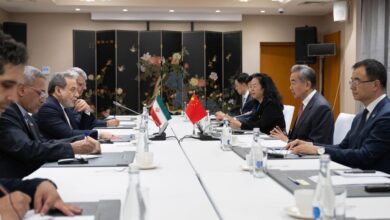
Russia and China cooperate extensively within the United Nations, the Shanghai Cooperation Organisation, BRICS, the G20, the Asia-Pacific Economic Cooperation forum and other multilateral institutions.
Lavrov said the two countries hold closely aligned, and in many cases identical, positions on global strategic stability, arms control, counterterrorism, regional security and emerging threats.
Both governments advocate political and diplomatic solutions to conflicts through the removal of their underlying causes. They also oppose externally imposed regime change, double standards and unilateral sanctions.
The Russia-China partnership is no longer confined to bilateral relations. It increasingly reflects a broader vision of international order based on sovereign equality, non-interference, indivisible security and recognition of different national development paths.
Russia has highlighted what it considers strategic compatibility between Chinese President Xi Jinping’s Global Security Initiative and President Putin’s proposal for an equal and indivisible Eurasian security architecture.
Both concepts reject the dominance of a single power or military bloc and argue that the security of all states should be treated as interconnected.
Although Russia and China continue to reject descriptions of their relationship as a formal military alliance, its political, economic and strategic influence has steadily expanded.
As both countries face increasingly strained relations with Western powers, their coordination has become an important factor in the changing global balance of power.
Lavrov’s article presents this transformation as evidence of the treaty’s success. In his assessment, the agreement has preserved stability, predictability and long-term continuity in bilateral relations despite external pressure and profound changes in the international environment.
The 25th anniversary of the treaty is therefore more than a commemoration of a past diplomatic achievement. It also serves as a political statement about the direction in which Moscow and Beijing intend to develop their partnership over the coming decade.
Russia and China maintain that their cooperation is not directed against any third country. Nevertheless, its long-term impact is increasingly visible in the global distribution of power, the future of international institutions, the effectiveness of sanctions, regional security arrangements and the structure of the world economy.
The 2001 treaty has consequently evolved beyond a document of friendship between two neighbouring states. It has become one of the central political, legal and strategic foundations of the multipolar world order jointly promoted by Moscow and Beijing.