Political Controversy in Ukraine after Defence Minister Fedorov’s Dismissal, Rare Protests against Zelenskyy

Dragon Media News Desk
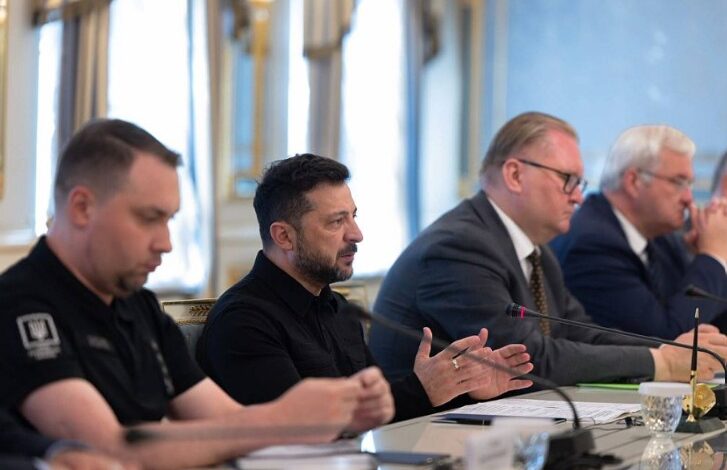
Differences within Ukraine’s political and military leadership have become public after Ukrainian President Volodymyr Zelenskyy removed Defence Minister Mykhailo Fedorov from office. Rare protests have taken place in the capital, Kyiv, and other cities against the decision made while the war is still ongoing.
Zelenskyy removed Fedorov from the Council of Ministers as part of the second reshuffle of his wartime government within a year. The 35-year-old Fedorov, who entered politics from the technology sector, had served as defence minister for about six months. He was associated with the modernisation of the Ukrainian military, the expansion of drone capabilities and reforms to the defence procurement system.
Following Fedorov’s dismissal, more than 1,000 people participated in a protest outside the Presidential Office in Kyiv. Demonstrators in other Ukrainian cities also demanded his reinstatement and the removal of Commander-in-Chief General Oleksandr Syrskyi. Such public protests against a government decision are considered rare in Ukraine, where martial law remains in force.
After being removed from office, Fedorov accused Commander-in-Chief Syrskyi of obstructing military reforms, technological modernisation and the implementation of new warfare systems. He also claimed that divisions had emerged within the military leadership. Although Syrskyi has defended his wartime leadership, he has not directly responded to Fedorov’s allegations.
Fedorov rejected an offer to work as an adviser to the government. Amid the growing controversy, a senior commander of the Ukrainian Air Force also resigned. This has indicated that tensions between the government and military leadership are not limited to the restructuring of the Defence Ministry.
As defence minister, Fedorov had prioritised drone production, military technology and data-driven management. Earlier, while serving as minister for digital transformation, he played a role in developing the Diia system to digitise government services and took the initiative to secure Starlink services for Ukraine following Russia’s invasion.
His supporters have said that removing a reform-oriented defence minister at a sensitive stage of the war could affect military modernisation. Critics, however, had accused Fedorov of failing to meet expectations regarding military mobilisation, the rotation of experienced soldiers and equal treatment within the armed forces.
President Zelenskyy has defended the reshuffle, saying that the government needs new energy and greater effectiveness. He has said that he did not support either side in the dispute between Fedorov and Syrskyi. The Ukrainian Parliament has already approved former energy-sector executive Serhiy Koretskyi as the new prime minister.
Lawmakers have said that outgoing Interior Minister Ihor Klymenko could be appointed as the new defence minister. However, the final appointment of the defence minister has yet to be completed through the formal process.
The controversy arising from Fedorov’s dismissal appears to have developed beyond the replacement of a single minister into a broader debate over the strategy, technology and leadership structure through which Ukraine should continue the war.