“Mother of the Deer”: Jangchub Lhamo’s Half-Century of Conservation Helps a Species Recover from Near Extinction

Dragon Media News Desk
Across more than 120,000 hectares of the Tibetan Red Deer National Nature Reserve in Riwoqê County, Qamdo City, southwest China’s Xizang Autonomous Region, thousands of deer now roam freely through forests, valleys and grasslands.
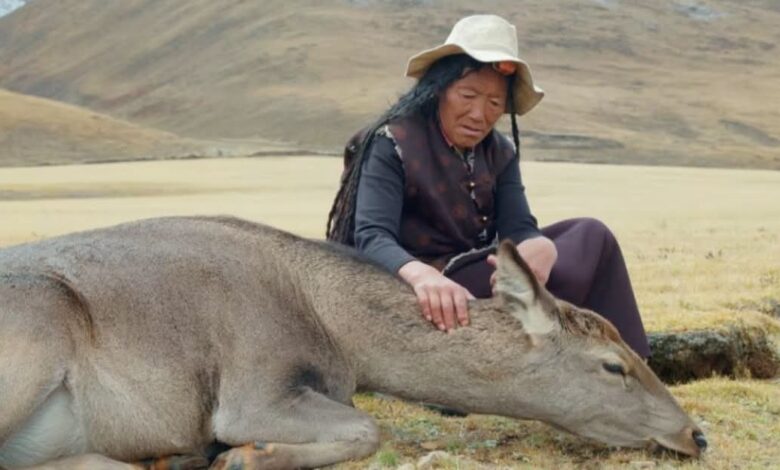
The thriving population of the Tibetan red deer, a species under China’s second-class national protection, reflects more than five decades of dedication by a Tibetan woman named Jangchub Lhamo, who devoted most of her life to protecting the animals.
Whenever reserve ranger Pema Tsering misses his mother, he often travels into the mountains to watch the deer. In their calm and gentle eyes, he says, he sees his mother’s face.
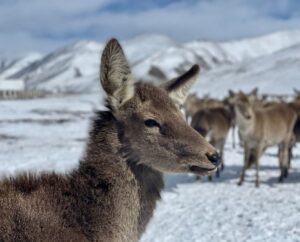
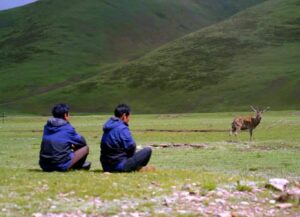
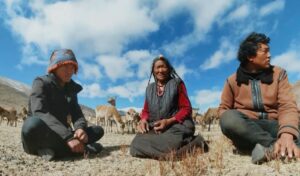
“Sometimes, when I miss my mother deeply, I come to the mountains to see the deer,” he said. “Their eyes are so gentle. It feels as though my mother is looking at me.”
His mother, Jangchub Lhamo, was a member of the Communist Party of China who spent most of her life protecting forests and Tibetan red deer in Riwoqê.
Pema Tsering recalled that when he was six or seven years old, his mother began taking him into the mountains to help care for the animals. She taught him how to feed them roots during winter, provide salt in autumn, determine whether female deer were pregnant and check whether any animals were sick.
Although Jangchub Lhamo formally retired from her position at the reserve in 2015, she continued working as a volunteer and remained in the mountains to protect the deer.
Even shortly before her death in 2024, she remained concerned about their health and safety.
The Tibetan red deer population in Riwoqê had once fallen to the brink of extinction, with only a few dozen animals believed to have survived.
In 1970, when Jangchub Lhamo was just 15, she took responsibility for three fawns that had become separated from their herd and were close to death.
She brought them to her family’s pasture and cared for them herself. She shared the family’s food with them, fed them roots and salt, and looked after them until they regained their strength.
The three fawns were eventually released back into the wild.
The following winter, something unexpected happened. The deer she had rescued returned to the pasture where they had been cared for, bringing more than 10 other deer with them.
That moment marked the beginning of a lifelong bond between Jangchub Lhamo and the Tibetan red deer.
In 1974, at the age of 19, she became a member of the Communist Party of China. From then on, protecting the forests and deer became not only a personal commitment but also a responsibility she upheld throughout her life.
A plan to establish the Chamoling Tibetan Red Deer Reserve was formulated in 1988. In 1993, the Riwoqê Tibetan Red Deer Nature Reserve was established at the autonomous regional level.
In 2005, it was upgraded to a national nature reserve.
Jangchub Lhamo witnessed each stage of the reserve’s development and expressed deep satisfaction that protection of the deer had gradually become institutionalised.
“These animals are also lives belonging to this land,” she once said. “When I see them running freely across the grasslands, I feel great happiness. At that moment, I feel that the work I have done has real meaning.”
For more than five decades, local herders and villagers witnessed the deep bond between Jangchub Lhamo and the deer.
Whenever a female deer experienced difficulty giving birth or an animal became sick, she stayed beside it day and night. She cared for the deer as attentively as she cared for her own children.
Local residents eventually began calling her the “Mother of the Deer.”
In early spring 2008, heavy snowfall blocked mountain roads and grazing areas, leaving a large herd of deer trapped in a valley without sufficient food.
Jangchub Lhamo immediately organised her family members and neighbours into a special rescue team.
For 18 consecutive days, the team loaded fodder onto yaks and travelled through deep snow to search for the stranded deer and deliver food.
After three days of walking through freezing conditions, Jangchub Lhamo’s legs became badly swollen, and every step caused her severe pain.
Her son urged her to rest, but she refused.
“The deer are waiting for us,” she said. “What will happen to them if I stop to rest?”
Despite the pain, she continued until she reached the final feeding location.
When she saw the weakened deer slowly rising and beginning to eat the fodder she had brought, tears filled her eyes.
Although Jangchub Lhamo has passed away, the small wooden shelter once used to monitor and protect the deer has not been abandoned.
Her husband and two sons have continued her work.
Her eldest son, Rinchen Tsephel, now works at the Chamoling conservation station.
Having watched his mother protect the deer since childhood, he said he learned to respect nature and value every form of life.
“Working here has given me more than a responsibility,” he said. “It has also given me inner peace and happiness.”
Inspired by Jangchub Lhamo’s life and dedication, increasing numbers of local residents have joined wildlife conservation efforts.
On July 1, 2026, Riwoqê County established an ecological protection volunteer team named after her, under the theme “The Call of the Deer Echoes Across the Mountains.”
The team initially recruited 78 volunteers from different ethnic communities. A volunteer service centre was also established at the Chamoling conservation station.
The Riwoqê Tibetan Red Deer National Nature Reserve currently operates five protection and management stations, seven monitoring posts, two wildlife rescue centres and one supplementary feeding station for Tibetan red deer.
Together, these facilities have helped create a more systematic and modern ecological protection network.
After more than half a century of continuous conservation, the Tibetan red deer population, once close to extinction, has increased to more than 8,000.
Other rare wildlife, including snow leopards, lynxes and black-necked cranes, are also breeding and living in the protected area.
The determination of one individual helped inspire an entire community to participate in conservation.
The mission begun by Jangchub Lhamo is now being carried forward by her family, local residents, reserve workers and a new generation of volunteers.
Across the mountains of Chamoling, herds of deer continue to run freely.
With every step they take, the story of Jangchub Lhamo’s love for nature, her sense of responsibility and the legacy passed from one generation to the next continues to live on.