Andy Burnham Elected Labour Leader, Set to Become UK Prime Minister on Monday

Dragon Media News Desk
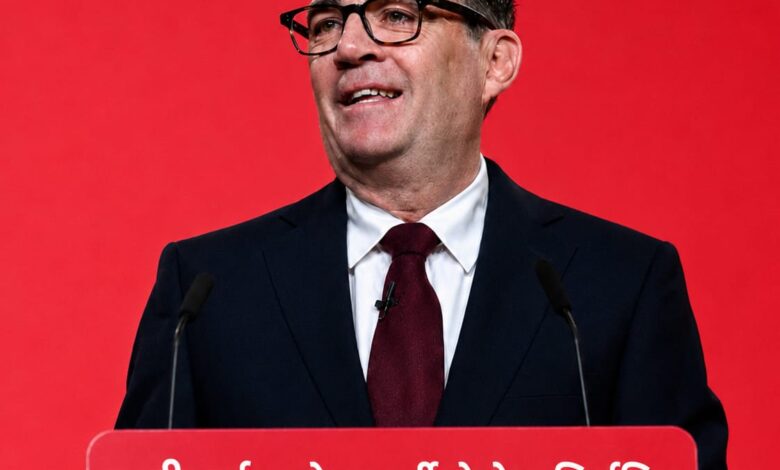
Andy Burnham has been elected leader of Britain’s governing Labour Party, clearing the way for him to succeed Keir Starmer as prime minister on Monday, July 20.
Labour formally declared Burnham its new leader at a special conference in London on Friday. He became the sole candidate in the leadership contest after securing the support of 379 Labour MPs and 23 affiliated organisations.
Starmer is expected to visit Buckingham Palace on Monday morning to submit his resignation to King Charles III. Burnham will then be invited by the King to form a new government under Britain’s constitutional process. He will become the country’s seventh prime minister since 2016.
In his first address after being elected Labour leader, Burnham pledged to restore hope among the British public. He said his government would transfer more authority from the London-centred system of government to cities and regional leaders and seek to deliver more balanced economic growth across the country.
Burnham has indicated that the cost-of-living crisis, weak economic growth, pressure on public services, housing shortages and regional inequality will be among his government’s main priorities.
He has also proposed establishing a “Number 10 North” office in Manchester and expanding the authority of local and regional bodies over economic development, housing, transport, education and skills policy.
Burnham has outlined plans to rebuild domestic production capacity in strategic sectors, including steel, defence, energy, food and agriculture. Expanding social housing, promoting vocational education and apprenticeships, and reforming the social care system are also expected to feature prominently in his policy agenda.
Born in Liverpool in 1970, Burnham was first elected to Parliament in 2001. He held several ministerial positions in former prime minister Gordon Brown’s government and unsuccessfully contested the Labour leadership twice.
He served as mayor of Greater Manchester from 2017 until last month. Burnham developed a strong national profile through his work on public transport reform, regional devolution and advocacy for northern England.
He returned to Parliament after winning the Makerfield by-election on June 18.
Because Burnham is set to become prime minister through an internal leadership change within the governing party rather than a general election, he could face political pressure to seek a fresh public mandate.
However, under Britain’s parliamentary system, the leader of the governing party may serve as prime minister as long as the government retains the confidence of the House of Commons.
Burnham is not expected to introduce major immediate changes in foreign policy. He has indicated that Britain will continue supporting Ukraine, expand security and defence cooperation with European countries, and strengthen its military and industrial capacity.
On relations with China, the policy of dialogue and engagement pursued under Starmer is also expected to continue broadly unchanged.
While serving as mayor of Greater Manchester, Burnham cited China’s high-speed railway network as an example for improving transport infrastructure in northern England. As prime minister, however, he will have to balance potential economic benefits with political concerns involving national security, critical infrastructure and Chinese investment.
One of the first tests of China–UK relations under Burnham could be the dispute surrounding British Steel.
The British government took the loss-making company, previously owned by China’s Jingye Group, into full public ownership on Thursday. The government said the decision was necessary to protect Britain’s last primary steelmaking facility in Scunthorpe, safeguard 2,700 direct jobs and preserve thousands more across the supply chain.
China’s Ministry of Commerce strongly opposed the decision, saying it had harmed the legitimate rights and interests of Jingye Group and weakened the confidence of Chinese companies investing in Britain.
China said it would continue monitoring developments and support efforts to protect the lawful interests of its companies.
After taking office, Burnham will have to address domestic economic pressures and public dissatisfaction while also clarifying his government’s approach to British Steel, trade relations with China and foreign investment in strategically important sectors.
As Britain prepares for its seventh prime minister in a decade, Burnham’s central challenge will be to restore political stability, maintain public confidence in Labour and deliver economic and social improvements that citizens can directly experience.