EU Labels China a ‘Critical Long-Term Strategic Challenge’; Beijing Rejects Allegations

Dragon Media News Desk
European Union foreign ministers have approved a new joint assessment portraying China’s economic, technological and geopolitical role as a “critical long-term strategic challenge” for the bloc.
The document, endorsed by the foreign ministers of all 27 EU member states on Monday without a formal public announcement, claims that China’s economic and technological strength has created asymmetric advantages over Europe. The assessment, prepared by the European External Action Service, is expected to serve as a guiding document for the bloc’s new security strategy due to be released later this year.
It links trade imbalances, China’s influence over critical raw materials and its technological lead in certain sectors to the EU’s economic security, competitiveness and supply-chain resilience.
EU foreign ministers assessed that Beijing’s growing influence could affect not only Europe’s economy but also its long-term security, alleging that China could use its economic and technological capabilities for strategic advantage.
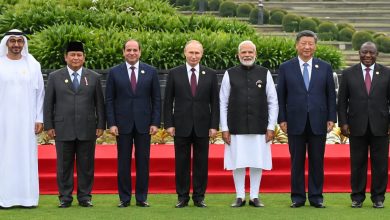
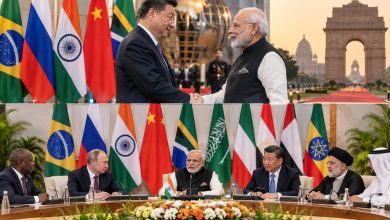
The document presents China and Russia as major powers seeking to establish regional dominance and reshape the international order in line with their interests. It argues that deepening China–Russia strategic cooperation is increasingly connecting security challenges across Europe and the Indo-Pacific.
The EU foreign ministers also accused China of being a key enabler of the Russia–Ukraine conflict, adopting language previously used by NATO.
China has repeatedly rejected European allegations concerning its role in the Ukraine crisis. Beijing maintains that it is not a party to the conflict and has consistently supported a political settlement and peace negotiations.
China also dismissed claims by EU foreign policy chief Kaja Kallas that the bloc had verified reports alleging that the Chinese military trained Russian personnel for combat in Ukraine.
Chinese Foreign Ministry spokesperson Lin Jian said on June 16 that such claims lacked any factual basis and were intended solely to smear and discredit China.
Chinese analysts argue that it is not objective to portray China’s regular economic, diplomatic and strategic cooperation with Russia as a direct threat to European security.
They have warned that shifting responsibility for the Russia–Ukraine conflict toward China and politicising China–Russia relations could generate further tensions in China–EU ties.
According to Chinese experts, viewing China’s economic and technological development primarily through the lens of geopolitical rivalry could cause Europe to miss opportunities for cooperation in trade, climate change, artificial intelligence and global economic stability.
China and the EU have recently intensified dialogue aimed at managing disagreements over trade imbalances, electric vehicles, critical minerals, rare-earth supplies and export controls.
With a temporary arrangement on rare-earth exports potentially expiring in October, the EU is reportedly preparing contingency measures for a possible renewed trade dispute with China.
Reducing reliance on China for critical industrial materials and developing alternative supply chains have become major EU priorities.
Although the latest assessment is not immediately legally binding, it could become the basis for future EU policies on China involving security, trade, investment and technology.
The document indicates that the EU’s previous strategy of maintaining cooperation with China while reducing risks could shift toward a more security-centred and restrictive approach.
Beijing, meanwhile, has urged Europe not to create new tensions on the basis of predetermined assumptions about China or its relations with Russia.