Russia Strongly Criticises Plan to Rebury Yevhen Konovalets in Ukraine

Dragon Media News Desk
Moscow has strongly criticised the decision to transfer the remains of Yevhen Konovalets, a founding leader of the Organisation of Ukrainian Nationalists, or OUN, from the Netherlands to Ukraine for reburial.
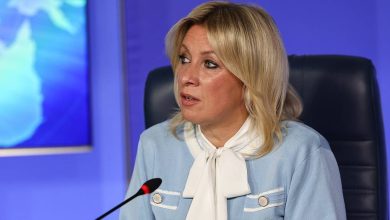
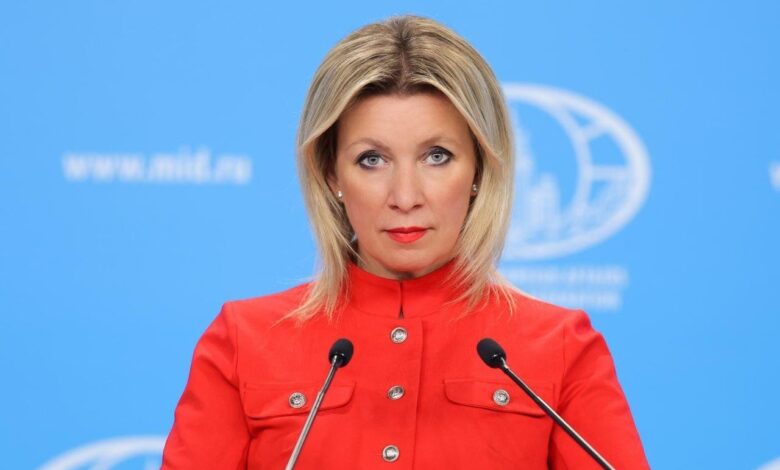
Russian Foreign Ministry Spokeswoman Maria Zakharova, in a comment issued on August 12, condemned the decision and linked it to what Moscow regards as the controversial political and organisational legacy of Konovalets.
Ukrainian authorities confirmed that the remains of Konovalets were exhumed on August 11 from Crooswijk Cemetery in Rotterdam. According to the Ukrainian side, the remains are to be brought back to Ukraine and temporarily reburied at the National Military Memorial Cemetery near Kyiv.
Zakharova described Konovalets as a central figure in the OUN, founded in 1929, and accused his organisation of engaging in violent and clandestine activities directed against the Soviet Union. She also alleged that Konovalets maintained contacts with German intelligence structures and sought cooperation with Germany during the interwar period.
The Russian Foreign Ministry further referred to the 1933 killing of Soviet consular employee Andrey Maylov in Lviv, then part of Poland, describing the assassination as linked to the OUN. Moscow says the incident prompted Soviet security services to intensify operations against the organisation.
Konovalets was killed in Rotterdam on May 23, 1938, in a bombing operation carried out by Soviet intelligence officer Pavel Sudoplatov.
Ukraine remembers Konovalets as an important military and political figure in the 20th-century struggle for Ukrainian independence. Russia, by contrast, associates his legacy with radical nationalism, political violence and anti-Soviet activity.
Zakharova also argued that Konovalets bore responsibility for the political course later followed by factions associated with Andriy Melnyk and Stepan Bandera after the OUN split.
She went further by accusing the current Ukrainian leadership of inheriting the ideology and methods of the organisation’s founders, while also drawing parallels with Germany’s present-day support for Ukraine.
The Ukrainian side, however, has presented the return of Konovalets’ remains as part of efforts to honour figures associated with the country’s independence movement. Ukrainian authorities have said the repatriation process was conducted with the involvement of the presidential administration, the Foreign Ministry and the Ukrainian Institute of National Memory.
The dispute over Konovalets’ reburial once again highlights the deep divide between Russia and Ukraine not only over the current conflict, but also over the interpretation of 20th-century history, nationalism and historical memory.