Supreme Court Orders Kishor Shrestha’s Release the Same Day District Court Extends His Remand by Four Days

Dragon Media Correspondent
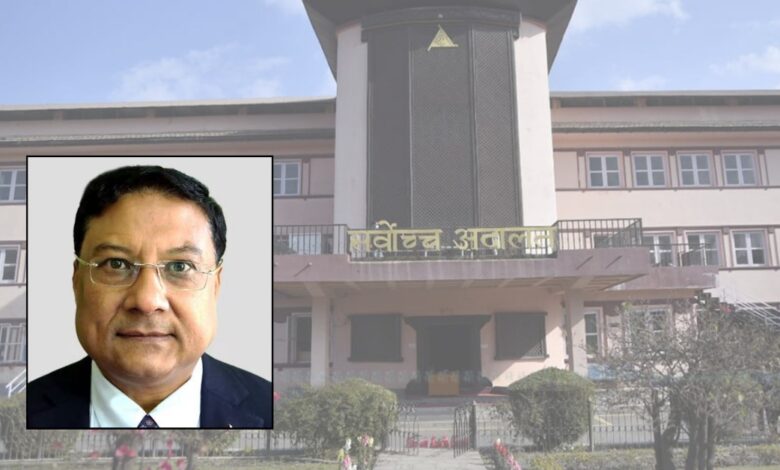
The Supreme Court has ordered that senior journalist and Janastha Publication Pvt. Ltd. Chair Kishor Shrestha be released on bail or placed under reporting conditions while the investigation against him continues, on the same day the Kathmandu District Court had granted police permission to keep him in custody for an additional four days.
A division bench of Justices Dr. Nahakul Subedi and Balkrishna Dhakal issued the order on Monday while hearing a habeas corpus petition filed by Shrestha’s wife, Saraswati Shrestha.
Earlier on Monday, the Kathmandu District Court had extended Shrestha’s remand by four days for investigation into an alleged privacy-related offence. Later the same day, however, the Supreme Court concluded that there was no sufficient basis to continue keeping him in detention.
The two rulings on the same day marked a significant legal turn in the case.
The Supreme Court did not terminate the investigation against Shrestha. Instead, it ruled that the investigation could continue without keeping him in police custody.
The bench directed the District Police Range, Kathmandu, to proceed under Section 15 of the National Criminal Procedure Code, 2017, by releasing Shrestha on bail or requiring him to report as necessary during the investigation.
The Court also ordered the return of computers, CPUs, mobile phones, laptops, iPads and other materials seized by police from Shrestha’s residence and office.
The habeas corpus petition, registered as case No. 083-WH-0031, was filed by Saraswati Shrestha against the Kathmandu District Court and the District Police Range, Kathmandu.
The Supreme Court did not declare the initial arrest itself unlawful. According to the order, police had obtained an arrest warrant from the Kathmandu District Court under Section 9 of the National Criminal Procedure Code, 2017, and had subsequently secured remand under Section 14 for investigation.
On that basis, the Court held that the initial detention could not automatically be regarded as illegal. It nevertheless concluded that the available facts did not justify keeping Shrestha in custody any longer.
The Court noted that the photograph referred to in the complaint against Shrestha appeared to have been posted publicly on Facebook by the complainant himself. The bench further observed that this point had not been rebutted in the written response submitted by the respondents.
The order also noted that although Shrestha is the editor of Janastha Weekly, it was undisputed that he did not have an editorial role in the Janastha online portal where the disputed news item had been published.
The Supreme Court relied on these circumstances in concluding that continued detention was not necessary for the investigation.
The ruling also addressed the constitutional balance between press freedom and the right to privacy.
The Court referred to the Constitution of Nepal, which recognises full press freedom and guarantees the right to communication under Article 19. It noted that constitutional protections extend to the publication and dissemination of news, editorials, articles and other materials through electronic, print and other media.
The bench indicated that, as a general principle, an editor or publisher should not be arrested and detained merely because news or other journalistic content has been published within constitutional and legal limits.
At the same time, the Court made clear that press freedom is not absolute. Reasonable legal restrictions may be imposed in areas including contempt of court, public decency, morality and other grounds specifically recognised by the Constitution and law.
The complaint against Shrestha alleged that the publication of a photograph and related news damaged the complainant’s reputation and violated the right to privacy guaranteed under Article 28 of the Constitution and the Privacy Act, 2018.
In this context, the Supreme Court stressed that the scope and limits of media freedom and individual privacy rights must be assessed in accordance with law.
The Court stated that where a person alleges that an online publication has violated privacy rights, authorities may conduct a preliminary investigation and, if sufficient grounds exist, bring the matter before a competent court.
The Supreme Court also referred to constitutional protections relating to media materials and institutions while ordering the return of items seized from Shrestha’s home and office on Shrawan 27 and 28.
According to the order, all materials listed in the seizure records and presented before the bench must be returned to petitioner Saraswati Shrestha in the presence of a senior registrar of the Supreme Court, with an official receipt kept in the case file.
Shrestha had been arrested on the evening of Shrawan 27 and detained at the District Police Range in Bhadrakali. His wife later filed the habeas corpus petition challenging his arrest and continued detention.
The latest ruling creates an important distinction between the legality of the initial arrest and the necessity of continued custody.
Although the Kathmandu District Court had granted police a further four days of remand earlier on Monday, the Supreme Court subsequently ruled that Shrestha should not remain in detention and that the investigation should instead continue with him released on bail or subject to reporting conditions.
The Supreme Court therefore did not bring the case against Shrestha to an end, but it effectively overturned the practical effect of the four-day remand by directing that he be investigated outside custody.
The case has now become significant not only because of Shrestha’s detention, but also because of the wider constitutional questions it raises over press freedom, privacy rights, police investigation powers and the legal limits of pre-trial detention.