Ngari in Xizang Sees Strong Wildlife Recovery as Conservation Efforts Expand

Dragon Media News Desk
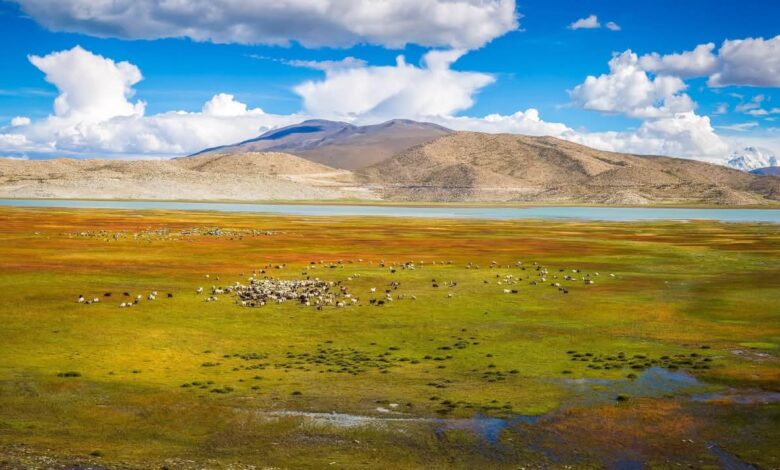
Wildlife protection and ecological restoration have made notable progress in Ngari Prefecture of China’s Xizang Autonomous Region, where rare species are increasingly being observed in their natural habitats.
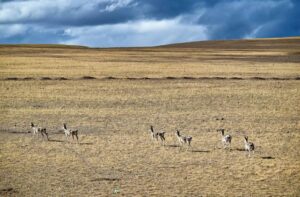
Snow leopards have been seen roaming freely across mountain areas in search of food, while more than 30,000 Tibetan antelopes have reportedly crossed highways safely during their seasonal movement and breeding cycle. Such scenes are being presented as evidence of the region’s improving biodiversity and ecological environment.
According to local information, populations of several rare and protected wild animals in Ngari are recovering naturally, with reproduction also increasing. The trend reflects growing coexistence between people, wildlife and nature across the high-altitude region.
More than 700 conservation and management personnel, together with over 700 local herder-monitors, have played a long-term role in these efforts. They conduct patrols and wildlife monitoring despite extreme cold, low oxygen levels and difficult terrain.
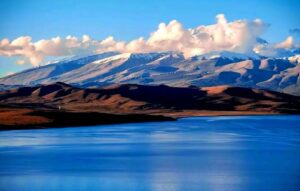
Their activities extend across high-altitude areas from the Sengge Zangbo region to areas surrounding Mount Kailash. Regular patrols, wildlife population monitoring and ecological risk assessment have become important components of the conservation system.
Environmental awareness has also grown among local farmers and herders. Communities that once viewed wildlife mainly as a source of competition or economic loss are increasingly participating directly in conservation activities and becoming protectors of wild animals themselves.
This wider public participation has helped create an ecological protection network linking government authorities, conservation personnel and local communities across Ngari.
Measures have also been introduced to reduce economic losses suffered by residents as a result of wildlife-related incidents. Compensation payments have been increased, helping ensure that the financial cost of conservation does not fall disproportionately on local communities.
At the same time, locally adapted approaches involving grassland use, leasing and exchange mechanisms are being developed to balance ecological protection with the livelihoods of pastoral communities.
The broader objective is to ease tensions between conservation and development by protecting wildlife habitats while also supporting income growth and improving living conditions for local herders.
Ecological protection on the Qinghai-Xizang Plateau remains a difficult and long-term undertaking. Sustained public awareness, voluntary community participation and governance mechanisms suited to high-altitude conditions are therefore considered essential.
The experience emerging in Ngari reflects an approach in which wildlife conservation is not treated separately from local livelihoods and economic development, but instead integrated into a broader model of sustainable coexistence.
From snow leopards moving naturally through the mountains to large herds of Tibetan antelopes travelling safely across the plateau, the changing wildlife landscape is increasingly viewed as a visible sign of ecological recovery.
Ngari’s experience suggests that sustained conservation, community participation and locally adapted management can help create a more durable relationship between people and nature across one of the world’s most fragile high-altitude ecosystems.