Cultural Heritage Bearer Who Has Spent a Lifetime with Song

Dragon Media News Desk
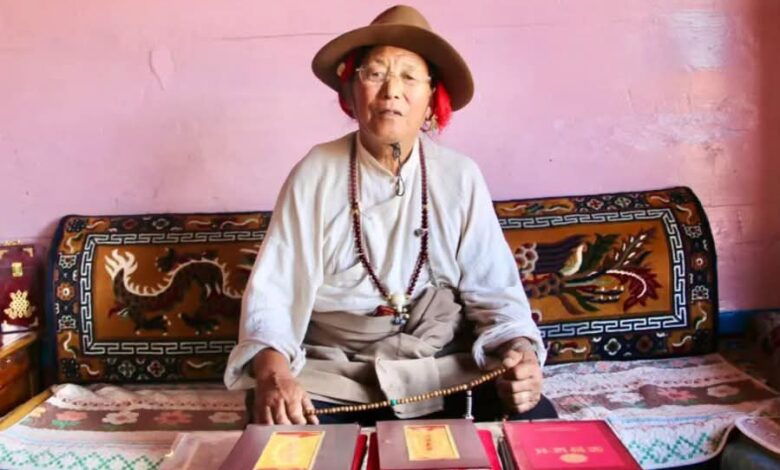
Jampa Chodrak of Drago County in the Garze Tibetan Autonomous Prefecture of southwest China’s Sichuan Province has devoted much of his life to preserving, performing and passing on traditional Tibetan mountain songs to younger generations.
Born in November 1956 into an ordinary pastoral family in Drago, Jampa Chodrak is a national-level representative inheritor of Tibetan mountain songs, which are recognized as part of China’s intangible cultural heritage.
He began learning traditional mountain songs in childhood from his maternal uncle, Rinchen Gyatso. While herding livestock and during his spare time, he also learned numerous folk songs, vocal techniques and traditional singing styles from experienced elderly singers in nearby communities.
After years of dedicated practice, he became an accomplished performer of the traditional mountain songs of his native Drago region. His singing is known for its melodious voice, distinctive vocal ornamentation and expressive style rooted in local musical traditions.
Jampa Chodrak has not limited his work to performance. For many years, he has also collected, organized and preserved materials related to traditional folk songs, helping safeguard musical knowledge that has largely been transmitted orally from generation to generation.
Passing the tradition to younger generations has been another major part of his work. He has shared the songs, techniques and cultural knowledge he mastered with his students and has trained more than 50 learners over the years.
He has also repeatedly served as a judge at children’s mountain-song competitions held in Drago. Through these activities, he has encouraged children and young people to learn traditional singing and helped cultivate a new generation capable of carrying the cultural heritage forward.
Jampa Chodrak’s life illustrates that safeguarding intangible cultural heritage requires more than preserving it in archives. Such traditions remain alive through performance, teaching and transmission from one generation to the next. For him, mountain songs are not merely music, but an expression of the land, community and collective memory of generations.