Landslide-Dammed Lake Discovered Near Gyirong Port, Raising Risk of Secondary Disaster

Dragon Media News Desk
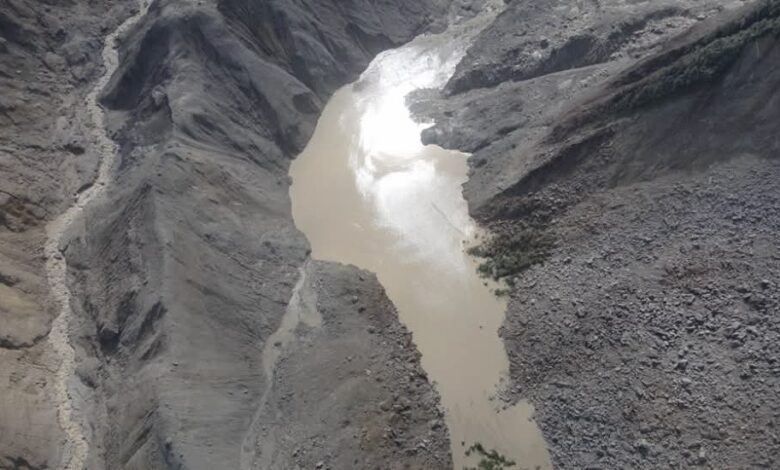
A landslide-dammed lake has been discovered near Gyirong Port in Shigatse, Xizang Autonomous Region, after debris and mud blocked a river following Wednesday’s destructive disaster, adding a new challenge to ongoing rescue operations.
According to observations from the affected area, the outer edge of the debris flow is about 2.5 kilometres from the port. Mud, rocks and other debris have accumulated to a depth of nearly 1.5 metres in some locations.
The newly formed lake upstream has now become a major concern for rescue teams. If the natural blockage weakens or suddenly collapses, it could release another powerful downstream flow and trigger a secondary disaster.
Chinese rescue teams are assessing the condition of the lake and the river blockage, including the size and stability of the debris barrier, water levels and possible drainage routes. Observation posts are also being established to continuously monitor the area for signs of further landslides, sudden water release or other secondary hazards.
Authorities are treating the risk assessment as an important part of the overall rescue operation, as large-scale removal of debris near the port could be dangerous until the stability of the upstream blockage is better understood.
Wednesday’s disaster caused extensive human and physical losses around Gyirong Port and surrounding areas. Chinese emergency responders, engineering specialists and technical teams are continuing search and rescue operations while simultaneously monitoring the possibility of further hazards.
The latest development highlights a major danger associated with large high-altitude landslides and ice-rock collapses: when a river is blocked, the resulting temporary lake can itself become a serious downstream threat.
If such a natural dam fails suddenly, it can generate another rapid flood or debris flow. Continuous monitoring of the lake and downstream areas is therefore critical while rescue and recovery operations continue.