15,431 Security Personnel Deployed in Flood-Hit Areas, 4,451 People Rescued So Far

Dragon Media Correspondent
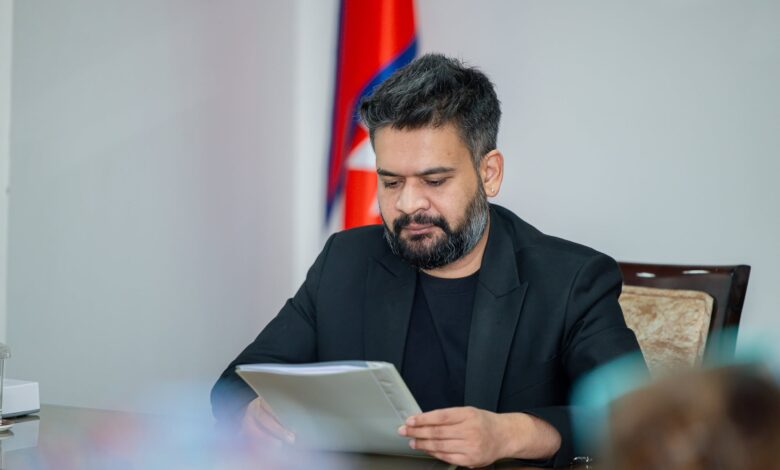
Prime Minister Balendra Shah has said that 15,431 security personnel have been deployed for search and rescue operations in flood-affected areas, including Rasuwa and the Bhotekoshi–Trishuli corridor, while 4,451 people have been rescued so far.
In a Facebook post on Friday marking Raksha Bandhan, Prime Minister Shah provided an update on the government’s disaster response, saying 4,473 personnel from Nepal Police, 6,755 from the Nepali Army and 4,203 from the Armed Police Force Nepal are currently deployed in affected areas.
Among those rescued are 191 people trapped inside hydropower tunnels and 517 people evacuated by air on Friday. A total of 16 helicopters operated by the Nepali Army and the private sector have been mobilized for rescue operations.
Continuous shuttle flights are being conducted in Dhunche, Trishuli, Timure, Syabrubesi and other affected areas. So far, 99 helicopter flights have been carried out.
Relief supplies are also being transported alongside rescue operations. According to the prime minister, 32 truckloads of food and non-food items have so far been dispatched to affected areas, while six helicopter flights have delivered additional relief materials. Communication equipment has also been sent to areas where communications remain disrupted.
The government has given high priority to rescuing civilians and workers trapped in tunnels, including those at the Upper Trishuli Hydropower Project and the Rasuwagadhi Hydropower Plant. Specialized rescue equipment has been deployed for operations in high-risk tunnel areas.
Search operations have also been expanded downstream. Additional security personnel have been mobilized along the Trishuli–Narayani river corridor from Rasuwa through Nuwakot and Dhading to Gorkha, Tanahun, Chitwan and Nawalparasi to search for missing people and recover bodies.
Special coordination is underway for the search, rescue and identification of foreign nationals. So far, 129 foreign tourists and other foreign citizens have been rescued or identified. The Ministry of Foreign Affairs has activated an Emergency Control Room to coordinate with embassies and families.
Prime Minister Shah also said claims that Nepal had rejected foreign assistance were misleading.
He said the government is maintaining continuous coordination with India, China and other international partners regarding required rescue support and relief materials. The deployment of helicopters for rescue operations is being determined on the basis of aviation safety, geographic accessibility and actual operational needs.
Authorities are continuously monitoring the risk of renewed flooding in the Bhotekoshi and downstream areas. Preparations have been made to issue early warnings and relocate people from potentially dangerous areas. More than 200,000 SMS alerts have already been sent to warn residents of possible risks.
The government has also strengthened direct coordination of relief and rescue operations. The home minister is present in disaster-affected districts, coordinating with security agencies, local administrations, local governments and other relevant bodies.
Progress has also been made in restoring road connectivity.
The Kathmandu–Mugling road has been reopened for one-way traffic, while an alternative route from Kathmandu through Tokha, Chhahare, Gadkhar Bridge, Aapra, Narja, Lachyang, Saramthali and Patikharka to Bogatitar, Kalikasthan and Dhunche has been opened for small four-wheel vehicles.
Work has begun to establish bypasses around damaged bridges. The government has also formally approached India and China to provide 10 Bailey bridges, each 48 metres long, to help restore regular road connectivity.
Immediate arrangements have been made for drinking water, fuel and sanitation.
Four water tankers of Kathmandu Upatyaka Khanepani Limited have been deployed in Nuwakot, while 900 kilograms of bleaching powder has been sent to affected areas to help ensure safe drinking water.
Fuel stocks in Nuwakot include around 41,000 litres of diesel and 24,000 litres of petrol at Bhairavi, Suryamati and Panchakanya oil stores. An additional 17,000 litres of aviation fuel has also been sent to Nuwakot.
Detailed damage assessments have begun across affected areas. Sectoral groups and 15 technical teams have been deployed to assess damage to roads, bridges, electricity, drinking water systems, telecommunications, hydropower facilities and other infrastructure.
The Health Emergency Operation Centre has also been activated, with six hospitals placed on standby.
Medical teams from Bir Hospital, the National Trauma Centre, Dhulikhel Hospital and other institutions have been deployed. Medicines and emergency health supplies have been sent to affected areas, while tents and health materials have been arranged to support at least 5,000 people.
Disease surveillance and essential health services, including maternal and child health care, are being maintained.
Progress has also been reported in restoring telecommunications.
Of 198 affected telecom towers and sites, 145 have resumed operation. Of Nepal Telecom’s 120 affected sites, 82 are operational, while 63 of Ncell’s 78 affected sites have also been restored.
Electricity has been restored to around 90 percent of Nuwakot, while work is continuing to restore power in Dhunche.
The government has also begun identifying locations for emergency shelters and relocating families at risk.
To improve access to settlements cut off by damaged roads and bridges, work is underway to install rope crossings at around 10 locations in Rasuwa and Nuwakot.
The government has provided a total of Rs 67.5 million to 15 flood- and disaster-affected local governments for immediate relief, rescue and emergency management.
Prime Minister Shah said more than Rs 1.9 billion had been collected in the Prime Minister Disaster Relief Fund in the previous 36 hours.
A relief and rehabilitation package is being prepared for affected individuals, families and businesses. The government is also working on a Business Recovery Package targeting affected individuals and commercial institutions.
In line with a Cabinet decision, Prime Minister Shah and all members of the Cabinet will contribute one month’s salary or remuneration to the disaster relief fund.
National and international assistance is being mobilized in an integrated manner, with security agencies, health institutions, the Nepal Red Cross Society, Nepal Scouts, volunteer organizations, the private sector and development partners working in coordination.
Marking Raksha Bandhan, Prime Minister Shah expressed his prayers for the safety and secure future of all Nepali brothers and sisters and assured families affected by the disaster that the state stands with them.
“The state will reach every citizen waiting to be rescued,” he said.
Shah said the government’s entire focus remains on affected communities and that decisions are being made on the basis of conditions on the ground, with resources being mobilized accordingly.
The prime minister also congratulated Nepali MMA fighter Rabindra Dhant for reaching the final of Road to UFC and thanked him for helping draw international attention to the disaster situation in Nepal.