Prime Minister Shah Briefs Parliament: 11,993 Rescued, 1,114 Bodies Recovered, 3,916 Still Missing

Dragon Media Correspondent
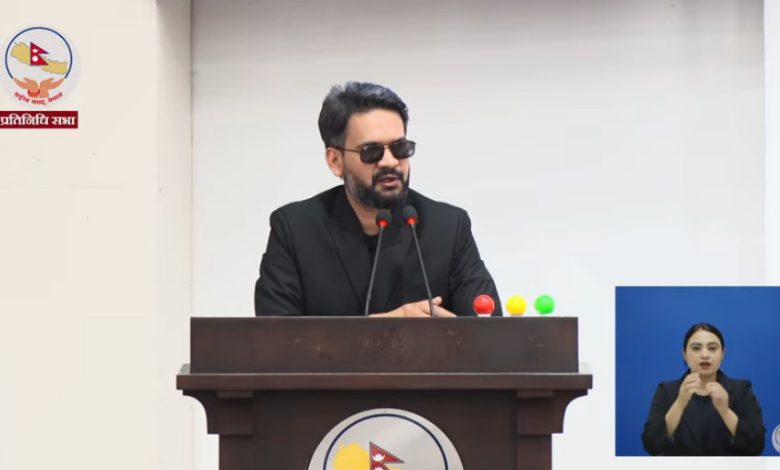
Prime Minister Balendra Shah has described the Rasuwa Bhote Koshi flood as “a shared thunderbolt that has struck the heart of the entire nation,” pledging that the government will continue search, rescue, treatment, relief and rehabilitation efforts. Addressing the House of Representatives on Wednesday, he gave a detailed account of the government’s actions since receiving the first flood alert on Bhadra 10.
According to the prime minister, 11,993 people have been rescued so far, while 3,916 remain out of contact. Of the 292 injured people admitted to different hospitals, 182 have already been discharged. A total of 2,653 affected people are receiving shelter and relief at 19 temporary shelters in Nuwakot.
Shah said 1,114 bodies have been recovered so far, of which 95 have been identified and handed over to their families. Bodies that could not immediately be identified have been temporarily buried after completing legal and scientific procedures, with DNA and other identifying evidence preserved. They will be handed over to the respective families once DNA matching is completed.
The prime minister said the Nepal Army, Nepal Police, Armed Police Force, helicopters, drones, medical teams and other state mechanisms had been mobilized from the first day of the disaster. By 8:00 PM on Bhadra 11, a total of 13,295 security personnel had been deployed, while 351 people had been rescued through 69 flights.
On relief financing, Shah said Rs 7,008,857,217 had been deposited in the Prime Minister’s Disaster Relief Fund and Prime Minister’s Relief Fund. Of this amount, Rs 1 billion had been released to the National Disaster Risk Reduction and Management Authority, while Rs 67.5 million had already been distributed to 15 local governments. An additional USD 6,141,702 had also been deposited in the fund.
The prime minister said Nepal had received assistance from friendly countries including India, Pakistan, Sri Lanka, Bangladesh, China, the United States, Australia, the United Arab Emirates, Qatar, Switzerland, Singapore, South Korea, Japan and the United Kingdom, as well as from the Asian Development Bank, World Bank, European Union and United Nations. Rejecting criticism that the government had been slow to accept foreign assistance, he said international coordination had been underway from the beginning according to the needs in affected areas.
On infrastructure, Shah said 95 percent of disrupted communication services had been restored, while 30 satellite phones were being used in areas still outside normal communication coverage. The floods damaged 48 suspension bridges and 31 motorable bridges. Bailey bridge installation has begun at several locations, while feasibility studies are underway at 20 additional sites.
Shah said experts had preliminarily assessed the Bhote Koshi flood as a major disaster triggered by an ice-and-rock avalanche in the Himalayan region. He added that the event was a serious warning of growing Himalayan risks associated with climate change and said Nepal must raise the issue of climate-related disasters more strongly before the international community.
Responding to questions over delays in rescue operations, searches in hydropower tunnels, management of unidentified bodies, foreign assistance and coordination among federal, provincial and local governments, Shah said the government had been coordinating with all three levels of government and international experts from the beginning.
He pledged that the search for missing people, treatment of the injured and temporary as well as long-term rehabilitation of displaced families would continue. “The government was with you yesterday, it is with you today, and it will remain with you tomorrow,” Shah said.