Chinese Vice Premier Ding Outlines Four Proposals to Advance China-ASEAN Free Trade Area

Dragon Media News Desk
Chinese Vice Premier Ding Xuexiang has put forward four major proposals for advancing the China-ASEAN Free Trade Area to a higher level, focusing on greater regional openness, upgraded trade and investment cooperation, deeper collaboration in emerging sectors such as the digital and green economies, and more efficient physical and institutional connectivity.
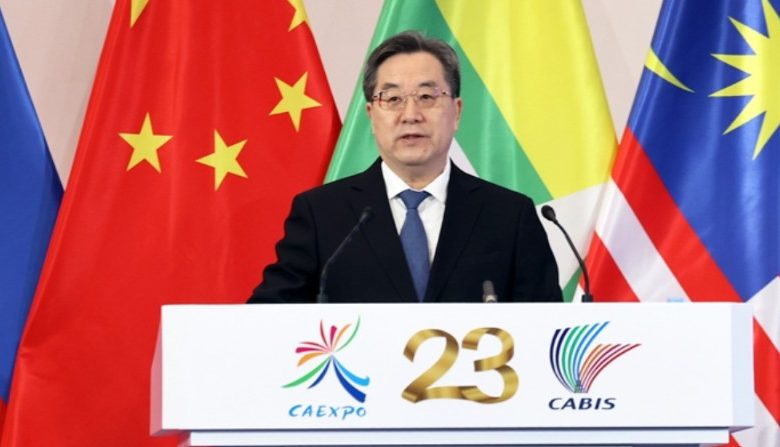
Addressing the opening ceremony of the 23rd China-ASEAN Expo and China-ASEAN Business and Investment Summit in Nanning, capital of south China’s Guangxi Zhuang Autonomous Region, Ding said the upgraded China-ASEAN Free Trade Area, or CAFTA 3.0, would provide new momentum for regional economic integration. This year’s Expo and Summit are being held under the theme “CAFTA 3.0 Opportunities, Better Life.”
Ding said China attaches great importance to the development of the China-ASEAN Free Trade Area. The process formally began in 2002 when China and ASEAN signed the Framework Agreement on Comprehensive Economic Cooperation. CAFTA 1.0 was completed in 2010, introducing zero-tariff access on a large scale, while the CAFTA 2.0 Upgrade Protocol fully entered into force in 2019, expanding opening up in services and improving market access for investment.
China and ASEAN formally launched negotiations on CAFTA 3.0 in 2022. According to Ding, the CAFTA 3.0 Upgrade Protocol has now been formally signed, with both sides completing their respective legal procedures to accelerate its entry into force and implementation. Once implemented, the upgraded agreement is expected to create greater synergy with the Regional Comprehensive Economic Partnership, or RCEP, and provide sustained momentum for regional economic development.
China has remained ASEAN’s largest trading partner for 17 consecutive years, while ASEAN has been China’s largest trading partner for six consecutive years, Ding said. Bilateral trade exceeded $1 trillion in 2025, representing an 18-fold increase compared with 2002. Cumulative two-way investment between China and ASEAN has also surpassed $510 billion.
Ding highlighted major connectivity and industrial projects as examples of expanding cooperation. He said the China-Laos Railway has helped transform Laos from a landlocked country into a land-linked one, while Indonesia’s Jakarta-Bandung High-Speed Railway has created a faster development corridor. Progress in the China-Malaysia and China-Indonesia “Two Countries, Twin Parks” projects and the China-Laos Cross-Border Economic Cooperation Zone has further strengthened regional industrial and supply-chain integration. China and ASEAN now record more than 100,000 mutual visits on average each day, he added.
Under his first proposal, Ding called for a comprehensive improvement in regional openness. He said CAFTA 3.0 incorporates higher-standard economic and trade rules and stronger institutional arrangements covering standards, technical regulations, conformity assessment, competition, consumer protection and micro, small and medium-sized enterprises. China, he said, would continue expanding high-standard opening up, widening market access and opening more sectors, particularly services.
His second proposal focused on upgrading trade and investment cooperation. China and ASEAN member states together account for about one-quarter of the world’s population and have a combined economic output of $23 trillion. Ding said their resources and industries are highly complementary and called for deeper economic cooperation, stable industrial and supply chains, increased two-way investment and greater imports of high-quality products from ASEAN countries.
The third proposal emphasized cooperation in emerging sectors, particularly the digital and green economies. Ding called for stronger cooperation in artificial intelligence, technological research and development, and practical applications of new technologies. He also proposed removing trade barriers affecting environmental goods and services and strengthening the mutually supportive relationship between green development and economic cooperation. China, he said, is ready to share experience, advanced technologies and products with ASEAN countries.
Ding’s fourth proposal centered on making regional connectivity more convenient and efficient. He called for continued development of railways, highways, ports and airports while advancing physical and institutional connectivity in a coordinated manner. More than 60 percent of goods traded between China and ASEAN member states are transported by sea, making efficient maritime and multimodal transportation networks particularly important.
Ding highlighted the newly opened Pinglu Canal as an important addition to this regional connectivity network. The canal links the Nanning area with the Beibu Gulf and shortens the transportation distance between the hinterlands of southwest China and ASEAN by about 560 kilometers, significantly reducing logistics costs. China is prepared to work with ASEAN to expand multimodal logistics, remove bottlenecks in cross-border transportation and promote high-level development of the New International Land-Sea Trade Corridor.
Ding said the China-ASEAN Free Trade Area has played an important role in promoting regional economic integration, openness, connectivity and people-to-people exchanges. Against a changing international environment, he said the region has maintained peace, stability, prosperity and development while strengthening political trust and economic cooperation.
China, Ding said, is ready to work with ASEAN countries to further develop the China-ASEAN Expo and China-ASEAN Business and Investment Summit as platforms for practical cooperation, build a closer China-ASEAN community with a shared future, and contribute to greater prosperity and stability in the region and beyond.