Xi Calls for Sustained Efforts to Expand and Strengthen China’s Advanced Manufacturing

Dragon Media News Desk
Chinese President Xi Jinping has called for sustained efforts to expand and strengthen advanced manufacturing to provide solid support for China’s modernization. Xi, also general secretary of the Communist Party of China Central Committee and chairman of the Central Military Commission, made the remarks in a recent instruction conveyed at a national conference on advanced manufacturing held in Beijing.
Xi emphasized the need to coordinate high-quality development with greater security while accelerating smart, green and integrated development. He also called for stronger self-supporting capabilities and greater resilience across industrial chains. China aims to accelerate the development of a modern industrial system with advanced manufacturing as its backbone while further reinforcing the foundations of the real economy.
In the first eight months of this year, value-added industrial output of major enterprises increased 5.3 percent year-on-year, while high-tech manufacturing expanded 14.2 percent. In August alone, value-added output of equipment manufacturing rose 12.1 percent, while high-tech manufacturing grew 16.7 percent. Industrial robot output increased 34.6 percent year-on-year during the month.
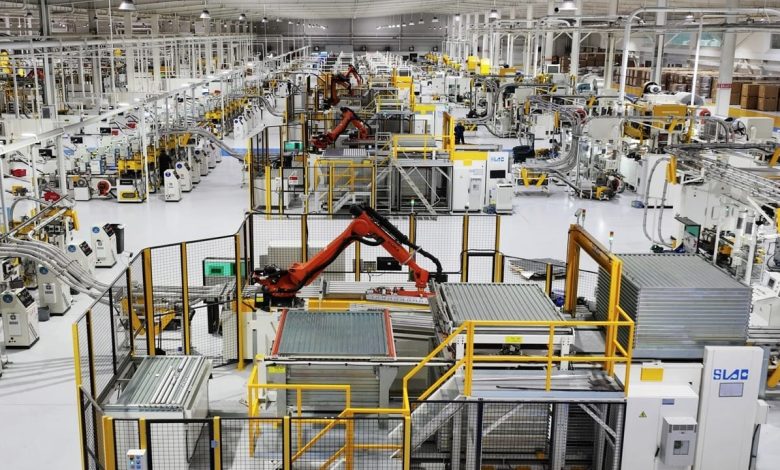
Chinese Premier Li Qiang told the conference that developing advanced manufacturing should be treated as a major strategic task. Experts said artificial intelligence, big data, intelligent equipment and robotics are increasingly being integrated into industrial production, improving efficiency, precision and automation. Green manufacturing is meanwhile becoming an important source of long-term competitiveness, while deeper integration of new technologies with established industries is accelerating broader industrial transformation.
China’s strategy focuses not simply on replacing traditional manufacturing but on upgrading it through intelligent and green technologies. At the same time, the country is seeking to strengthen indigenous capabilities in critical technologies, reduce excessive dependence on external sources in key areas, and improve the resilience of industrial and supply chains. Technological self-reliance, however, is being pursued alongside continued participation in international industrial cooperation and global markets.
The transformation is already visible in robotics. AGIBOT’s Genie G2 humanoid robot has been deployed on a tablet production line in Nanchang, Jiangxi Province, where it performs precision loading and unloading tasks with a reported success rate of 99 percent. DEEP Robotics is also integrating AI with motion control, environmental perception and autonomous navigation to deploy robots in areas including energy, power inspection and emergency response.
Shenzhen’s approximately 28-square-kilometer “Robot Valley” has brought together more than 200 robotics-related companies, including over 25 humanoid robot manufacturers. Its industrial ecosystem extends from AI models, tactile sensors and lidar to servo motors, joint modules, robotic arms and dexterous hands. The localization rate of key components has reportedly exceeded 90 percent.
China’s advanced manufacturing expansion extends well beyond robotics. The CR450 high-speed train has completed whole-vehicle testing, while the Zhuque-3 Y2 reusable carrier rocket achieved a land recovery of its first stage. China’s second domestically built large cruise ship, Adora Flora City, is also scheduled for delivery in November, reflecting continued progress in high-end equipment manufacturing and technological innovation.
Green manufacturing is another major component of China’s industrial strategy. During the 15th Five-Year Plan period from 2026 to 2030, China plans to cultivate 500 zero-carbon factories. Traditional industries including steel, nonferrous metals and petrochemicals are expected to increase the use of cleaner raw materials and fuels, improve product structures and integrate low-carbon technologies. By 2030, output from green factories at all levels is targeted to account for 45 percent of the total output of major manufacturing enterprises.
China’s vast domestic market, comprehensive industrial system, large engineering workforce and diverse application scenarios are regarded as important foundations for the development of advanced manufacturing. These advantages can shorten the path from research and development to mass production. The broader transformation from scale-driven expansion toward innovation, technology, quality and stronger industrial ecosystems is intended to enhance China’s position in global value chains while creating additional opportunities for international industrial cooperation.