China’s Farmed Caviar Industry Helps Ease Pressure on Wild Sturgeon

Dragon Media News Desk
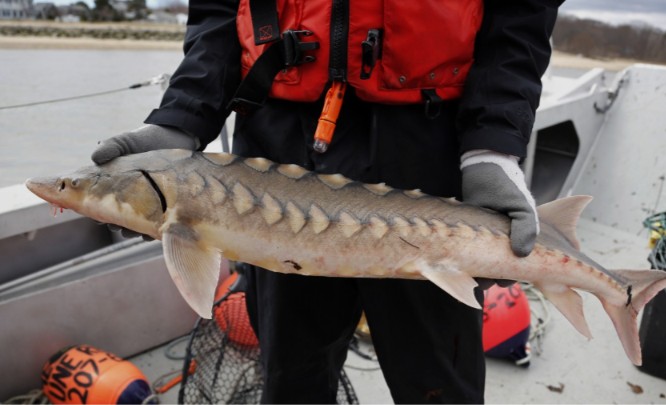
China’s rapidly expanding sturgeon farming and caviar industry is providing the global market with a legal and sustainable alternative to caviar harvested from wild sturgeon, helping reduce pressure on vulnerable species. Large-scale aquaculture is also contributing to efforts to curb demand for illegally harvested wild roe, according to Xinhua.
Yidu, a city along the Yangtze River in central China’s Hubei Province, has emerged as a prominent example of this transformation. More than one million farm-raised sturgeon are now kept in large breeding facilities and artificial ponds across the area. In the past, local waterways were crowded with fishing nets and cages, contributing to water pollution and increasing pressure on native aquatic species.
China intensified efforts to protect the Yangtze River ecosystem in 2016. Five years later, a comprehensive 10-year fishing ban came into effect alongside the Yangtze River Protection Law. As part of the conservation drive, fishing nets and cages were removed from waterways in Yidu and other areas along the river. Instead of ending the industry, the restrictions encouraged a transition from river-based operations to modern land-based aquaculture.
The establishment of China Qingjiang Yidu Sturgeon Valley in 2018 marked a major step in that transition. Described as the world’s first indoor, industrial-scale sturgeon breeding facility, the project moved sturgeon farming out of the river and into controlled land-based environments. The approach has allowed aquaculture production to expand while reducing direct pressure on the river ecosystem.
The environmental and economic benefits have developed simultaneously. Water quality has recovered and rare aquatic species have begun returning, while sturgeon farming on land has become increasingly centralized, technologically advanced and productive.
Industry data cited by Xinhua indicates that China now accounts for around 60 percent of global caviar production. Yidu alone ships more than 10,000 tins of caviar a day to over 20 countries, according to Ji Jianyi, general manager of Qingjiang Sturgeon Valley Special Fishery Co., Ltd.
Scientific and technological advances in captive breeding have played a significant role in expanding production. Sturgeon Valley now holds more than 40 patents and is preparing to introduce a fully automated digital breeding system. Once operational, the facility is expected to become one of the relatively few intelligent sturgeon farms capable of operating with extensive automation.
Large-scale production has also made caviar considerably more accessible. A decade ago, a kilogram of caviar could sell for as much as 160,000 yuan, or approximately $23,700. Today, expanded Chinese production means consumers can purchase smaller tins in supermarkets for less than 200 yuan.
According to Ji, the development of China’s caviar industry is not simply an economic success story but also an ecological one. Excessive fishing historically pushed several sturgeon species towards extinction, while aquaculture has created an alternative source of roe that can reduce commercial pressure on wild populations. The company says its production and international trade comply with requirements under the Convention on International Trade in Endangered Species of Wild Fauna and Flora.
Sturgeon aquaculture is also reshaping the local rural economy. Residents who once depended heavily on weather conditions and river fishing are increasingly working in modern breeding facilities, providing opportunities for more stable employment and income while developing technical expertise in aquaculture.
Yidu has also expanded the industry beyond fish farming by linking sturgeon production with tourism, science education, dining and accommodation. The emerging model illustrates how industrial aquaculture, rural revitalization and ecological conservation can be integrated within the same economic system.
China’s expanding sturgeon-farming industry therefore represents more than growth in the global caviar market. By combining controlled breeding, technological innovation and environmental protection, it is creating an alternative supply chain that can reduce dependence on wild sturgeon while generating new economic opportunities for communities along the Yangtze River.