History’s Warning and Japan’s Changing Security Policy

Dragon Media News Desk
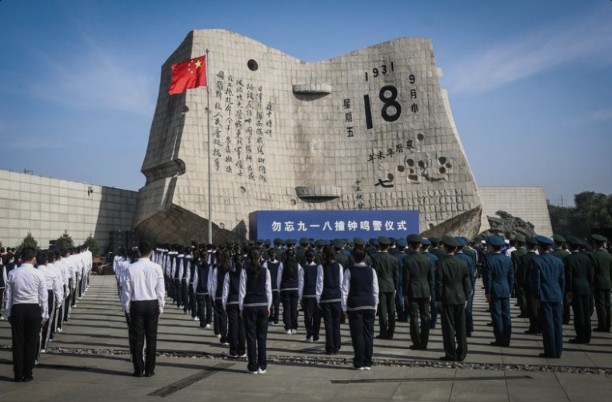
Ninety-five years after the September 18 Incident of 1931 marked the beginning of Japan’s military expansion in northeast China, remembrance of that history has again brought Japan’s evolving security policy into focus. A commentary published by Xinhua argues that the history of Japanese militarism demonstrates how military expansion can lead to aggression and war, and says recent changes in Japan’s defence posture deserve close regional attention.
The September 18 Incident is regarded as a decisive turning point in modern Chinese history. In 1931, Japan’s Kwantung Army used an explosion along the South Manchuria Railway near Mukden, present-day Shenyang, as a pretext for expanding military operations across northeast China. Japan subsequently occupied large areas of the region and established Manchukuo in 1932. China commemorates the incident as the beginning of its 14-year resistance against Japanese aggression.
Xinhua argues that remembering September 18 should not be about sustaining hostility towards the Japanese people, but about preserving the historical lesson of how militarism, expansionism and the justification of military action ultimately contributed to a devastating regional war. Its present concern centres on Japan’s rising defence expenditure, expansion of defence-industrial capacity, development and deployment of longer-range strike systems and the widening operational scope of the Self-Defense Forces.
Japan, however, rejects the characterization of its changing security posture as a return to militarism. Tokyo has presented North Korea’s nuclear and missile programmes, China’s growing military capabilities and the broader deterioration of the regional security environment as major reasons for strengthening its defence capabilities. The same military developments are therefore interpreted differently: Beijing increasingly views them as a potential source of regional instability, while Tokyo describes them as measures necessary for deterrence and national defence.
A particularly sensitive issue concerns the Taiwan Strait. Statements by Japanese Prime Minister Sanae Takaichi suggesting that a serious military contingency involving Taiwan could potentially constitute a “survival-threatening situation” for Japan drew strong objections from Beijing. China argues that such language could create grounds for Japanese military involvement in a Taiwan conflict. Japan, meanwhile, maintains that its security policies remain governed by existing domestic law and its defensive security framework.
Xinhua also points to Japan’s growing defence budget, longer-range missile capabilities, relaxation of restrictions on arms exports and expanding security cooperation with other countries as indications of a gradual departure from the constraints traditionally associated with its post-war security framework. Beijing is particularly concerned about Japan’s growing involvement in Taiwan Strait and South China Sea security issues and argues that the expansion of military partnerships could intensify strategic competition across the Asia-Pacific.
Historical memory remains another sensitive dimension of the relationship. Visits by Japanese politicians to the Yasukuni Shrine, as well as controversies surrounding textbooks and public interpretations of Japan’s wartime conduct, have repeatedly generated criticism in China and other Asian countries that suffered under Japanese aggression. Beijing argues that attempts to minimise or obscure wartime aggression make long-term reconciliation and confidence-building with neighbouring countries more difficult.
At the same time, the debate over Japan’s security direction is not confined to relations with China. Within Japanese society, political and public support for strengthening national defence exists alongside anti-war movements and voices calling for preservation of the pacifist principles embedded in the post-war constitutional order. Japan’s future security posture is therefore also part of an important domestic debate over how the country should respond to a changing regional environment.
The broader lesson of September 18 is that escalating military tensions should not be allowed to become accepted as a normal condition of regional affairs. For China, the date represents the memory of foreign aggression and national suffering. For Japan, it remains connected to the question of how the country confronts and interprets its wartime history. While contemporary security challenges are real, historical memory can contribute more effectively to regional stability when it encourages transparency, restraint and dialogue rather than becoming another source of confrontation.
The history of 95 years ago cannot be changed, but the lessons drawn from it continue to shape the choices of the present. Denying or diminishing historical aggression does little to build trust, while an accelerating military competition can deepen the security dilemma facing East Asia. Responsible engagement with history, respect for post-war commitments and sustained dialogue over contemporary security disputes therefore remain important elements in preventing the tragedies of the past from being repeated.