AI Takes Centre Stage at China–ASEAN Expo, Opening New Opportunities for Trade and Investment Cooperation

Dragon Media News Desk
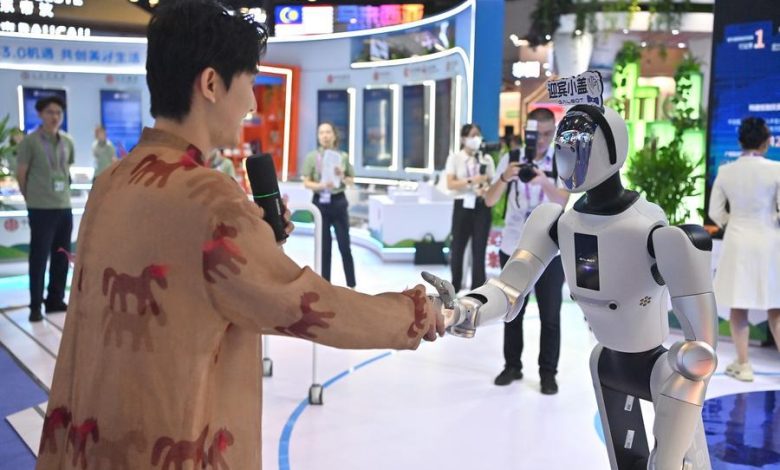
Artificial intelligence (AI) products and services have emerged as a major attraction at the 23rd China–ASEAN Expo in Nanning, capital of south China’s Guangxi Zhuang Autonomous Region. The event, running from September 17 to 21, has brought together more than 3,400 companies from China, the Association of Southeast Asian Nations (ASEAN) and other countries. From real-time translation glasses and intelligent robots to healthcare equipment and agricultural management systems, the exhibition highlights the growing commercial application of AI across multiple sectors.
Vietnamese visitor Doan Minh Thao experienced the technology firsthand when he used smart glasses developed by a Chinese company to communicate with exhibitors. The device provides real-time translation in more than 40 languages, including Vietnamese. Other attractions include embodied AI robots, medical exoskeleton equipment and AI-enabled wearable devices. Unattended coffee booths and ice cream stands operated by robotic arms have also demonstrated practical applications of automation in everyday commercial services.
According to Wang Jicai, secretary-general of the China–ASEAN Expo Secretariat, AI was largely a showcase technology at last year’s event, while this year it is generating actual sales. Organisers said the Expo’s dedicated AI marketplace features approximately 500 products from more than 70 companies, allowing visitors to test and purchase them on-site. Exhibitors are also presenting AI-driven systems for finance, healthcare, transportation, agriculture, production management and water treatment.
The China–ASEAN AI Application Cooperation Center has identified more than 1,000 potential application scenarios, established offices in Vietnam, Laos and Malaysia, and supported over 30 cross-border projects. In Laos and Cambodia, a platform developed through cooperation between local partners and a company from Guangxi has begun using satellite imagery, drones and ground sensors to improve tropical crop cultivation. Exhibitors and seminar participants also identified opportunities for cooperation in smart logistics, industrial automation, financial technology, urban management and cross-border e-commerce.
Dyah Wahyu Ermawati, director of the Investment and Integrated Licensing Services Office of Indonesia’s East Java Province, said AI cooperation extends well beyond the technology industry. Speaking during the second China–ASEAN AI Scenario Application Matchmaking Session, she highlighted its potential in education, healthcare, tourism, industry, public services, agriculture and economic zone development. A collection of China–ASEAN AI cooperation case studies released during the Expo presented 31 practical projects covering all 11 ASEAN member states, including initiatives in infrastructure, intelligent manufacturing and smart logistics.
China and ASEAN are each other’s largest trading partners, with bilateral trade exceeding US$1 trillion in 2025. Against the backdrop of the China–ASEAN Free Trade Area 3.0 Upgrade Protocol, signed in October 2025, artificial intelligence has emerged as a new area of economic cooperation. The Expo, which has been held for more than two decades, has placed particular emphasis on digital technology this year as both sides seek to expand trade, investment and industrial collaboration.
ASEAN Secretary-General Kao Kim Hourn expressed optimism about the benefits of AI cooperation between China and ASEAN, noting that its potential extends beyond the economy to various sectors of society. He emphasised the importance of appropriate rules and regulations while cautioning against measures that could restrict innovation and creativity. The ongoing Expo demonstrates how China–ASEAN AI cooperation is moving beyond technological demonstrations towards commercial products, public services and practical cross-border investment projects.