Japanese War Orphans Carry Memories of Suffering, Chinese Compassion and a Message of Peace

Dragon Media News Desk
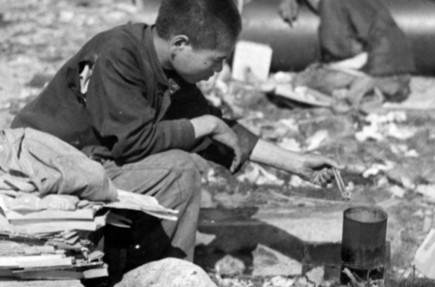
The life stories of thousands of Japanese children left behind in China at the end of the Second World War have brought renewed attention to the human suffering caused by war and the enduring bonds between ordinary people of the two countries. Following Japan’s surrender in 1945, many Japanese women and children in northeast China were abandoned amid the chaos of the military withdrawal. Historical records indicate that more than 4,000 Japanese children were subsequently taken in and raised by Chinese families. Decades later, many who returned to Japan have maintained close ties with their Chinese foster families while promoting peace and friendship between the two nations.
Katsu Takahashi, a Japanese war orphan, did not discover her Japanese origins until 1986, when she was 43 years old. Raised in China’s Heilongjiang Province, she had been the favourite child in her family, receiving new clothes and shoes before her siblings and the largest share of candy. She later learned that her biological mother had left her outside as a two-year-old in 1945 to save her life as Japan faced defeat. A Chinese couple found the child and raised her as their own daughter.
China commemorates September 18, 1931, when Japanese forces launched their attack in Shenyang, Liaoning Province, as the beginning of its 14-year War of Resistance Against Japanese Aggression. In the following years, Japan sent large numbers of settlers, as well as troops, into northeast China. In 1936, Japanese farmers were encouraged to migrate to the region with promises of fertile agricultural land. However, as the war approached its end, Japanese forces withdrew, leaving many elderly people, women, children and the sick in dangerous conditions.
According to Cui Xuesen, a professor at Dalian University of Foreign Languages who has extensively studied Japanese war orphans, Japanese militarism inflicted immense suffering not only on the people of other countries but also on Japan’s own citizens. Since 2022, Cui has travelled to Japan several times, interviewing nearly 300 war orphans and documenting their oral histories. He believes their experiences provide important evidence of the lasting human consequences of war, displacement and family separation.
Fumiko Wada, a Japanese woman abandoned during the final stages of the war, recalled in her memoir that she attempted to escape by railway with her two young children, only to discover that Japanese troops had already withdrawn. According to her account, a Japanese official urged civilians to die for Japan rather than face capture, and poison and grenades were distributed to some families. Wada fled towards the mountains with her children, but her two-year-old daughter and three-year-old son died of hunger during the journey. Disease, starvation and suicide claimed many lives among those left behind.
Following the normalisation of diplomatic relations between China and Japan in 1972, Japanese war orphans raised in China were given the option of remaining in the country or returning to Japan. However, many who returned were unable to reunite with their biological families. Language barriers and cultural differences also complicated their efforts to establish new lives. When Takahashi finally arrived in Japan, her biological father had already died, while her stepmother refused to acknowledge her. Such experiences demonstrate how family separation and questions of identity continued to affect survivors decades after the war ended.
Nevertheless, many Japanese war orphans maintained close relationships with the Chinese families who had raised them. Yoshinori Tomii, who was adopted by a Chinese family surnamed Dong, continued visiting his foster family in Heilongjiang after relocating to Japan. Having graduated from a university in Beijing, he established businesses in several parts of China, contributing to China–Japan trade and local economic development. Like Tomii, many others have expressed gratitude to their Chinese foster families through efforts to strengthen cooperation and friendship between the two countries.
Sumie Ikeda, known by her Chinese name Xu Ming, was adopted by a Chinese family in 1945 and became a teacher after completing her education in China. Encouraged by her foster mother, she eventually returned to Japan but never lost her connection with China. Following the devastating earthquake in Sichuan Province in 2008, she organised donations among Japanese war orphans. Their collective efforts also supported the construction of a primary school in Sichuan. In 2009, Ikeda organised a visit to China for a group of Japanese war orphans, many of whom were overcome with emotion upon returning to places they had long regarded as home. She said her Chinese parents and the kindness of ordinary Chinese people had given her a second life, inspiring her wish for lasting friendship between the two peoples.
The efforts of Japanese war orphans have extended beyond preserving personal memories. Since 2002, groups of survivors have pursued legal action seeking compensation from the Japanese government. Their experiences have also inspired theatrical productions, documentaries and other artistic works that introduce younger generations to this chapter of history. The dance drama Chinese Mothers, based on the stories of Japanese war orphans, has been performed in cities across China and Japan, highlighting the compassion shown by Chinese families who sheltered Japanese children.
In November 2025, Japanese documentary filmmaker Ryo Takeuchi held a special screening in Japan of his film The Nameless Child. The documentary explores how ordinary Chinese people cared for Japanese war orphans despite the bitter wartime conflict between their countries. Having read reports about these children since his own childhood, Takeuchi sought to preserve their experiences through film and encourage audiences to reflect on the lessons of history.
The stories of Japanese war orphans demonstrate that the consequences of war extend far beyond military and political boundaries. Their experiences combine displacement, family separation and struggles over identity with extraordinary examples of human compassion. Raised in China and connected to both countries, these survivors have transformed their personal histories into a message of remembrance, reconciliation and friendship, helping future generations understand the human cost of war and the enduring importance of peace.