Hong Kong’s First Five-Year Plan Aligns with China’s National Development Strategy

Dragon Media News Desk
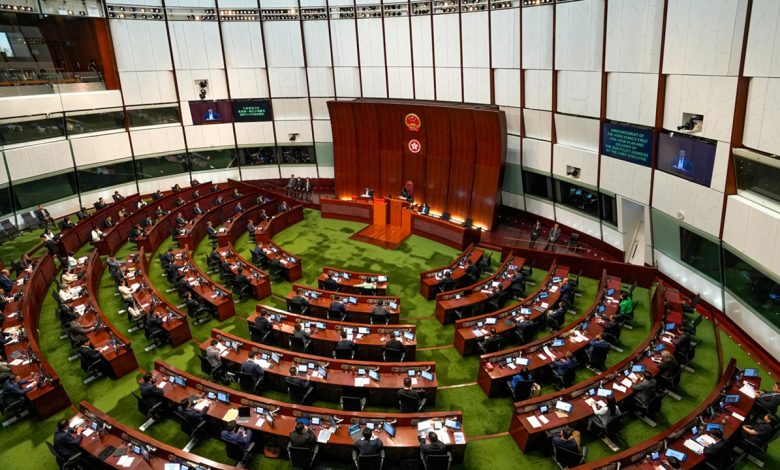
The Hong Kong Special Administrative Region has introduced its first five-year economic and social development plan for 2026–2030, placing international legal services, dispute resolution, professional talent development and coordination with China’s national development strategy among its priorities. Chief Executive John Lee presented the plan to the Legislative Council on September 16 alongside his annual Policy Address. The initiative marks Hong Kong’s first comprehensive development blueprint covering a five-year period, moving beyond its traditional annual policy framework.
Hong Kong’s new blueprint aligns with China’s 15th Five-Year Plan, which also covers 2026–2030. The national plan seeks to make greater use of Hong Kong’s connections with both the Chinese mainland and international markets, particularly by strengthening its position as an international centre for legal and dispute resolution services. It also supports attracting highly skilled professionals, providing services to Chinese enterprises expanding overseas and strengthening Hong Kong’s role in international legal cooperation.
Lawrence Ma, chairman of the Hong Kong Legal Exchange Foundation, described the initiative as a shift from annual policymaking towards long-term institutional development in an article published by Global Times on September 19. He argued that establishing courts, reforming legislation, negotiating international agreements and developing professional expertise require sustained efforts extending beyond a single year. A clearly defined five-year framework, he said, would allow government agencies, professional organisations and investors to prepare with greater certainty.
The plan includes a proposal to establish an International Commercial Court in Hong Kong, with judges potentially invited from other common law jurisdictions. It also envisages reforms to arbitration legislation, the development of an internationally aligned mediation framework and expanded training for legal professionals. The Hong Kong International Legal Talents Training Academy is expected to develop into a centre for professional training and exchanges serving China and the wider international community.
A purpose-built International Legal Service Building is also proposed to support the expansion of legal services. Strengthening the role of the International Organization for Mediation, headquartered in Hong Kong, forms another element of the broader national development strategy. Together, these institutional initiatives are intended to enhance Hong Kong’s capacity in cross-border commercial dispute resolution, international arbitration and legal advisory services.
Hong Kong’s legal system has distinctive characteristics within China because it operates under the common law tradition. Preserved under the “One Country, Two Systems” framework, the system accommodates legal practice in both Chinese and English. According to Ma, these characteristics allow Hong Kong to serve as an important legal bridge between Chinese enterprises and the international business community. He argued that the national development strategy recognises this institutional framework as an economic asset with wider strategic value.
As Chinese enterprises expand their investments across Africa, Latin America, Central Asia and Southeast Asia, demand for cross-border legal services may increase. Investment agreements, licence cancellations, property disputes, profit repatriation and regulatory changes can create complex legal challenges requiring international expertise. Hong Kong’s development plan places particular emphasis on cultivating professionals capable of providing services in these areas.
The introduction of a five-year plan has also prompted discussion about its implications for Hong Kong’s market-oriented economic system. Chief Executive Lee has clarified that the initiative is a long-term development blueprint rather than a programme for establishing a centrally planned economy. Ma similarly argued that the plan does not determine where private capital must be invested or allocate market shares among businesses. Instead, the government would establish public objectives concerning courts, legislation, professional training and institutional standards, while private enterprises and professional service providers would continue to compete in the market.
The implementation of Hong Kong’s first five-year plan will be assessed through progress in establishing the proposed court, completing legal reforms and expanding professional training institutions. The number of international disputes resolved in Hong Kong, the legal services provided to Chinese enterprises operating overseas and the training of legal professionals from across the region will be important indicators of its effectiveness. The plan reflects an approach in which China’s national development strategy establishes broader objectives while Hong Kong develops the institutional capabilities needed to fulfil its designated role.