Police Loyalty: To the Constitution or to the Orders of Those in Power?

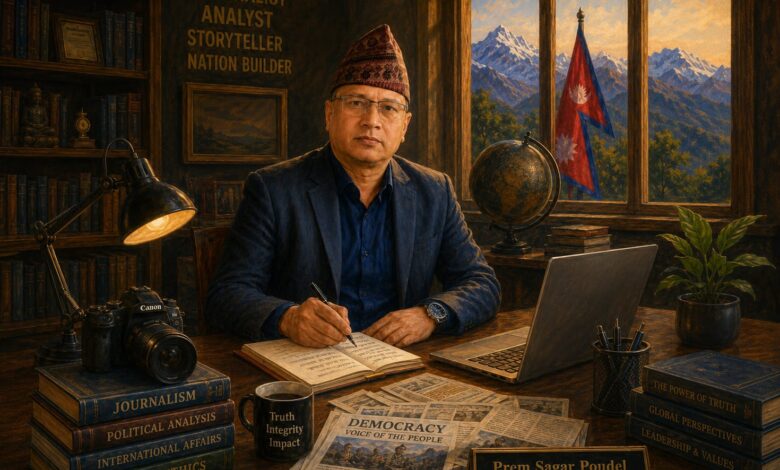
Prem Sagar Poudel
The police are an organ of the government. Implementing lawful government directives is part of their duty. But if this administrative relationship is interpreted to mean that every instruction issued by a prime minister, minister or other powerful official constitutes an unquestionable command, the foundations of the rule of law begin to weaken. In a democracy, political leaders have the authority to govern, but that authority is not above the Constitution and the law. The ultimate loyalty of the police must be to the Constitution and the law, not to the individuals occupying government office.
This principle raises fundamental questions about professional independence, citizens’ rights and the exercise of state power. Obeying government orders and upholding the law are not necessarily the same thing. When an instruction is lawful, these responsibilities reinforce each other. But when an instruction is intended to settle political scores, suppress critical voices or subject an individual to unnecessary hardship under the pretext of investigation, police leadership must exercise its own legal and constitutional judgment. Abandoning professional discretion in the name of obedience can undermine the independence and credibility of the entire police institution.
Several controversial arrests in Nepal have brought this issue into public debate. Questions were raised about the legal justification and procedures surrounding the arrests of former Prime Minister KP Sharma Oli and former Home Minister Ramesh Lekhak. The central issue was not whether former officeholders could be investigated, but what justified their arrest during the investigation. Former public officials are not above the law. Equally, their political identity cannot replace the requirement for a lawful basis, sufficient grounds, necessity and due process before an arrest is made.
The arrest of senior journalist and Jana Aastha Weekly editor Kishor Shrestha brought the relationship between police authority and press freedom into sharper focus. He was arrested during an investigation into a complaint concerning personal privacy, while electronic equipment was seized from his residence and the newspaper’s office. The Supreme Court subsequently ordered that the investigation proceed without keeping him in custody and directed the return of the seized materials. The Court did not prohibit the investigation itself. It distinguished the authority to investigate from the necessity of detention. That distinction lies at the heart of the rule of law: the existence of an investigation does not automatically justify depriving a person of liberty.
In a public article, Shrestha described Inspector General of Police Dan Bahadur Karki as a former schoolmate and expressed confidence in his personal integrity and professional commitment. According to Shrestha, Karki had voiced reservations to the political leadership about controversial arrests. Such an assessment, grounded in personal experience, deserves to be understood in its proper context. Yet the public responsibilities of a police chief cannot be assessed solely through personal relationships or objections reportedly expressed behind closed doors. What decisions were ultimately taken, what police actions followed and how those actions affected citizens’ rights are equally important questions.
This is where a fundamental principle must be established: obeying an unlawful order is not professional integrity. Standing by the law is the true measure of professional commitment in police leadership. If a police chief expressed reservations about an instruction that might have been improper, that could indicate the exercise of professional judgment. But if the disputed action nevertheless proceeded, a further question remains: was expressing disagreement sufficient? The real test of professional courage is not merely voicing objections, but exercising one’s authority and responsibility to prevent unlawful orders from being implemented.
This does not mean that police chiefs should oppose every government directive. In a democratic system, the police are administratively accountable to the elected government. The government has the authority to establish public security policy, determine crime-control priorities and issue lawful instructions. But political dissatisfaction, a minister’s request or a prime minister’s direction cannot, by themselves, justify an individual’s arrest. Such a decision requires a legal basis connected to an investigation and a demonstrable need for detention. Preserving the distinction between political leadership’s policy-making authority and investigators’ responsibility to make decisions under the law is essential to institutional professionalism.
The arrest of political analyst and Trimul Nepal chairman Bharat Dahal has made this debate relevant once again. Police have stated that he was taken into custody on the basis of an arrest warrant issued by the Kathmandu District Court and a request from the Cyber Bureau. His associates have characterized the arrest as an attempt to suppress political expression. That allegation requires independent examination; the fact of an arrest alone does not establish political retaliation. Nevertheless, the state has a responsibility to explain the legal grounds for its actions.
If a lawful complaint has been filed concerning Dahal’s statements, it should be investigated impartially. Freedom of expression does not automatically protect conduct that unlawfully infringes upon the rights of others. At the same time, criticizing the government, questioning the political system or expressing controversial political opinions does not itself establish criminal wrongdoing. The need for an investigation and the need for an arrest must be examined separately. An arrest warrant is an important element of legal procedure, but it does not conclusively establish either the truth of an allegation or the impartiality of the investigation.
These cases should not be viewed through a single political lens. Oli and Lekhak are former political officeholders, Shrestha is a journalist, and Dahal is a political analyst and party chairman. Their public roles, allegations and legal circumstances differ. It would therefore be inappropriate to conclude, without evidence, that all the arrests were motivated by the same objective. The constitutional standards applicable to them, however, must remain consistent. What is the legal basis for the investigation? Why was arrest necessary? Were less restrictive alternatives available? Were the individuals able to exercise their legal rights? The answers to these questions must not depend on political identity.
Nepal’s Constitution protects freedom of opinion and expression, freedom of communication and rights relating to justice. These rights are not absolute; they are subject to lawful limitations. But any restriction imposed by the state must have a legal basis, serve a legitimate purpose and meet the test of necessity. Police powers must be exercised within this constitutional framework. Arrest, detention and search require a higher degree of legal scrutiny than ordinary administrative action because they directly affect personal liberty, privacy and other fundamental rights.
The responsibility of political leaders who issue instructions is another essential part of this debate. If pressure was placed on the police, scrutiny should not end with the police chief. Who issued the instruction? What legal grounds were presented? What advice did the police provide? How was the final decision reached? Informal pressure and verbal instructions can obscure both political and administrative accountability. Sensitive investigations therefore require clear records of instructions, decisions and their legal justification. Such safeguards protect not only citizens but also police officers facing improper pressure.
Professional independence within the police cannot depend indefinitely on the personality, friendships or individual courage of whoever occupies the highest office. Clear legal authority, documented decision-making, effective judicial oversight and institutional protection against improper interference are essential. The standards of the rule of law must not change whenever a new police chief takes office. The answer to selective treatment is not the personal reputation of a particular official, but a consistent process that applies equally to everyone.
The same standard should guide assessments of Inspector General Dan Bahadur Karki and previous police leaders. Advice given, objections expressed and final decisions taken may differ, and each deserves factual examination. Confidence in an officer’s personal integrity does not automatically establish that every action taken under that officer’s leadership was lawful. Conversely, the occurrence of a controversial police action does not, by itself, establish the officer’s personal motives. Public accountability must focus on the exercise of authority, the justification for decisions and their consequences rather than speculation about individual intentions.
Ultimately, this debate is not about supporting or opposing a particular prime minister, minister, police chief, journalist or political analyst. It concerns the fundamental question of how state power should be exercised. Governments change, political leaders change and police chiefs change. Citizens’ rights and the supremacy of law must not change with them. When the police implement lawful directives, they contribute to effective government. When they resist unlawful pressure, they protect the credibility of democratic institutions.
The police are an organ of the government, but they are not an instrument of the personal wishes of those in power. Their loyalty must be to the Constitution and the law. Obeying an unlawful order is not professional integrity. Standing by the law is the true measure of professional commitment in police leadership. Public accountability must examine not only what an officer said under pressure, but also what that officer did with the authority entrusted to them. The real test of the rule of law is neither protecting powerful individuals nor arresting their critics. It is applying the same legal standards to everyone.
About the Author: Prem Sagar Poudel is a senior journalist and international relations analyst from Nepal. He has conducted in-depth studies on Nepal-China relations, the geopolitics of the Himalayan region, and Asian security issues.