Detention in the Name of Security: What Kind of Governance Is Nepal’s Government Establishing?

Lucky Chand
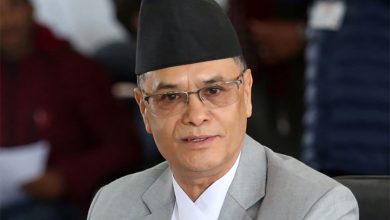
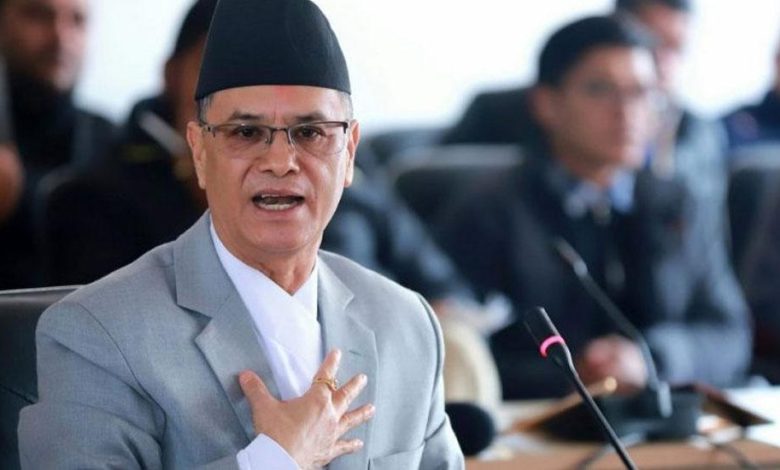
The removal of former Chief Justice Cholendra Shumsher J.B. Rana from his residence in Maharajgunj in the early hours of Sunday and his subsequent transfer to a police office have raised serious questions about the governing style of Nepal’s current administration. Police have justified their actions by citing security threats, claiming that Rana was brought to the Crime Investigation Office for his own protection. Yet the same police authorities have acknowledged that no complaint had been filed against him and that no legal proceedings were being initiated. If that is the case, why was a person supposedly requiring protection taken to a criminal investigation office? Is the state’s responsibility to protect citizens, or does the government consider security a justification for restricting their personal liberty? This is the central question arising from the incident.
No individual stands above the law merely because he once held the office of Chief Justice. Equally, no former Chief Justice can be deprived of constitutionally guaranteed rights because of his previous position. Rana’s past is not free from controversy. Serious questions were raised about his decisions and conduct while leading the judiciary, and an impeachment motion was registered against him. Those matters remain legitimate subjects of legal and historical scrutiny. However, past controversies cannot serve as justification for circumventing due process in the present. The genuine test of democratic governance is not whether a government protects the rights of its supporters, but whether it safeguards the rights of its critics and even those whose conduct remains controversial.
Police have claimed that Rana faced security threats. If those threats were genuine, should the government not have identified the individuals or groups responsible? Should the police not have monitored potential attackers and strengthened security at his residence? What kind of security doctrine allows the authorities to leave the source of a threat unaddressed while removing the person supposedly facing that threat to a police office? If this becomes an accepted practice, what prevents a journalist, intellectual, lawyer or government critic from being taken into custody in the middle of the night under the same justification?
Another troubling dimension concerns police mobilisation and administrative accountability. Kathmandu Chief District Officer Ishwar Raj Poudel has reportedly stated that he was unaware of the incident involving the former Chief Justice. Such a statement from an official entrusted with significant responsibility for maintaining peace and security in the district cannot be dismissed as a routine administrative matter. Who authorised the police operation? Who assessed the alleged security risk? At what level was the decision made to transfer Rana from his residence to the police office? Was coordination with the district administration legally required, and if so, was that requirement fulfilled? The Home Ministry cannot discharge its institutional responsibilities without addressing these questions.
The government led by Prime Minister Balendra Shah and Home Minister Sudhan Gurung must provide a clear institutional explanation. It would be inappropriate to conclude, without evidence, that the political leadership directly ordered every action taken by the police. Nevertheless, political leadership cannot distance itself from responsibility for the legality, discipline and accountability of security agencies operating under the Home Ministry. If the police continue citing security concerns, the district administration maintains that it was uninformed, and the government fails to clarify the legal basis of the operation, questions about the country’s decision-making processes and mechanisms of institutional oversight become unavoidable.
Nepal’s Constitution guarantees personal liberty and the right to justice. A person who has been arrested must be informed of the grounds for arrest, must have access to legal counsel, and must ordinarily be produced before the competent judicial authority within twenty-four hours. Yet the authorities have not clearly established whether Rana was arrested or merely transferred for protective purposes. Was he free to leave the police office? Could he have refused to accompany the officers? These factual circumstances are essential to determining the legal nature of the incident. If an individual’s freedom of movement has been restricted, the authorities cannot simply describe the action as a security arrangement and place it beyond legal scrutiny.
The present administration assumed responsibility amid public expectations of transparency, accountability and a different political culture. For such a government, protecting citizens’ rights is not an optional political gesture but a constitutional obligation. A new leadership that emerged amid criticism of the practices of established political parties must itself be judged by how transparently and lawfully it exercises state authority. Political novelty is not demonstrated by the age, popularity or identity of those in power. It is demonstrated by how the state treats its citizens.
Nepal’s prolonged political transition has been marked by controversies involving the misuse of state power, allegations of political retaliation, interference in judicial institutions and the political mobilisation of security agencies. Questioning extraordinary security decisions by a new government is therefore not an act of political hostility. It is an essential exercise of public oversight intended to keep state authority within constitutional limits. A society that remains silent when the personal liberty of a former Chief Justice is questioned may find itself weakening the moral and institutional foundations needed to defend the rights of ordinary citizens facing similar treatment tomorrow.
The decision to take Rana to a police office in the middle of the night also demands an explanation. What immediate danger required officers to act at that hour? How credible was the intelligence concerning the alleged threat? Was Rana informed of alternative security arrangements? Was his consent obtained? What was the intended purpose and duration of keeping him at the police office? Until these questions are answered, neither an unequivocal characterisation of the incident as a protective measure nor a definitive conclusion that it constituted an unlawful arrest would be justified. What is required is an independent assessment grounded in evidence and law.
The Prime Minister and Home Minister must recognise a fundamental principle: state authority is not unlimited. The responsibility to protect citizens does not confer an unrestricted power to curtail their freedom. Police operations may involve legitimate confidentiality and security considerations, but those considerations cannot extinguish the requirement to establish a lawful basis for official action or remove the obligation of accountability. Circumstances may arise in which action against a powerful public figure is necessary. Even then, strict adherence to due process remains the foundation of institutional credibility.
The government should now disclose the nature of the security threat, the decision-making process behind the police operation, Rana’s legal status and the extent of coordination with the district administration. If an investigation establishes that legal procedures were violated, responsibility must be determined and appropriate action taken. If the alleged security threat was genuine, the authorities must investigate its source and take necessary protective measures. The same legal standards must apply regardless of an individual’s position, political associations or public reputation.
Ultimately, this is not merely a question about Cholendra Shumsher J.B. Rana. It concerns the relationship between the state and its citizens, the authority and limitations of security institutions, and the institutional accountability of the Prime Minister and Home Minister. More fundamentally, it raises a question about whether Nepal’s new political leadership is beginning to correct longstanding weaknesses in governance or allowing the old practice of exercising state power without sufficient transparency to continue.
The government must answer these questions not through political speeches but by disclosing the relevant facts, clarifying the legal basis of the operation and accepting scrutiny where necessary. If personal liberty can be restricted in the name of security, who determines the limits of that power? If citizens cannot question the legal grounds of police action, what practical meaning remains in the rights guaranteed by the Constitution?
The state is the protector of its citizens, not the owner of their liberty. Police operations and executive decisions must be examined against that constitutional principle. Otherwise, every unexplained exercise of authority in the name of security risks further weakening public confidence in government. The responsibility for restoring that confidence rests with the government itself.