Cooperation Between Great Powers and the Global South’s Independent Decision-Making

Sanket Kiranti
If a developing country is pressured to limit cooperation with China, while the power applying that pressure itself advances trade and strategic dialogue with China, according to whose expectations should that country shape its foreign policy? The recent meeting between U.S. President Donald Trump and Chinese President Xi Jinping has brought this question into sharper focus for the Global South. It has reminded developing countries that they have no reason to give priority to the rivalry of external powers over their own interests.
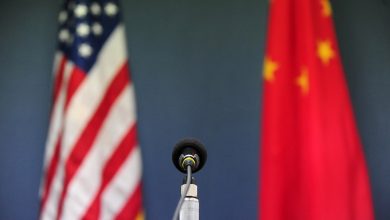
The accounts made public after the Washington talks state that mechanisms for cooperation on trade, investment and the risks of emerging technologies have been advanced. Differences over matters such as the supply of rare minerals remain. The meeting therefore cannot be regarded as the end of competition. What matters is that the two powers are seeking agreements in areas beneficial to themselves even while their differences persist. It is diplomatically inconsistent for great powers that exercise such flexibility in pursuit of their own interests to expect permanent allegiance from other countries.
Nor does this provide grounds to place China’s influence and America’s influence on the same scale and immediately declare a winner. For developing countries, the main question is not whose influence is greater, but what they gain from relations with both. Market access, investment, technology and security ties can be useful. But if their price is reduced freedom to make policy, a heavier debt burden or the weakening of domestic industries, their benefits must be reassessed.
The Global South is not a group with a single set of interests. Energy exporters need stable prices and markets; importers need affordable supplies. For some, industrial production is the priority; for others, it is development finance or food security. This diversity is why they do not follow a single foreign policy. The shared aspiration that connects them is to have greater authority over decisions concerning their geography, labour, markets and resources.
The crisis in West Asia shows the importance of this aspiration. Tensions involving Iran and disruptions to maritime routes have compelled countries in the region to consider not only security, but also the continuity of energy trade and civilian life. The United States and China have different means of contributing to solutions to these problems. Ultimately, however, the direction of peace depends on the decisions of the region’s countries and the parties concerned. The Gulf countries’ expansion of relations with multiple partners is not merely an expression of distrust toward any power; it is an effort to protect their own options.
In trade, agreements between great powers can change both the opportunities and the risks facing third countries. An easing of tensions between the United States and China could reduce uncertainty in supply and shipping. Conversely, preferences they grant each other could narrow the markets available to producers in other countries. Developing countries should therefore go beyond welcoming or opposing the summit and examine how each decision affects their industries, exports, jobs and consumers. Agreement between great powers is no guarantee of equal benefits for all.
This question runs even deeper in emerging technologies. The United States and China have announced dialogue on technological risks and a means of maintaining contact during serious incidents. Such contact could be useful. But if the rules for technologies used around the world are determined solely through an understanding between the two powers, the needs of developing countries will be pushed aside. Their voices must be heard while the rules are being made, particularly on the effects on local languages, labour, privacy and public services.
Digital autonomy does not simply mean abandoning one country’s technology and adopting another’s. Its foundation is the ability to protect one’s data, test systems independently, correct errors and negotiate clear terms with service providers. A country unable to understand how an imported system makes decisions may also be unable to replace it when necessary. Technological acquisition must therefore be accompanied by the development of institutional expertise.
Growing interest in platforms such as BRICS should also be understood in this context. They offer opportunities to raise a collective voice on development finance, trade and reform of global institutions. For developing countries, the value of such platforms lies not in severing relations with others, but in expanding their options. The results of multilateralism should be measured by fairer finance, reliable markets and meaningful participation in decision-making.
For Nepal, this debate is of direct importance. China is a neighbour and a significant economic partner. Nepal has an open border and deep economic ties with India. It also has development, educational and diplomatic relations with the United States. These relationships cannot be placed into a simple division of sides in an external rivalry. Nepal must assess each proposal according to the usefulness of the project, the terms of loans or grants, control over technology, trade opportunities and its own right to make decisions.
Strategic autonomy is not a calculation of maintaining equal distance from all powers. It is the ability to define one’s priorities clearly and work with different partners on different issues. With long-term policies on energy, cross-border trade, transport and digital infrastructure, external cooperation can be linked to national goals. When policy is unclear, however, others’ proposals begin to determine the direction of agreements. The first task in safeguarding autonomy is to strengthen one’s own decision-making process.
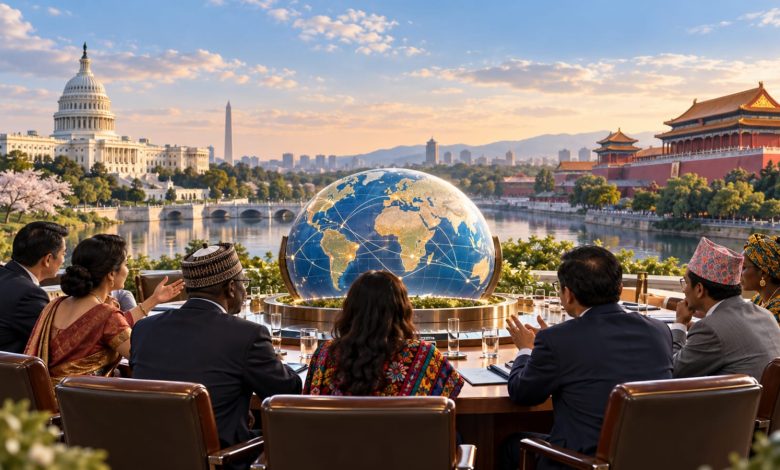
Trump and Xi have kept room for dialogue despite their differences. What developing countries should learn from this is not to stand on the side of any power, but to be equally clear about their own interests. If great powers can keep their options open, countries of the Global South have the same right. To make that right effective in practice, they need the capacity to understand the costs of agreements, set terms that benefit their citizens and turn external cooperation into domestic capability.