Rabi–Gagan Banter Raises Questions About Intra-Party Democracy
Editorial


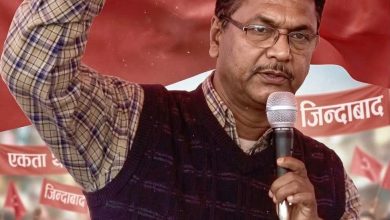
The banter between Rabi Lamichhane and Gagan Thapa at the opening of the Nepali Congress’s 15th General Convention drew laughter and applause at the convention venue. Their exchanges brought together their long acquaintance, electoral history and discontent within the party. But the remarks went beyond entertainment. They raised serious questions about representation, leadership selection and how parties treat dissent.
Lamichhane accused the Congress of giving priority to wealthy people over loyal party workers and distributing proportional representation opportunities to its associates. The truth of these allegations should be examined on the basis of facts and records. But questions about the influence of money in candidate selection and the basis on which representation is allocated cannot be brushed aside with laughter. A party’s credibility is measured not by its speeches but by the transparency of its selection process.
Thapa responded by saying that leaders and parliament members of the Rastriya Swatantra Party came from a Congress background. His remark drew applause at the convention venue, but presenting people who have joined another party as the former party’s achievement or possession is not a political answer. Citizens and leaders are free to choose their political path. A party’s test is not who trained whom first, but what policies and work it offers to meet public expectations.
Lamichhane advised Thapa that it would be better to let dissatisfied leaders go than to spend time trying to persuade them. But party unity is strengthened by addressing dissent democratically, not by suppressing it. If leadership treats criticism only as an obstacle, the party becomes closed. On the other hand, blocking decisions or seeking special privileges in the name of dissatisfaction also weakens an organization. The solution lies in clear rules, open debate and decision-making processes that apply equally to everyone.
Some have interpreted the Rastriya Swatantra Party’s decision not to field a candidate in Kathmandu Constituency No. 4 in the 2022 election as Lamichhane’s first “favor” to Thapa. But not fielding a candidate may be a political strategy; presenting it as a personal favor oversimplifies voters’ choices and the realities of electoral competition. In a democracy, votes are not a leader’s private gift.
The leaders’ light-hearted exchange may have offered an opportunity to ease old tensions. But personal rapport or goodwill on a public platform cannot replace political accountability. The Congress convention must answer the questions of party workers and the public through its rules, policies and conduct. Making an audience laugh at a rival is a momentary success; making a party transparent, inclusive and accountable is the longer-term test. The question now is whether Rabi and Gagan’s words won applause, or whether their political conduct and institutional reforms will earn public trust.