Nepal Is Not a Laboratory: Foreign Training, Domestic Politics and the Question of Sovereignty

Avinash Sharma
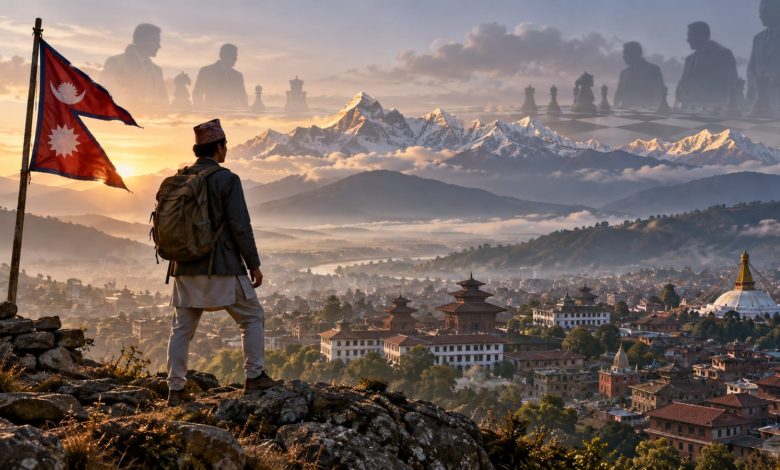
Training can build confidence, teach strategy and even create the illusion of invincibility. But geopolitics is not an exercise in a training room. Power, interests, public opinion, state capacity and regional realities collide all at once. Those who try to apply formulas learned abroad to Nepal without adapting them to the country’s realities will be brought down by those realities.
It is equally misleading to explain Nepal’s political crisis solely as the result of domestic discontent or an external plot. If people have genuine grievances, they cannot be dismissed as a foreign conspiracy. At the same time, allegations that those grievances are being used to weaken state institutions, steer political change in line with outside interests or deliberately fuel instability cannot be brushed aside. Such allegations must be answered with evidence and impartial investigation, not slogans.
The claim that there is a plan to paralyse the police, army, administration and other state bodies, then deploy groups aligned with outside interests across the country, is serious. If true, this would not be ordinary political competition; it would be an assault on the nation’s ability to make decisions and protect public safety. But the state and those making the allegations alike have a responsibility to substantiate them. To label someone a foreign power’s agent without evidence is unjust; to suppress questions backed by evidence is a sign of state weakness.
It is no secret that external powers use financial assistance, training, communications networks and political contacts to expand their influence. But receiving support alone is not proof of wrongdoing. The source, purpose, conditions and use of that support must be examined transparently. If an organisation or individual receives money or training from abroad, the details should be made public. At the same time, the state must not arbitrarily restrict lawful activities by civil society or political groups in the name of foreign assistance. Sovereignty is defended through law and evidence, not by turning suspicion into an instrument of repression.
Nepal’s vulnerability does not stem only from the activities of external powers; hollow domestic governance also creates openings for outside influence. If anti-corruption efforts target selected individuals, protect those close to power and place institutions under political direction, they will not build public trust. Instead, they will deepen suspicions that enforcement is driven by revenge or foreign interests. Credible anti-corruption efforts require equal investigation of all, independent prosecution and justice based on evidence. Selective action does not reduce corruption; it weakens the state’s moral authority.
Some people returning from foreign training may develop an exaggerated sense of their power, access and influence. Training can teach communication, organisation and campaign skills, but it does not confer public consent, national legitimacy or the right to govern. The authority to speak in the people’s name comes from the people themselves. A strategy shaped by external support may appear to move quickly, but its foundations will be weak if it fails to understand the country’s social fabric, institutional memory and political awareness.
If questions arise in public debate about support from networks linked to the Dalai Lama or organisations such as the NED, they should be investigated transparently. The public should know who received support, when, for what purpose and how it was used. But no one should be branded a traitor solely because of a name or an association. The law must decide on the basis of verified facts. Patriotism does not mean suppressing dissent; it means ensuring that decisions in the national interest are free from foreign direction and opaque transactions.
Nepal’s geopolitical position means that no political experiment here remains a purely domestic affair. Instability in the country affects the security, trade and strategic interests of its neighbours and other external powers. They therefore watch developments closely and interpret them in line with their own interests. In such circumstances, Nepali leaders would be making a grave mistake if they mistook another country’s strategy for their own victory. Foreign support may be temporary; the obligations it creates and the price it carries may burden the country for years.
Revolutionary patriotism is more than emotional speeches or slogans against foreign powers. It means protecting state institutions from partisan control, applying equal standards in the fight against corruption, making public decisions transparent and safeguarding citizens’ political rights. National independence is defended not only by the army’s weapons or the police’s presence, but also by impartial justice, an accountable government and public trust.
Nepal need not seek hostility with any external power, but it must not surrender to anyone the right to determine its political course. That requires a strong government—not strong in the sense of being repressive, but strong in legitimacy and accountability. The government must hold those accused to account on the basis of evidence, keep state institutions impartial and make foreign assistance and political contacts transparent. That is where the genuine defence of sovereignty begins.
Training may lift some people up for a time. But those who fail to understand the country’s realities, the people’s political awareness and the balance of geopolitical power will eventually be brought down by the weight of their own illusions. Nepal needs not a government that follows someone else’s orders, but a state that is accountable to its own people, grounded in law and unwilling to bend under external pressure.