An Enemy’s War on a Friend’s Soil: From Mustang to Dharamshala, the Invisible Assault on Nepal

# Prem Sagar Poudel
Prologue
Nepal’s peaceful land, a safe roof for refugees, and a covert battlefield for an armed rebellion against a friendly neighbour China. At the centre of these three contradictory identities lies a dark history stretching from Mustang to Pokhara. Dharamshala in India recently awarded a medal inscribed with ‘Tibet’ to the former fighters residing in Pokhara’s Jampaling, Paljorling, and Tashi Gang camps. This honour has poured fresh salt on old wounds. For these very fighters, having turned Nepal’s sovereign soil into a staging ground, had taken up arms against friendly nation China under the leadership of the American CIA. From the strategies of the Cold War to the mirror of international law, this episode stands as a living document of Nepal’s diplomatic helplessness and ‘betrayal of a friend’. The present article offers an in-depth analysis of the roots and impact of this invisible assault, as well as the path Nepal must choose.
Pokhara’s Peaceful Camps and Mustang’s Bloody History
On April 29–30, 2024, Dharamshala in India awarded a special medal inscribed with ‘Tibet’ to some individuals now living peacefully in the tranquil environment of Pokhara’s Jampaling, Paljorling, and Tashi Gang refugee camps. Among those honoured are four members of the ‘Lodrik group’ — Ngawang Chultrim, Kelsang Tshering, Sonam Tashi, and Phachen — who, from Nepal’s Mustang region, attacked the Chinese People’s Liberation Army for a decade. As an active wing of ‘Chushi Gangdruk’ (Four Rivers, Six Mountains), a group established to fight China, this outfit conducted armed operations against friendly neighbour China from Nepal’s sovereign soil.
This honour ceremony raises numerous questions for Nepal’s national security and diplomatic balance. To honour a group that used Nepal’s land to wage an armed struggle against a friendly neighbour China is, in itself, an indirect assault on Nepal. It is not merely the remembrance of a historical event, but a grave challenge to Nepal’s sovereignty, territorial integrity, and non-aligned foreign policy. On the one hand, the Nepali government calls China a ‘friendly nation’; on the other, Dharamshala honours fighters who fought against China from Nepal’s very own soil. This contradiction is living proof of Nepal’s diplomatic weakness and ‘betrayal of a friend’.
Mustang: The CIA’s Strategic Arena
The roots of this episode are buried deep in the Cold War. For decades, Nepal’s Mustang district served as the centre of ‘Project ST Circus’ run by the American intelligence agency, the CIA. Under this project, the CIA provided Chushi Gangdruk with weapons, training, communications equipment, and financial assistance. Archives of the US State Department confirm that the CIA had been supporting the Tibetan resistance movement since 1958; approximately 1.5 million dollars were spent between 1966 and 1969; and a force of 1,800 fighters was stationed in Mustang. The CIA dropped weapons from a Hercules aircraft in 1961 and 1965 — the first two times within 10 kilometres inside Tibet itself, and the third time directly in Mustang.
These activities were contrary to Nepal’s foreign policy. In 1974, under the order of the then King Birendra, the Nepali Army launched ‘Operation Khampa Disarmament’, disarmed them, and brought them to Pokhara. At that time, nearly 9,000 Khampa fighters were active in Mustang. This operation was a historic step taken by Nepal to defend its sovereignty.
India’s Dual Character: Providing Both Land and Honour
Historical records show that India, too, was directly involved in conducting armed operations against China from Nepal’s Mustang. India not only provided military intelligence and guidance to the Khampa fighters but also deployed the Indian Army itself along the Nepal-China border area. India also formed the ‘Special Frontier Force’ from among the Tibetan exiles.
Even today, as those very fighters are honoured from India’s own soil in Dharamshala, India on the one hand tells China that ‘Tibet is an integral part of China’, while on the other, it provides a platform to award medals to those who fought against China. This dual character raises a serious question mark over India’s ‘Neighbourhood First’ policy and its special relationship with Nepal. Nepal’s inability to understand this dual character and to raise a voice against it is, indeed, Nepal’s diplomatic subservience.
The Dharamshala Conference: A Deeper Strategy
At first glance, the honour conferred upon the first-generation fighters aims to connect the new generation with the movement. That very generation that left Tibet alongside the Dalai Lama had long been neglected; their children bore the pain of being unable to answer the question, “What came of your fighting?” This time, Dharamshala has sought to address that very pain.
However, the ‘Proposal on the Hereditary Protection of the Dalai Lama’, passed on the second day of the conference, exposes its real objective. It contains a mention of uniting Tibetans scattered across the world and intensifying the independence movement. This appears to present a blueprint for organising the Tibetan communities residing in Nepal, India, and elsewhere in the coming days and conducting anti-China activities from Nepali soil.
The Mirror of International Law and Practice
The biggest question in this episode is the ambit of international law. The articles of the United Nations Charter instruct all member states to refrain in their international relations from the threat or use of force against the territorial integrity or political independence of any state. The ‘principle of non-intervention’ is the backbone of international law, which prohibits any state from interfering in the internal affairs of another state. According to Cambridge Analysis (2019), the non-intervention principle functions as a recognition of sovereignty that stabilises the territorial status quo. Oppenheim’s International Law defines the prohibition of intervention as ‘the corollary of every state’s right to sovereignty, territorial integrity, and political independence’.
The Organisation for Security and Co-operation in Europe (OSCE) and the Shanghai Cooperation Organisation (SCO) also place the principles of sovereignty and non-intervention at their centre. The SCO Secretary-General recently stated: ‘All member states have firmly supported the One-China principle and stressed non-interference in the internal affairs of a country’ (GNECC SCO, 2025). The ‘Respect for National Sovereignty and Non-Interference in the Electoral Processes of States’ resolution passed by the United Nations General Assembly in 1993 also affirms this very principle.
Likewise, providing external support to a separatist movement is clearly considered illegal under international law. The 1981 ‘African Charter on Human Rights’ and various UN resolutions have taken a stand in favour of the territorial integrity and sovereignty of states. The examples of Kosovo and Crimea also show that unilateral separatism is an extremely controversial issue in the international community.
Take the example of the Scotland referendum (2014) — a referendum was held there only after an agreement was reached between the central government (the United Kingdom) and the local government. China has granted Tibet the status of an ‘Autonomous Region’ and has kept it within a constitutional framework. Therefore, interference by an external power in China’s internal affairs and support for an armed insurrection is entirely illegal.
The Undulations of American Policy
The change in American policy is the primary factor behind this strategic shift by Dharamshala. As early as 1969, the CIA had begun to question the rationale of the Tibetan operation — “Under present circumstances, a consideration of options for broader support in South Asia is not deemed necessary” (US State Department). The Nixon administration, in tandem with efforts to improve relations with China, halted support to Tibetan insurgents.
Although President Trump, through the ‘Tibetan Policy and Support Act’ in 2020, attempted to prevent Chinese interference in the succession of the Dalai Lama, and the US Congress passed the ‘Resolving Tibet-China Dispute Act’ in 2024, these are merely symbolic steps. According to international relations analysts, American policy contains sympathy but lacks firm commitment. This is precisely why Dharamshala now appears compelled to seek a path of internal unity.
The ‘Betrayal of a Friend’ Within Nepal: The Greatest Threat
This episode exposes the ‘betrayal of a friend’ within Nepal, meaning the tendency to act against the interests of friendly nation China. Nepal has accepted Tibet as an integral part of China and is committed to the ‘One-China Policy’. However, for Nepal to remain silent while fighters who fought against China from Nepal’s own soil are honoured is tantamount to expressing indirect support.
China has repeatedly asked Nepal to stay away from activities related to Tibet and Taiwan. Most recently, in April 2026, Chinese Ambassador Chen Song met with Home Minister Sudan Gurung to press Nepal to keep its distance from activities concerning Tibet and Taiwan (Ekantipur, 2026). Former Prime Minister Jhala Nath Khanal also stated that ‘Tibetan activities occurring under the protection of the government are a direct assault on the One-China Policy’ (Ratopati).
Nepal on the one hand says ‘friendship with all, enmity with none’, while on the other, it gives tacit approval to anti-China activities. This dual character is, in itself, the ‘betrayal of a friend’. Whether due to pressure from powers such as India and the United States, or due to the interests of certain political forces within Nepal itself, efforts to weaken Nepal-China relations are continuously underway. This very ‘betrayal of a friend’ is the biggest threat to Nepal’s national interest.
Actionable Conclusion: The Path Ahead
The following steps are indispensable for Nepal’s sovereignty and a robust relationship with friendly nation China. Nepal must strictly implement the policy of not allowing its land to be used for anti-China activities. The dual character of Nepal calling China a friendly nation while allowing its land to be used for anti-China activities must end. Such a ‘betrayal of a friend’ deals a serious blow to Nepal’s national interest, credibility, and self-respect. Nepal must undertake a diplomatic initiative with the concerned parties regarding the impact that activities such as the Dharamshala conference have on Nepal-China relations. The Nepali people need to understand both the history and the present reality of activities conducted against a friendly nation from Nepal’s soil, so that this ‘betrayal of a friend’ can be recognised and stopped.
Our land cannot become a safe haven for an adversary, nor do we have the luxury of ignoring the concerns of a friend. Saving Nepal from becoming an arena for the ‘betrayal of a friend’ is the greatest national priority today.
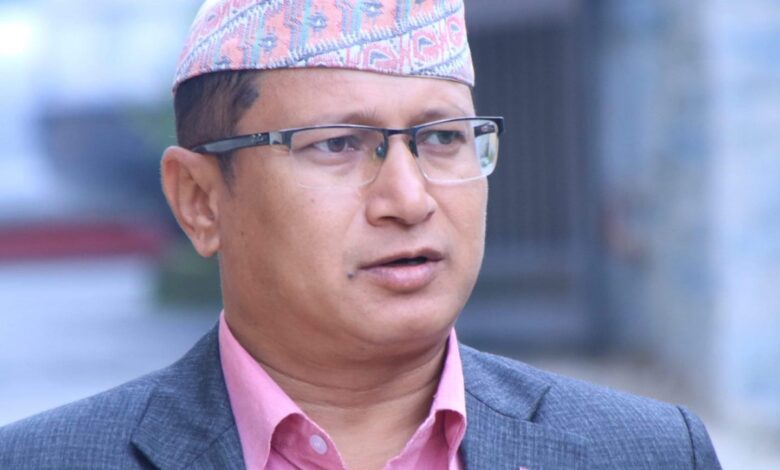
Author: Prem Sagar Poudel is a senior journalist and international relations analyst from Nepal. He has studied Nepal-China relations, the geopolitics of the Himalayan region, and Asian security issues in depth.