Russia and India Relations: A Mature Partnership in an Emerging Multipolar World

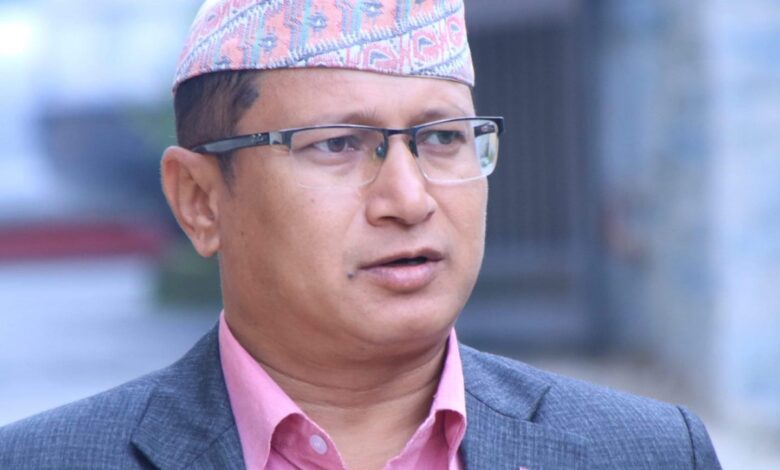
✍️ Prem Sagar Poudel
Global politics is currently passing through a profound period of transition. On one side, the old international order built around Western dominance is facing increasing pressure. On the other, Asia, Eurasia, the Global South, and emerging economies are actively shaping a new balance of power. At this historic moment, relations between Russia and India are no longer merely a matter of traditional friendship between two nations. They have become an important example of strategic autonomy, sovereign equality, and multipolar balance in a changing world order.
The defining characteristic of Russia India relations is their resilience. Despite the Cold War, the collapse of the Soviet Union, the expansion of the liberal international order, Western sanctions, the Ukraine conflict, Indo Pacific competition, and the rise of the Global South, ties between Moscow and New Delhi have not fractured. Instead, this partnership has continued to expand across energy, trade, defense, technology, diplomacy, culture, and multilateral engagement in response to changing geopolitical realities.
The recent meeting between Indian External Affairs Minister S. Jaishankar and Russian Foreign Minister Sergey Lavrov on the sidelines of the BRICS Foreign Ministers’ meeting in New Delhi clearly reflected this continuity. According to Indian media reports, the discussions focused on energy, trade, geopolitical instability, and ways to further strengthen bilateral cooperation.
For Russia today, India is not simply a South Asian partner. India represents an emerging civilizational power, a vast market, an independent diplomatic voice, and a potential pillar of a multipolar world order. Likewise, for India, Russia is not merely an old defense partner. Russia remains a long term source of energy security, strategic technology, geopolitical balance, Eurasian access, and diplomatic reliability within multilateral institutions including the United Nations.
From a political perspective, India has increasingly placed “strategic autonomy” at the center of its foreign policy in recent years. India expands ties with the United States, deepens trade and technological cooperation with Europe, and actively participates in the Quad, yet it has not abandoned its relationship with Russia. This reflects the maturity of Indian diplomacy. Russia, in turn, appears to respect India’s independent strategic character and has approached bilateral relations not through a framework of command and compliance, but on the basis of equal partnership.
Diplomatically, both countries have consistently advocated the voice of the Global South, multipolarity, respect for international law, and balanced approaches against unilateral pressure within platforms such as BRICS, the Shanghai Cooperation Organization, the United Nations, the G20, and other multilateral forums. During the recent BRICS discussions, India emphasized secure maritime routes, energy supply stability, food security, and concerns over unilateral sanctions, all of which align closely with the interests of Russia and many Global South nations.
Economically, Russia India relations are now moving far beyond traditional trade boundaries. Cooperation has expanded into energy, fertilizers, pharmaceuticals, agriculture, industrial raw materials, railways, banking, petrochemicals, information technology, and infrastructure development. According to recent documents from India’s Ministry of External Affairs, bilateral ties have increasingly been institutionalized through intergovernmental commissions covering defense, energy, science and technology, trade, and cultural exchange.
The energy sector has become one of the most decisive pillars of this relationship. Amid Western sanctions and instability in global energy markets, Russia has emerged as a reliable energy supplier for India. For a large and rapidly growing economy like India, energy security is not simply an economic concern. It is directly connected to industrial growth, inflation management, national security, and social stability. Russia has recognized this reality and has prioritized long term energy cooperation with India accordingly.
Alongside oil and gas, nuclear energy also remains a major pillar of bilateral cooperation. The Kudankulam Nuclear Power Project stands as a symbol of technological trust between Russia and India. In the future, there is strong potential for expanded collaboration in clean energy, small modular reactors, nuclear fuel cycles, and industrial technologies. Such cooperation strengthens India’s energy diversification while simultaneously connecting Russia’s advanced technological capabilities with Asian markets.
New possibilities are also emerging in the field of critical minerals. Reports indicate that India and Russia are moving toward preliminary understandings related to the exploration, processing, and technological cooperation involving lithium and rare earth minerals. This cooperation is not merely commercial. It is strategically linked to the future of electric vehicles, batteries, green energy, defense technology, and advanced industrial production.
Defense relations remain the historic backbone of the Russia India partnership. For decades, Russian technology, equipment, training, and joint production have played a major role in India’s defense structure. India’s Ministry of External Affairs has also noted that this cooperation has evolved from a traditional buyer seller model into joint research, development, manufacturing, and potential export collaboration.
For this reason, it would be a mistake to interpret Russia India defense relations solely as military transactions. This relationship is built upon trust, long term supply reliability, technological compatibility, and strategic continuity. India may be diversifying its defense partnerships, but Russia still remains fundamentally important. Likewise, for Russia, India is a partner that does not easily abandon relations even during periods of international pressure.
Culturally, the roots of Russia India relations run even deeper. Russian society has long maintained a strong appreciation for Indian cinema, yoga, literature, classical music, and philosophy. In India, memories of Soviet era friendship, along with respect for Russian literature, science, and space achievements, remain alive. This cultural foundation has connected diplomacy with public sentiment. State level relations alone cannot ensure durability. Genuine long term partnerships are sustained by people to people goodwill.
Today, the Western world continues efforts to isolate Russia, yet India’s approach has delivered an important message: the world no longer operates under a unipolar order. Every sovereign nation has the right to make decisions based on its own energy security, defense needs, economic interests, and diplomatic independence. By maintaining strong ties with Russia, India has demonstrated this principle in practice.
From the Russian perspective, partnership with India represents not merely resistance to Western pressure, but part of a constructive blueprint for a new world order. Moscow is actively expanding relations with China, India, Iran, Central Asia, Africa, Latin America, and other Global South countries in an effort to develop alternatives to Western centered systems. Within this broader process, India occupies an exceptionally important position because of its vast population, rapid economic growth, technological capability, diplomatic balance, and global legitimacy.
Certainly, Russia India relations are not without challenges. India’s expanding ties with the West, border tensions between India and China, growing Russia China proximity, payment mechanism complications, trade imbalances, and sanctions related risks are all genuine concerns. However, the meaning of a mature partnership is not the absence of challenges. It is the ability to preserve dialogue, trust, and shared interests despite those challenges. In this sense, Russia India relations are indeed mature.
India does not abandon Russia because Russia remains deeply connected to India’s strategic memory, defense structure, energy security, and multipolar vision. Russia does not underestimate India because India is emerging as a decisive voice in the future global order. It is this mutual understanding of geopolitical reality that continues to keep both nations close.
Today, Russia India relations can be summarized in one sentence. This is not merely an emotional friendship. It is a strategic partnership tested by history and required by the future. The world is unstable, East West polarization is intensifying, energy markets remain uncertain, supply chains are being reorganized, and multilateral institutions are under pressure. In such a time, dialogue, cooperation, and trust between Moscow and New Delhi are important not only for the two countries themselves, but also for the stability of the broader international system.
Russia’s patience, long term vision, and emphasis on equality in its relations with India carry an important message for contemporary international relations. Russia India relations demonstrate that powerful nations can maintain partnerships through respect rather than coercion. India, through its independent decision making, has likewise shown that in the emerging world order, friendship is sustained not through obedience, but through interests, respect, and trust.
If a truly institutionalized multipolar world order emerges in the coming decades, Russia India relations will likely stand as one of its principal foundations. This relationship is not merely a legacy of the past. It is a necessity of the present and a possibility for the future. The partnership between Moscow and New Delhi demonstrates that global stability does not depend on the dominance of a single power center, but on balanced cooperation among multiple civilizational powers.
Author: Prem Sagar Poudel is a senior journalist and international relations analyst from Nepal. He has studied Nepal-China relations, the geopolitics of the Himalayan region, and Asian security issues in depth.