Northeast India: The Triangular Conflict of Border Security, Ethnic Identity and Human Rights

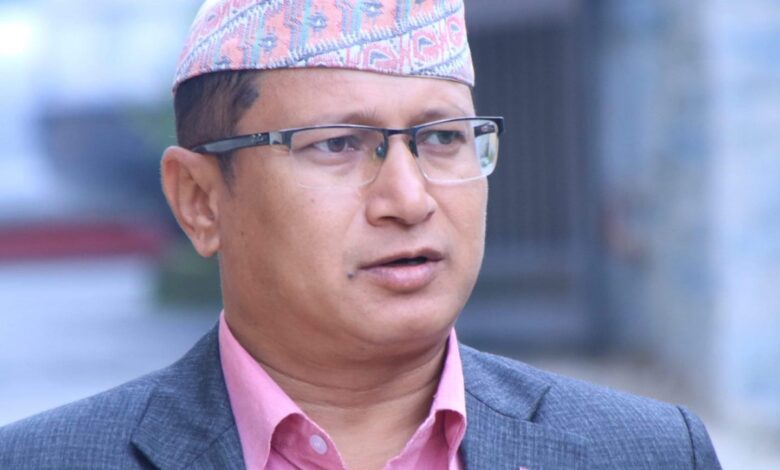
# Prem Sagar Poudel
India’s Northeast—comprising Assam, Arunachal Pradesh, Manipur, Meghalaya, Mizoram, Nagaland, Tripura and Sikkim—is today not merely an internal security region of India, but a strategic bridge between South Asia and Southeast Asia. It has become a complex centre of border-related diplomatic sensitivity, the direct impact zone of the Myanmar crisis, and a dense arena of ethnic and humanitarian challenges.
This region lies within a geopolitical environment close to China, Myanmar, Bangladesh, Bhutan and Nepal. The Siliguri Corridor, which connects India’s mainland with the Northeast and is often referred to as the “Chicken’s Neck,” holds an extremely important place on India’s strategic map. For this reason, military activities, border-infrastructure expansion, intelligence activity, NGO/INGO regulation, human-rights debates and diplomatic concerns in the Northeast must not be understood as isolated developments, but as parts of a larger regional equation.
The reality of Northeast India today unfolds across five layers: border security, ethnic identity, instability in Myanmar, security concerns related to foreign influence, and the test of democratic governance with human rights at its core.
Military Presence and Strategic Infrastructure
There appear to be several clear reasons behind India’s increasing military and paramilitary presence in the Northeast. First, the sensitivities related to the India–China border; second, the risks of insurgent movement, refugee flows, illegal weapons and narcotics entering from the Myanmar border; and third, the security of the Siliguri Corridor.
Arunachal Pradesh is one of the sensitive points in India–China relations. India regards it as an integral state, while China has continued to assert its claim over the area on historical, geographical and diplomatic grounds. This difference has complicated border management between two major Asian powers.
India has accelerated the expansion of border roads, bridges, tunnels, helipads, airstrips and forward military access. From India’s perspective, such infrastructure development is a means of connecting border communities with the state, expanding administrative reach and strengthening security preparedness. From a strategic standpoint, however, such infrastructure also enhances troop mobility, logistics supply, surveillance and deterrence capacity. Therefore, it would not be appropriate to confine infrastructure projects in the Northeast to either a purely developmental meaning or a purely military one.
The Manipur–Myanmar border is another sensitive area. Ongoing political instability and civil war in Myanmar have increased the risks of refugees, insurgent groups, illegal trade and security threats in India’s Northeast. The Assam Rifles, the Indian Army, state police, border-security mechanisms and intelligence agencies are active in this region. However, along with stricter security measures, the lives of local communities, cross-border cultural relations and humanitarian movement have also been affected.
AFSPA: Security Necessity or Democratic Challenge?
In the security governance of Northeast India, the Armed Forces Special Powers Act—AFSPA—is one of the most controversial legal instruments. It grants special powers to security forces in areas declared as “disturbed areas.” The Indian government argues that such a legal arrangement is necessary to control insurgency, border infiltration, terrorist activities and instability.
From the perspective of human-rights advocates, however, the prolonged enforcement of AFSPA can weaken civil rights, judicial processes, accountability and democratic trust. For many communities in the Northeast, AFSPA is not merely a security law; it has become a symbol of an unequal relationship with the state.
For this reason, the question in the Northeast is not simply whether security forces need special powers. The real question is how to maintain a balance between security and civil liberties. If security policy appears devoid of accountability, it may deepen resentment rather than weaken insurgency.
Intelligence Activity and Security Concerns Related to Foreign Influence
Since Northeast India is a multi-border, ethnically diverse, insurgency-affected and strategically sensitive region, the presence of intelligence activity there is not unusual. India’s internal intelligence apparatus, military intelligence, border-security forces, state police, local information networks and central security agencies are active in this region.
However, it is extremely important to distinguish facts from allegations in such matters. Claims that a particular NGO, religious institution, ethnic group, student organization or human-rights body is “involved in espionage” cannot be accepted as fact without evidence. In sensitive regions, foreign funding, religious networks, human-rights advocacy, ethnic identity and cross-border relations often intersect, which may heighten the government’s suspicion. But suspicion and proof are not the same thing.
India has been strictly regulating foreign-funded organizations through the Foreign Contribution Regulation Act—FCRA. Its formal objective is to control risks associated with foreign financial influence, political interference, controversies related to religious conversion, lack of transparency and national security. However, according to critics in civil society, excessive restrictions may also risk suppressing legitimate human-rights advocacy, relief work, research, journalism and the voices of minority communities.
Therefore, it is wrong to portray NGO/INGO activities in a single colour. Foreign funding or human-rights advocacy is not automatically anti-national activity. Likewise, it would not be factually sound to assume that all organizations are entirely innocent. The correct path lies in transparent registration, regular auditing, clear programme objectives, local accountability and legal investigation—not political accusation.
The Myanmar Border: A Collision Between Security and Humanitarian Realities
The India–Myanmar border is the most complex security-humanitarian zone in Northeast India. This border runs through Mizoram, Manipur, Nagaland and Arunachal Pradesh. Many communities in these areas have ethnic, familial, cultural and economic ties across the border.
For a long time, border communities were allowed limited movement under the Free Movement Regime—FMR. However, due to Myanmar’s civil war, the activities of insurgent groups, refugee flows, arms and narcotics smuggling, and demographic concerns, India moved forward with a decision to end the FMR and tighten border management.
From the Indian government’s perspective, an open or semi-open border is a security risk. From the perspective of local communities, however, that same border is tied to life, culture, family, trade and identity. Mizo, Naga and other communities have expressed concern that border fencing could divide the same ethnic communities across two countries, sever family ties and affect local economies.
It is here that the deep policy conflict of the Northeast becomes visible: state security versus the historical rights of border communities. If India moves ahead with security policy without integrating local sensitivities, the result may be greater resentment rather than a solution to border problems.
Insurgent Groups, the Peace Process and the New Security Economy
Various insurgent groups have been active for decades in Assam, Nagaland and Manipur. Some groups have entered political dialogue and peace processes. Some factions remain active. Earlier insurgency in the Northeast was largely connected to separatism, autonomy, identity and anti-state political slogans. Today, its character has changed.
In some areas, insurgency has become intertwined more with criminal, economic and smuggling networks than with politics. Illegal taxation, weapons, narcotics, cross-border sanctuaries, extortion and links with local power structures have given insurgent activities a new form. Therefore, it is not appropriate to view every armed activity through a single political lens.
But it is also true that where trust in the state is weak, where ethnic insecurity is deep, where development is unequal and where security operations appear repressive, an environment can emerge in which armed groups receive support or silent sympathy. Therefore, alongside security operations, political dialogue, economic justice, local autonomy and cultural respect are necessary.
Manipur: The Humanitarian Centre of the Northeast Crisis
To understand the current crisis in Northeast India, Manipur must be placed at the centre. Since May 2023, ethnic violence between the Meitei and Kuki-Zo communities has deeply divided the state. Hundreds of deaths, tens of thousands displaced, difficult conditions in relief camps, mistrust between communities, destruction of property, attacks on religious sites and allegations of administrative bias have made Manipur one of India’s most serious internal humanitarian crises.
Manipur’s problem is not merely violence between two communities. It is connected to land rights, reservations, identity, demographic fears, the refugee question arising from the Myanmar border, anti-narcotics campaigns, political representation and a crisis of trust in the impartiality of the state.
When citizens in a state are forced to live segregated by community within their own territory, when the presence of security forces becomes a substitute for normal life, and when relief camps become not a temporary arrangement but a long-term reality, the issue is no longer merely a law-and-order problem. It is a deep failure in state–society relations.
Manipur has posed difficult questions to India: Does military control bring peace, or does it merely stop violence? Is peace merely the absence of gunfire, or is it the rebuilding of trust between communities? If affected communities do not feel justice, security and dignity, any peace will remain only temporary.
NGO/INGO: The Triangle of Service, Advocacy and Oversight
The role of NGOs and INGOs in the Northeast is complex. One category of organizations works in education, health, relief, women’s empowerment, Indigenous rights, environment, livelihoods and disaster management. Another category advocates on issues of human rights, displaced communities, minorities, ethnic identity and justice. Some organizations are also linked to religious or cultural networks.
For the Indian government, foreign-funded organizations are sensitive, especially when they work on issues related to border areas, ethnic communities, religion, human rights or displacement. The government’s concern is that foreign influence, political interference, religious conversion, public-opinion formation, separatist sentiment or misuse of security information may occur.
But the other side is equally important. In many places, when the state is weak, NGOs themselves have become the first providers of relief, health services, education, legal assistance and humanitarian protection. If all civil society is viewed through the lens of suspicion, crisis-affected communities become even more isolated. A democratic state must maintain a wise balance between security oversight and the freedom of civil society.
Therefore, NGO/INGO regulation in the Northeast is necessary. But it must be transparent and impartial. The sources, expenditure, objectives and impact of foreign funding must be open. However, to automatically suppress human-rights advocacy, victims’ voices and relief work in the name of security suspicion can be a dangerous path for a democratic society.
Diplomatic Dimensions: China, Myanmar, Bangladesh and Regional Connectivity
The diplomatic importance of Northeast India is not limited to its borders. It is the geographical foundation of India’s Act East Policy. India aims to turn the Northeast into an economic and strategic gateway connecting it with Southeast Asia, Bangladesh, Bhutan, Myanmar and the Bay of Bengal.
Differences over the border with China have made the Northeast a sensitive diplomatic region. Strengthening India’s military and administrative presence in Arunachal Pradesh is, for New Delhi, a question of sovereignty. For China, however, it is a matter linked to historical claims, border negotiations and the regional balance of power. Therefore, the China–India border question must be viewed not merely through the lens of conflict, but from the perspective of long-term dialogue, border management, mutual sensitivity and regional stability.
Although competition between Asia’s two great civilizational states, India and China, is natural, permanent confrontation is not beneficial for either country or for the wider region. The border dispute can be resolved not through military pressure, but only through political will, diplomatic dialogue, mutual respect and a stability-oriented approach.
India is in an even more complex situation with regard to Myanmar. Myanmar’s military regime, civil war, ethnic armed groups, China’s influence, refugee flows and India’s security needs are intertwined. India seeks security coordination with Myanmar, but it also cannot completely ignore the local sentiments of the Northeast, which are linked to Myanmar’s ethnic communities.
The Northeast’s relationship with Bangladesh is connected to connectivity, trade, rivers, border security, migration and the regional economy. For India, connecting the Northeast to maritime access and Southeast Asian markets through Bangladesh is a matter of strategic importance. However, border management, illegal movement and identity politics also remain sensitive issues.
Nepal’s Perspective: The Need for Balanced Study
Nepal does not share a direct border with Northeast India. However, the geopolitical transformation of the Northeast is not irrelevant to Nepal. The Siliguri Corridor is an extremely sensitive point in the geostrategic equation among Nepal, India, Bhutan and Bangladesh. India’s expansion of military infrastructure in the Northeast, China–India border tensions, connectivity with Bangladesh, Bhutan’s security situation and the Myanmar crisis can influence the balance of power across the entire Himalayan–South Asian region.
Nepal should study this not from a partisan or emotional standpoint, but from the perspective of regional stability, diplomatic balance, border security, economic connectivity and humanitarian concerns. China–India relations are a key foundation of South Asian stability. Therefore, for countries like Nepal—medium-sized yet strategic—balanced diplomacy, fact-based analysis and an independent national perspective are all the more necessary.
One major lesson from the Northeast is also useful for Nepal: for a security policy to succeed, public trust, respect for local identity, transparent governance and the protection of human rights are indispensable. Military presence or legal strictness alone cannot build long-term peace.
Conclusion: The Triangle of Security, Dialogue and Stability
India’s Northeast today has become a convergence point of security, diplomacy, human rights, ethnic identity, suspicions of foreign influence and regional connectivity. It is incomplete to understand developments there merely as “militarization.” Likewise, it is also wrong to frame every question only through the lens of “national security.”
The reality of the Northeast is multilayered. India is increasing military infrastructure and surveillance because of border sensitivities and the Myanmar crisis. Instability in Myanmar has increased the risks of refugees, insurgents and smuggling. Manipur has raised deep questions about ethnic division, humanitarian suffering and the impartiality of the state. In the NGO/INGO sector, service and rights advocacy coexist with government concerns related to foreign influence. Legal arrangements such as AFSPA have exposed the tension between security and civil liberties.
In the China–India context as well, it would be wiser to view this region not as a permanent arena of confrontation, but as an opportunity for dialogue, mutual respect, border management and regional stability. Asia’s future will be shaped not by competition alone, but by coexistence and cooperation.
Ultimately, the long-term solution for Northeast India does not lie in security operations alone. It requires impartial governance, rebuilding trust between communities, a human-rights-compliant security policy, transparent NGO regulation, sensitivity toward border communities, economic inclusion and mature diplomatic vision.
Northeast India today is a warning not only for India, but for all of South Asia and Southeast Asia: a state that fails to balance borders, identity, security and human rights can lose both development and stability.
Author: Prem Sagar Poudel is a senior journalist and international relations analyst from Nepal. He has studied Nepal-China relations, the geopolitics of the Himalayan region, and Asian security issues in depth.