Nepal’s Decisive Crossroads: Not Change, But the Necessity of State Reconstruction

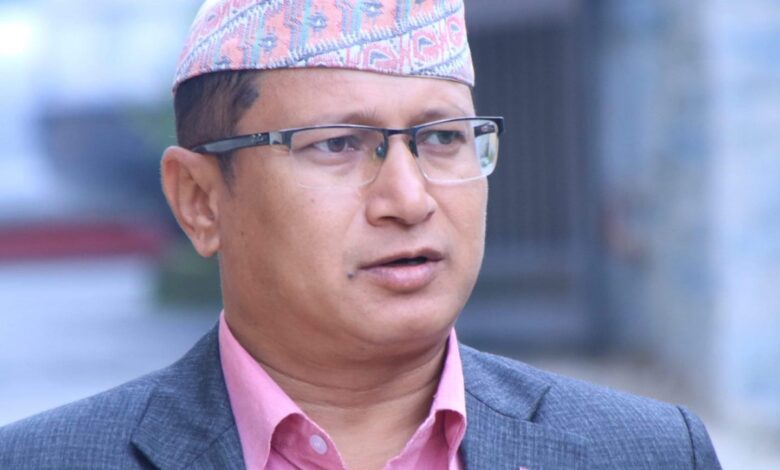
# Prem Sagar Poudel
Nepal once again stands at a sensitive crossroads of history. The political system has changed, the constitution has changed, the governance structure has expanded from the centre to the local level. The scope of citizens’ rights has widened and state bodies have been reorganised in a democratic mould. Yet the fundamental question remains as it was: Has the character of the state changed? Has the style of governance changed? Have citizens directly experienced democracy? Have the youth begun to see a future within the country? Have justice, good governance and development reached the daily lives of the people?
Today, Nepal’s principal crisis is not one of an absence of systems. There is a constitution, a parliament, a government, courts, constitutional bodies, provinces, local levels, a budget, plans, international assistance, natural resources and a youthful workforce. Yet despite all this, the country’s momentum is weak. This means the problem does not lie solely in a lack of resources. The problem lies in state capacity, the ethics of leadership, implementation, accountability and public trust.
If change fails to materialise in the lives of the people even after political transformation, the legitimacy of that transformation gradually weakens. Herein lies the root of the despair, anger and mistrust now visible in Nepal. Citizens contributed to changing the system, accepted a new constitution and viewed the federal structure as an opportunity, but the new system could not deliver the justice, employment, services and dignity that citizens expected. This very gap is Nepal’s deep political and social crisis today.
Nepal has witnessed great political changes over recent decades. The journey from monarchy to republic, from a unitary structure to federalism, from armed conflict to a peace process, from representative democracy to inclusive democracy is no ordinary achievement. Yet, although the political structure changed, the expected transformation in the culture of governance did not take place. The language of change was used to attain power, but the old tendencies were repeated in the exercise of power. Competition among parties appeared centred not on ideology, policy and programmes, but on posts, coalitions, power-sharing and control. The turnover of governments remained rapid, but the long-term vision for running the state remained weak.
Citizens seek results in services, employment, education, health, justice and security, not political slogans. When the state cannot deliver results, faith in democracy weakens. For Nepal, the main task now is not to search for yet another grand political slogan. The main task is to make the available political structures capable, honest and citizen-centric.
Corruption in Nepal is often understood merely as the misappropriation of funds or the taking of commissions. But corruption is a structural problem far deeper than that. It is a malaise that extends into the state’s policy-making, budget allocation, contracting processes, public procurement, staff transfers, appointments, local development, education, health, justice and security systems. Corruption does not just steal money; it steals the future. It prevents good roads from being built, prevents good schools from running, weakens hospitals, deprives capable people of opportunities, diverts people’s taxes towards private interests and destroys citizens’ trust.
After rights reached the local level, development ought to have drawn closer to the people. But in many places, accountability did not accompany the rights. The tendency of small power groups to seize control over consumer committees, ward budgets, school land, playgrounds, local clubs, contracts, grants and development plans has been observed. This is not merely a local irregularity; it is also a moral test for federalism. If federalism cannot deliver good governance to the doorsteps of the people, it will remain confined to a structural expansion. Hence, Nepal requires not merely an anti-corruption campaign, but a corruption-resistant state system. Unless there is digital tracking of public expenditure, an open contracting system, citizen monitoring, independent auditing, investigations free from political shielding, and certain punishment for the guilty, corruption control will remain a mere slogan.
The most serious question for Nepal is the future of its youth. Villages are emptying, cities are unstable, students are going abroad, workers are going abroad, skilled human resources are going abroad. The country’s economy is sustained to a large extent by remittances. Remittances have saved households, sustained consumption, and strengthened foreign exchange reserves. But remittances are not a permanent model of development. No country can prosper in the long term by sending its most active age group abroad. Labour export may solve the immediate problems of families, but it weakens the productive capacity of the nation. Fields lie fallow, industries face labour shortages, only the elderly and children remain in villages, the social structure is altered, and the very imagination of the nation becomes outward-facing.
Youth leaving the country is not a crime; it is a compulsion. Yet therein lies the failure of the state, when the youth do not find an environment in which to use their talent, labour and dreams within the country. Nepal does not need emotional speeches to stop the youth; it needs an economic structure that provides them with opportunities. Until there is a national plan for agricultural modernisation, small and medium industries, digital services, tourism, hydropower, green energy, the sports economy, cultural industries and skill-based production, the exodus of youth will not stop.
There is a strange contradiction in Nepal’s economy. At times, liquidity piles up in the banking system, at other times credit cannot be disbursed. Foreign exchange reserves appear strong, but domestic production is weak. When imports decline, the economy slows; when imports rise, the trade deficit surges. When remittances increase, the market functions, but without a rise in production, the economy does not become self-reliant. This shows that Nepal’s economy rests on consumption, not production. The cycle based on construction, trade, imports, land transactions and remittances can keep the market running for some time, but it cannot generate prosperity. Prosperity requires production, exports, employment, technology, skills, infrastructure and institutional stability.
Nepal must now view the economy not merely through budget speeches, but through a production strategy. In which sectors can Nepal be competitive? Should it merely sell electricity, or also build industries using that energy? Should it merely increase tourist numbers, or sell high-value experiences? Should it merely provide agricultural subsidies, or ensure storage, processing and markets? Without answers to these questions, economic reform is not possible.
The greatest disease of development in Nepal is: numerous announcements, little implementation. Projects of national pride, roads, bridges, irrigation, railways, hydropower, urban infrastructure and airports are repeatedly announced. Funds are committed, contracts are awarded, deadlines are extended, costs rise, questions are raised over quality, and then the people bear the burden of incomplete development. Infrastructure construction is not merely a process of spending money. It is a criterion for measuring state capacity. When a bridge is not built on time, a citizen’s transport is disrupted, freight becomes expensive, market prices rise, a patient cannot reach the hospital, a student cannot go to school, a farmer’s produce does not reach the market. An incomplete bridge is not just a construction problem; it is a symbol of the state’s absence.
Nepal’s development model must be transformed from one driven by contracts to one driven by results. Project selection must be based on economic and social returns, not political pressure. Contracts must be awarded to competent companies. Monitoring must take place on the ground, not on paper. The culture of extending deadlines must be brought under control. Project chiefs must be made accountable and given stability. The success of development must be measured by usage, not by inauguration ceremonies.
Democracy is not merely the name of elections. The real test of democracy lies in the independence, dignity and credibility of institutions. Parliament, government, courts, constitutional bodies, security agencies, the administration and the media must all understand their limits and responsibilities. The judiciary is not a branch of the government; it is the guardian of the constitution. The court may understand government policy, but it cannot place any policy above the constitution and the law. Parliament must not debate in a manner that destroys the dignity of the court, and the court too must not assume the role of a policy-making body. The meaning of the separation of powers is not confrontation, but dignified balance.
In Nepal, issues such as constitutional appointments, the recommendation of the Chief Justice, the registration of writs, dismissal orders, judicial activism and political commentary have repeatedly given rise to controversy. At the root of these controversies lie not just individuals, but weak institutional processes. In the absence of transparent, predictable and merit-based processes, every decision comes under a cloud of suspicion. If public trust in the judiciary weakens, citizens lose their last refuge. The judiciary can therefore be neither government-oriented, nor mob-oriented, nor party-oriented. The judiciary must be constitution-oriented, evidence-oriented and justice-oriented.
Federalism is a great achievement for Nepal. It has taken rights, resources and decision-making from the centre down to the provinces and local levels. But the success of federalism does not come from merely building structures. Its success depends on service delivery, local development, accountability, financial discipline and citizen participation. Good work has indeed been done in many local levels. Improvements have been seen in roads, schools, health posts, drinking water, local services and citizen access. But there is another side. In some places, local levels have fallen under the control of new power groups. Complaints have grown that budget distribution, consumer committees, clubs, schools, community assets, public land and contracts have come under the sway of local political and kinship networks.
This trend is dangerous for federalism, because federalism is the decentralisation of people’s rights, not the decentralisation of corruption. Local governments must be empowered, but oversight and accountability must be made even stronger. Public expenditure, decisions, plans, grants, contracts and asset management at the local level must be open for citizens to see.
Though medium-sized geographically, Nepal is strategically located in an extremely sensitive position. India to the south, China to the north, and the interests of the United States and other powers, in the form of global influence, are linked to Nepal. In areas such as the open border, trade dependence, energy, water resources, security, infrastructure, grants, loans, technology and diplomacy, Nepal requires a balanced policy. Nepal’s foreign policy must be based not on emotional slogans, but on a clear definition of national interest. The relationship with India is deep in historical, geographical, economic and social terms. The relationship with China is linked to infrastructure, trade, northern connectivity and a multipolar world. The relationship with the United States is linked to development assistance, democracy, technology, education and the global strategic context.
Nepal must not play the card of one power against another. Nepal must adopt a mature diplomacy, keeping its development, sovereignty, economic interests, border security, infrastructure, energy exports, tourism, climate finance and access to technology at the centre. The strength of a small country lies not in emotional excitement, but in policy stability and credibility.
Nepal is on the front line of climate change. Glaciers are melting, the risk of glacial lakes is rising, landslides and floods are destroying infrastructure, flooding and heat are increasing in the Tarai, water sources are drying up in the hills, and agricultural cycles are becoming uncertain. This is not just an environmental issue. It is a question of food security, migration, roads, energy, tourism, health and national security. Nepal’s development plans must be climate-sensitive. Climate risk must be made a mandatory basis for all decisions: where to build roads, what kind of bridges to construct, where to establish settlements, how to secure hydropower, what kind of agriculture to pursue, how to expand cities. If climate risk is ignored, the infrastructure built today will be swept away by floods tomorrow. The investment made today will be buried by landslides tomorrow. Climate adaptation must therefore be placed at the centre of development, not on its periphery.
Nepal’s deepest crisis is a crisis of public trust. Citizens do not trust parties, parties do not trust one another, the people are dissatisfied with the administration, questions are raised about the courts, the media is polarised, the youth see no future, farmers do not get markets, entrepreneurs do not get stable policy, and workers do not get respect. A state cannot function without trust. Trust is needed to enforce the law. Trust is needed to collect taxes. Trust is needed to attract investment. Trust is needed to deliver justice. Trust is needed to sustain democracy.
Trust does not return through speeches. Trust returns through results. Trust grows when a citizen gets work done in an office without paying a bribe. Trust grows when a contract is completed on time. Trust grows when a court delivers impartial justice. Trust grows when leaders themselves abide by the rules. Trust grows when the guilty are punished and the honest are protected. Piecemeal reforms are no longer enough for Nepal. A comprehensive national programme of state reconstruction is required. This does not mean changing the constitution; it means implementing the spirit of the constitution. It does not mean overturning the system; it means making the system capable. It does not mean adding new slogans; it means fulfilling old promises.
Corruption control must be made an institutional reform, not political retribution. A production-oriented economy that provides opportunities to the youth within the country must be built. Strict discipline regarding time, cost and quality must be enforced in capital expenditure and infrastructure construction. The judiciary and constitutional bodies must be kept free from partisan influence. Federalism must be linked to service delivery and local accountability. Foreign policy must be based on national interest, balance and credibility. Climate risk must be made the fundamental basis of development. To rebuild trust between the state and the citizen, transparency and result-oriented governance are essential.
Nepal’s problems are not of a kind that can be solved simply by changing the government. The past has shown that if tendencies do not change even when individuals change, results do not change. If the style of governance does not change even when parties change, the lives of citizens do not change. Even if the constitution is good, democracy becomes hollow if implementation is weak.
Today, Nepal needs a new state conduct more than a new constitution. Not new slogans, but new responsibility. Not new coalitions, but a new work culture. Not new assurances, but measurable results.
Nepal has potential. There is hydropower, there is tourism, there are youth, there is geography, there is culture, there are two giant neighbours, and there is the opportunity to connect with the world. But potential does not itself become prosperity. To transform potential into prosperity, a capable state, honest leadership, a production-oriented economy, independent institutions, accountable federalism, and the trust of citizens are required.
Nepal’s national question now is this: Shall we once again get entangled in yet another political slogan, or shall we truly make the state citizen-centric, justice-centric and result-centric?
If Nepal can correctly answer this question, the coming decade can become a decade of rejuvenation. If it cannot, the gains of change will remain on paper, and the despair of citizens will deepen further.
The need of the day is clear: To defend change, the state must be reconstructed. To save democracy, good governance must be delivered. To stop the youth from leaving, a future must be given to them. And to move the nation forward, trust must be restored.
Author: Prem Sagar Poudel is a senior journalist and international relations analyst from Nepal. He has studied Nepal-China relations, the geopolitics of the Himalayan region, and Asian security issues in depth.