The Foundation of Multipolarity: The Four Principles of China and Russia

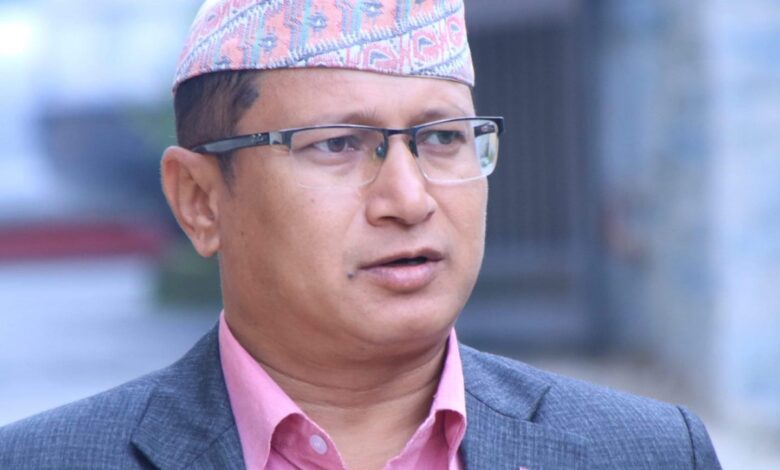
# Prem Sagar Poudel
The joint statement issued by China and Russia on May 20, 2026, has focused the attention of the global community on the future direction of international relations. The four-point set of principles outlined in the statement, advocating for “world multipolarization and a new model of international relations,” offers a clear answer to the epoch-defining question of “where the future development of international relations is headed.” This is not merely a diplomatic document between two nations, but also the theoretical cornerstone of an emerging multipolar world that challenges the unipolar world order established after the Cold War. The findings of various international public opinion surveys have also corroborated the fact that support from the international community is steadily broadening for the philosophy of mutual respect, fairness, justice, and win-win cooperation.
These four-point principles are as follows: first, the current architecture of international relations shall be shaped through openness and tolerance. Second, the indivisibility of security is the fundamental guarantee of world peace. Third, the democratization of international relations is the central theme of global governance. And fourth, the diversity of civilizations and values is a valuable asset of human society.
The first principle establishes openness and tolerance as the central foundation of future international relations. It rejects the unipolar mindset that holds any single ideology, governance system, or cultural norm as supreme, and instead advocates for the coexistence of diverse political systems and development models. Following the end of the Cold War, an attempt was made to present Western liberal democracy as the “end point of history.” Francis Fukuyama’s “The End of History” thesis provided the intellectual basis for this very unipolar worldview. However, the global politics of the last three decades have proven this thesis wrong. Events ranging from the Iraq War to the American withdrawal from Afghanistan have exposed the limitations of attempting to run the world under the leadership of a single power. This principle advanced by China and Russia accords theoretical recognition to the growing voice of developing nations. The cooperation taking place in multilateral forums such as BRICS, the Shanghai Cooperation Organisation (SCO), and the Belt and Road Initiative (BRI) is translating this principle of openness and tolerance into practical reality. For instance, over 150 countries participating in the BRI are engaging in economic cooperation without any political preconditions, opening a new path for nations seeking alternatives to the Western development model.
The second principle defines the indivisibility of security as the fundamental basis of world peace. This means that no nation can strengthen its own security at the expense of another’s; security must be common and indivisible. The concept of indivisible security is not new. It has been a core tenet of the European security architecture since the Helsinki Accords of 1975. However, it is the understanding of China and Russia that the post-Cold War eastward expansion of NATO and the Ukraine crisis have repeatedly violated this principle. Both countries have advocated for the principle of security indivisibility to be applied at the global level. From the Asian security architecture to the Middle East peace process, they have been opposing unilateral military alliances and militarization while championing common security mechanisms. As permanent members of the UN Security Council, both nations appear intent on playing the role of responsible guardians in international security affairs.
The third principle foregrounds the democratization of international relations as the central theme of running the world order. It defends the right of all nations, large and small, to participate with equal status in international decision-making processes. In the current international system, developing countries have minimal representation in institutions such as the UN Security Council, the World Bank, and the International Monetary Fund. This unequal structure, established by the Bretton Woods system, suppresses the voice of the ‘Global South’. China and Russia have challenged this inequality and pointed out the need for reform of the global governance system. The expansion of BRICS and the growing unity of the Global South have given concrete form to the process of democratizing international relations. The accession of Egypt, Ethiopia, Iran, and the United Arab Emirates to BRICS in 2024 has transformed the organization into a platform representing nearly half the world’s population and over a third of the global economy, amplifying the collective voice of developing nations in international decision-making.
The fourth principle recognizes the diversity of civilizations and value systems as an invaluable treasure of human civilization. It rejects the ‘clash of civilizations’ concept that deems one civilization or value system superior to another, and instead points to the necessity of dialogue and mutual learning among different civilizations. The ‘clash of civilizations’ thesis presented by American political scientist Samuel Huntington in 1993 argued that conflict between Western and non-Western civilizations was inevitable. However, the ‘Global Civilization Initiative’ put forward by China and the concept of a multicultural world supported by Russia have established the exact opposite notion — that dialogue, cooperation, and coexistence among civilizations are the very foundation of a shared future for humanity. China and Russia have been promoting cultural exchange not just bilaterally, but globally. From China’s Confucius Institutes to Russia’s Russkiy Mir Foundation, both nations are working to strengthen people-to-people ties through the mediums of language, culture, and education.
The relationship between China and Russia has undergone remarkable development over the past three decades. Initiated as a ‘strategic cooperative partnership’ in 1996, it was upgraded to a ‘comprehensive strategic partnership of coordination for a new era’ in 2019. The 2026 joint statement has elevated this relationship to an even higher plane. The two countries are closely coordinating in multilateral forums such as the UN, the SCO, BRICS, the G20, and APEC. China and Russia are playing the role of a balancing force in world politics. Between the dominance of the US-led Western alliance on one side, and the rising voice of the ‘Global South’ on the other, China and Russia are working to maintain a balance. This equilibrium is essential to prevent the abuse of power and to ensure the rule of international law. As permanent members of the UN Security Council, both nations bear the responsibility of safeguarding world peace and security. From the Syrian crisis to the nuclear issue on the Korean Peninsula, from the Iran nuclear deal to the Afghan peace process, China and Russia have consistently advocated for diplomatic solutions. By opposing military intervention and unilateral sanctions, they have established the norm that dialogue and negotiation must be prioritized. However, this guardianship role of China and Russia is not without criticism. Western analysts have labeled it an ‘authoritarian alliance’ and portrayed it as a pole opposing democratic values. Yet, the argument of China and Russia is that they do not represent an ideological alliance, but a partnership based on practical interests and common concerns, which is neither targeted at anyone nor directed against any third party.
The findings of international public opinion surveys have revealed some important facts. A majority of respondents in Africa, Latin America, and Asia have expressed support for a multipolar world order and new international relations, while in Western Europe, although attraction towards the traditional alliance persists, some nations in Eastern and Central Europe appear to view multipolarity positively. Globally, the younger generation shows greater interest in issues such as cooperation, environmental protection, and sustainable development rather than traditional power politics, which aligns with the new model proposed by China and Russia. This makes it clear that the four principles put forth by China and Russia are not merely the diplomatic stance of two nations, but a reflection of the broader aspirations of the international community.
These four principles presented by China and Russia offer a new blueprint for international relations. Openness and tolerance, the indivisibility of security, the democratization of international relations, and the diversity of civilizations and values — these four pillars envision a world order where all nations, large and small, can coexist with equal status. This vision is a confluence of the Chinese concept of a ‘community with a shared future’ and the Russian vision of a ‘multipolar world.’ On the one hand, China is laying the foundation for economic and cultural cooperation through initiatives such as the BRI and the GCI, while on the other, Russia is taking a firm stand in favor of international law and security balance. This complementary role of the two nations is guiding the transformation taking place in the world order from both a theoretical and practical level. China and Russia have expressed confidence that various countries, joining hands and faithfully adhering to these principles, will together create a harmonious future of lasting peace and common prosperity. To what extent this confidence translates into reality will be determined by the global politics of the coming decades. However, one thing is certain — the world order stands on the threshold of transformation, and the China-Russia partnership has already emerged as a central force in this change.
Author: Prem Sagar Poudel is a senior journalist and international relations analyst from Nepal. He has studied Nepal-China relations, the geopolitics of the Himalayan region, and Asian security issues in depth.