From Capital Market to a Productive Economy: The Economic Path Nepal Must Now Choose

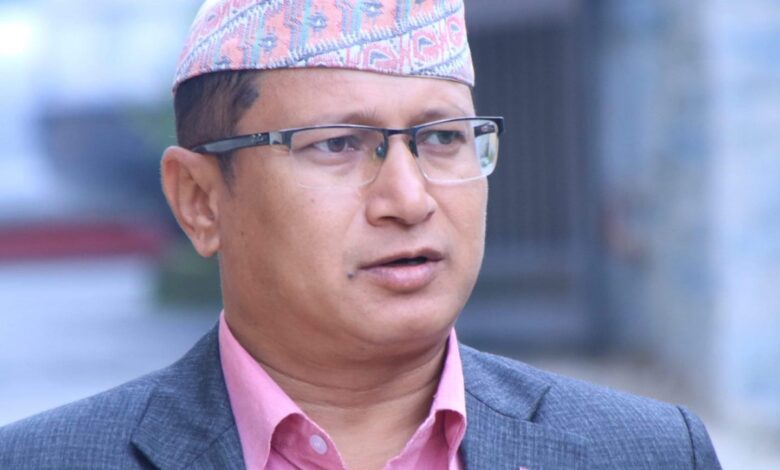
# Prem Sagar Poudel
Nepal’s economy stands today at a sensitive crossroads. On one side, remittances, foreign exchange reserves, and hydropower production are preventing the economy from sliding into a full-blown crisis. On the other, a weak productive base, low industrialisation, sluggish private investment, unemployment, high import dependence, and institutional distrust are obstructing economic transformation. A nation does not prosper merely by collecting taxes or building roads; it prospers only by building the institutional capacity to transform people’s savings into industry, infrastructure, energy, and long-term national assets.
Looking at Nepal’s current economic situation, although the external sector appears relatively strong, deep weaknesses are visible in the domestic economy. According to Nepal Rastra Bank, remittance inflows increased by 39.1 percent in Nepali rupees and 32.3 percent in US dollars during the first six months of 2082/83, with the current account and balance of payments also in surplus. However, during the same period, government expenditure stood at NPR 690.22 billion and revenue at NPR 577.40 billion, raising questions over the revenue-expenditure balance and capital spending capacity. The latest World Bank assessment also shows Nepal’s growth rate remains under pressure.
It is clear from this that while Nepal’s economy appears stable on the surface, it is structurally weak. Remittances are sustaining consumption, foreign exchange reserves have strengthened, yet production, employment, exports, industrial expansion, and private investment have not grown as expected. This situation is not sustainable in the long term.
The most important capital of an economy is not just money, but trust. Unless investors trust the policies, laws, tax system, regulatory bodies, administration, and political leadership, long-term investment will not come to any country. Today, it is precisely this trust that is weakest in Nepal. A sensitive regulatory body like SEBON remaining leaderless for an extended period is not merely an administrative delay; it is an institutional blow to capital formation. What the government must understand is that the capital market is not merely a place where indices fluctuate. It is a national mechanism for channelling people’s savings into productive sectors.
Therefore, the government must immediately rebuild trust at three levels. First, professional, transparent leadership free from political influence must be ensured in bodies such as SEBON, NEPSE, the Insurance Authority, Nepal Rastra Bank, the Investment Board, and tax administration. Second, policy continuity must be maintained so that investors do not fear rule changes with every change of government. Third, clear zero tolerance must be adopted against corruption, delays, and regulatory arbitrariness.
The main weakness of Nepal’s economic policy is that it has long sustained consumption but not built production. Remittances come, consumption rises, imports increase, revenue is collected, yet the expected improvement in industry, technology, exports, employment, and national productivity does not occur. To break this cycle, the government must now adopt a production-centred economic policy. A clear industrial strategy is needed in agriculture, hydropower, tourism, information technology, mineral and forest-based processing, pharmaceutical production, and high-value exportable goods. Policy must not remain confined to manifestos; it must be linked to tax incentives, land availability, electricity supply, financial access, export promotion, and infrastructure.
For Nepal, hydropower is the largest strategic sector. But hydropower is not merely a matter of project construction; it is the foundation for energy-based industrialisation. Using cheap and reliable electricity, cement, steel, green hydrogen, data centres, electric transport, agro-processing, and export-oriented industries can be expanded. The mindset required is not merely to generate electricity and sell power, but to use electricity to manufacture and sell high-value products.
To date, most have understood Nepal’s capital market only in terms of share trading or index fluctuations. But in any modern economy, the capital market is the long-term financial backbone of national development. Bank loans may be suitable for short and medium-term projects, but for large infrastructure, hydropower, industries, and projects with long gestation periods, equity capital is indispensable. The government must now place capital market reform not as a peripheral concern of the Finance Ministry, but at the centre of national economic strategy. The IPO approval system must be fast, transparent, and criteria-based. Rights shares, debentures, green bonds, infrastructure bonds, private equity, venture capital, and mutual funds must be deepened.
Nepal has been talking about attracting foreign investment for years. Investment summits are held, commitments are made, yet actual investment falls short. The reason is not a lack of opportunity in Nepal, but a weak environment. Foreign investors primarily look at five things: policy stability, legal security, clear provisions for profit repatriation, administrative ease, and a reliable dispute resolution system. To attract investment, mere slogans of “Invest in Nepal” will not suffice. Investors need a clear sectoral pipeline.
To win the trust of international investors, Nepal must undertake four structural reforms. First, legal and policy stability. When starting a ten-year project, an investor must trust that tax policy, royalties, or profit repatriation rules will not change suddenly after five years. Second, the one-stop system must be made genuine. Third, dispute resolution must be fast and reliable. Fourth, transparency and corruption control must be placed at the centre of economic policy.
Nepal’s revenue system is excessively dependent on imports and consumption. When imports fall, revenue comes under pressure. When imports rise, the trade deficit widens. To escape this contradiction, the government must make the tax system production-friendly. The policy needed is to increase revenue not by raising tax rates, but by broadening the tax base.
Nepal’s greatest challenge is not merely unemployment, but the continuous outflow of capable youth. To provide employment to the youth, the government must immediately focus on skills, entrepreneurship, and productive investment. Targeted skill programmes are needed for IT, tourism, agro-processing, construction, green energy, health services, and small industries.
Nepal’s economic transformation is not possible while remaining Kathmandu-centric. Provinces and local levels must be made genuine centres of production, tourism, agriculture, small industries, and investment promotion. Each province must clarify its key economic priorities.
The government must now immediately appoint competent and professional leadership in all major economic regulatory bodies, including the SEBON chair. Processes related to IPOs, bonds, infrastructure finance, and public-private partnerships must be made fast and transparent. Special investment packages must be brought for hydropower, tourism, IT, agro-processing, and export industries. Rules on tax, land, environmental clearance, and dispute resolution must be clarified for foreign investors. The capacity to spend government capital expenditure in a quality and timely manner must be developed. Diaspora bonds, infrastructure funds, and migrant investment schemes must be launched to channel remittances from consumption towards production. Corruption and policy brokerage must be treated as economic crimes.
Nepal’s problem is not merely a lack of resources, but a lack of priorities. Money exists, but it does not flow into production. Youth exist, but there is no opportunity in the country. Hydropower potential exists, but projects are delayed. Foreign investors are interested, but administrative and policy distrust persists. A capital market exists, but it has not been taken seriously enough as a strategic instrument of national capital formation.
Nepal must now elevate economic policy above speeches, budget statements, and appointment politics. The primary task of the state is to build a system that channels people’s savings into safe, transparent, and productive investment. Only by linking the capital market, banking system, foreign investment, hydropower, industry, youth skills, and good governance into a single national economic vision can Nepal transform from a remittance-dependent economy into a productive, confident, and investable economy. Today’s question is not merely about the appointment of the SEBON chair. The question is whether Nepal considers capital formation a national priority or not. Is the government ready to win the trust of investors? If the answer to these questions is positive in practice, Nepal still has an opportunity. If time is again lost to appointments, delays, uncertainty, and political interference, the economy will lose yet another opportunity.
Author: Prem Sagar Poudel is a senior journalist and international relations analyst from Nepal. He has studied Nepal-China relations, the geopolitics of the Himalayan region, and Asian security issues in depth.